Japan's Micro-Seasons: A Month-by-Month Guide to the Best Time for Photos
"Cherry blossom season" sounds like it describes a few weeks. In practice, peak bloom is closer to ten days. Japan's four seasons are real, but each one is built from smaller windows that open and close on their own schedule. A specific week when a specific tree turns, a specific month when a specific park's evening light lines up with its closing time. Miss a narrow window, and you're not in a lesser version of the same season. You're often in a different one entirely.
That's the idea behind micro-seasons: the useful unit for planning a photoshoot in Japan isn't "spring" or "autumn," it's the narrower slice inside it. This matters for sightseeing. It matters more for a photoshoot, because a two-hour session only works within that narrower window - and because the shortest windows, like peak cherry blossom, mean a limited number of available shoot dates rather than a whole season to choose from.
In this guide:
Why Japan's Seasons Move the Way They Do
Japan runs roughly 3,000km north to south, and its two signature seasonal events travel across that distance in opposite directions.
Cherry blossoms move south to north. Tokyo and Kyoto typically bloom in the last days of March; Hokkaido blooms roughly five weeks later, in late April to early May. A trip built around cherry blossoms can, in theory, chase the bloom line north and get two separate peak-bloom experiences from the same trip. But it also means a Tokyo-timed booking is simply the wrong week for a Hokkaido shoot, and vice versa.
The south-to-north pattern isn't perfectly clean either, and altitude complicates it as much as latitude does. Kawaguchiko sits south of Tokyo on a map, but its elevation at the base of Mount Fuji pushes its cherry blossom peak into mid-April, later than Tokyo's despite being the more southerly location. Anywhere with meaningful elevation gain runs on its own adjusted calendar rather than strictly following the south-north rule.
Autumn foliage runs the other way. Hokkaido's color typically peaks around early-to-mid October, weeks before most of the country has even started turning. Kyoto's peak lands in mid-to-late November. Tokyo, further complicated by which trees actually populate the city (see below), lags even later. The two seasonal fronts essentially trade places twice a year, and a guide that treats "spring" or "autumn" as a single national event is going to be right for one region and wrong for the rest.
This is also why Tokyo and Kyoto autumn look so different from each other despite being roughly the same latitude and only a few hundred kilometers apart. Kyoto's tree mix leans heavily toward maples, which is why its color arrives as a single, saturated wave of red, orange, and yellow together in November.
Tokyo's urban tree population leans toward ginkgo and sycamore, which turn yellow well before the city's maples turn red. That stretches Tokyo's color out into stages rather than one peak week. Tokyo's tree mix also largely skips species like katsura and Japanese beech, both heavy contributors to the orange range seen in areas like Kyoto's western hills. That's one more reason Tokyo's palette leans yellow-to-red rather than showing the fuller orange spectrum visible elsewhere. Same country, same rough timing, structurally different result.
Sun Position and Park Closing Times
The sun's position shifts more across a Japanese year than most visitors expect, and it intersects directly with something practical: several of Tokyo's best garden locations have fixed closing times that don't move with the seasons the way sunset does.
Take Shinjuku Gyoen. In winter (roughly October through mid-March), the park's hours run 9 am to 4 pm, with gates closing at 4:30. Tokyo's sunset in December lands around 4:30 as well, meaning the gates are closing at almost exactly the moment golden hour would normally begin. A session aiming for that soft late-day light needs to be built around early-to-mid afternoon instead, because the park simply won't be open for it.
Flip to summer. From mid-March through June, Shinjuku Gyoen's gates close at 6 pm, but Tokyo's June sunset runs closer to 7 pm. The garden closes over an hour before golden hour even starts. The same park, the same "golden hour plan," produces two completely different session structures depending on which side of the year you're shooting.
Rikugien Gardens tells a similar story from a different angle. Its standard daily closing is 5 pm year-round. Outside of its short autumn illumination event (a ticketed evening reopening for roughly two weeks in late November and early December), there's no way to shoot Rikugien's true golden hour in summer at all since sunset is hours after closing. In deep winter, sunset and closing time sit close enough together that timing gets tight but workable.
That doesn't mean summer light at Rikugien is a dead end, though. The park sits on slightly elevated ground within Tokyo, and the tree line along its northwest edge is tall enough to soften and redirect late-afternoon sun well before actual sunset. Interesting light is still very possible within normal hours, even if it isn't the classic golden-hour glow. Getting it right depends on reading the day's specific conditions, which is really a call for your photographer's field experience rather than a fixed rule.
The practical takeaway: "golden hour" isn't a fixed booking instruction in Japan. It has to be checked against both the month and the specific location, especially for private gardens with fixed hours rather than public parks that stay open into the evening.
Spring: The Micro-Seasons Inside Cherry Blossom Season
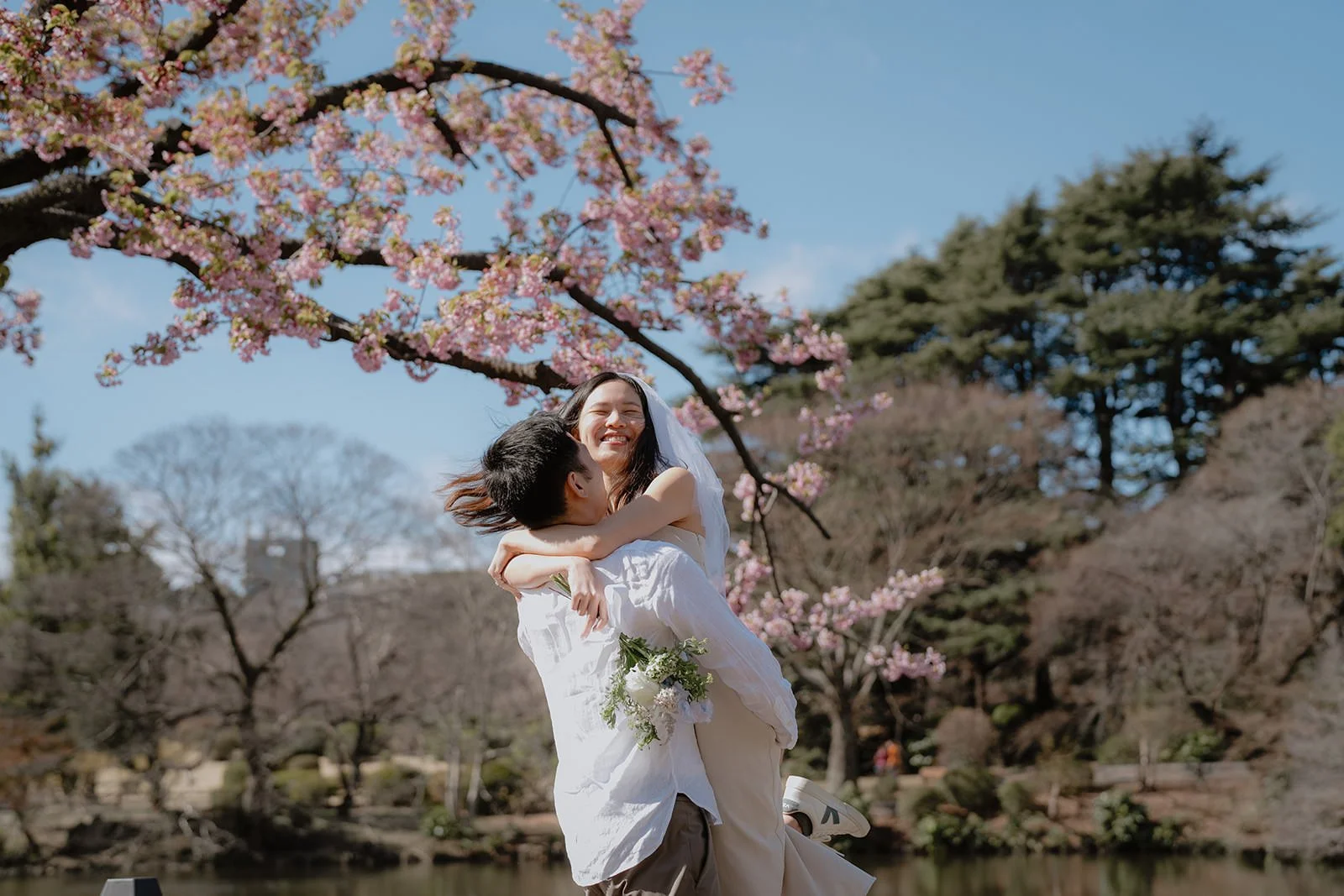
Cherry blossom season isn't one event but several, stacked close together. Plum blossoms open first, generally in February, and get a fraction of the attention despite being genuinely photogenic and far less crowded. Then the cherry blossom front itself moves through in stages: early-blooming varieties, then the mass Somei Yoshino bloom that "cherry blossom season" usually refers to, then late-blooming varieties that extend the tail end for those who miss the peak.
The mass bloom - the ten or so days most people picture when they think of sakura - is the narrowest and most in-demand window of the entire year. That narrowness has a direct effect on booking: with that few usable days, and every other visitor in the city trying to shoot the same week, photoshoot availability during peak bloom is genuinely limited rather than a matter of picking a convenient date. Anyone planning a cherry blossom shoot should treat the booking timeline the way they'd treat a hard deadline, not a loose window.
Tokyo's Shinjuku Gyoen is a useful exception to the ten-day rule. Because it carries early, standard, and late-blooming varieties across its grounds, the garden's usable cherry blossom window stretches past two months rather than the two or three peak weeks elsewhere in the city.
The crowd behavior here isn't simply a matter of walking as far from the entrance gates as possible. The distance between a given gate and the garden's quieter bloom spots doesn't track with common sense, and specific spots only work well within specific windows of the day. That kind of gate-by-gate, hour-by-hour knowledge is worth checking directly with your photographer rather than assuming from a map.
In Kyoto, Maruyama Park and the Philosopher's Path are the two most requested spring locations, and both fill up fast once bloom hits. Kyoto's narrower streets concentrate the same crowd size into a more intense experience than Tokyo's wider layout does.
Beyond the well-known spots, we also work with smaller neighborhood parks in both cities that carry excellent cherry blossoms and essentially no crowds. These stay off public content and get shared only with confirmed clients, specifically to avoid the kind of social-media-driven overcrowding that's turned so many once-quiet spots into the next Arashiyama.
Cherry blossom season also happens to be peak proposal season, particularly around Kyoto's traditional gardens - one more reason the short window matters for booking, not just for sightseeing.
Once peak bloom passes, spring keeps moving through its own smaller stages: wisteria, canola blossoms, nemophila (the pale blue flower fields that peak in late April into early May), azaleas, peonies. Each with a real but narrow window and far less competition for a session slot than the two or three weeks everyone else is chasing.
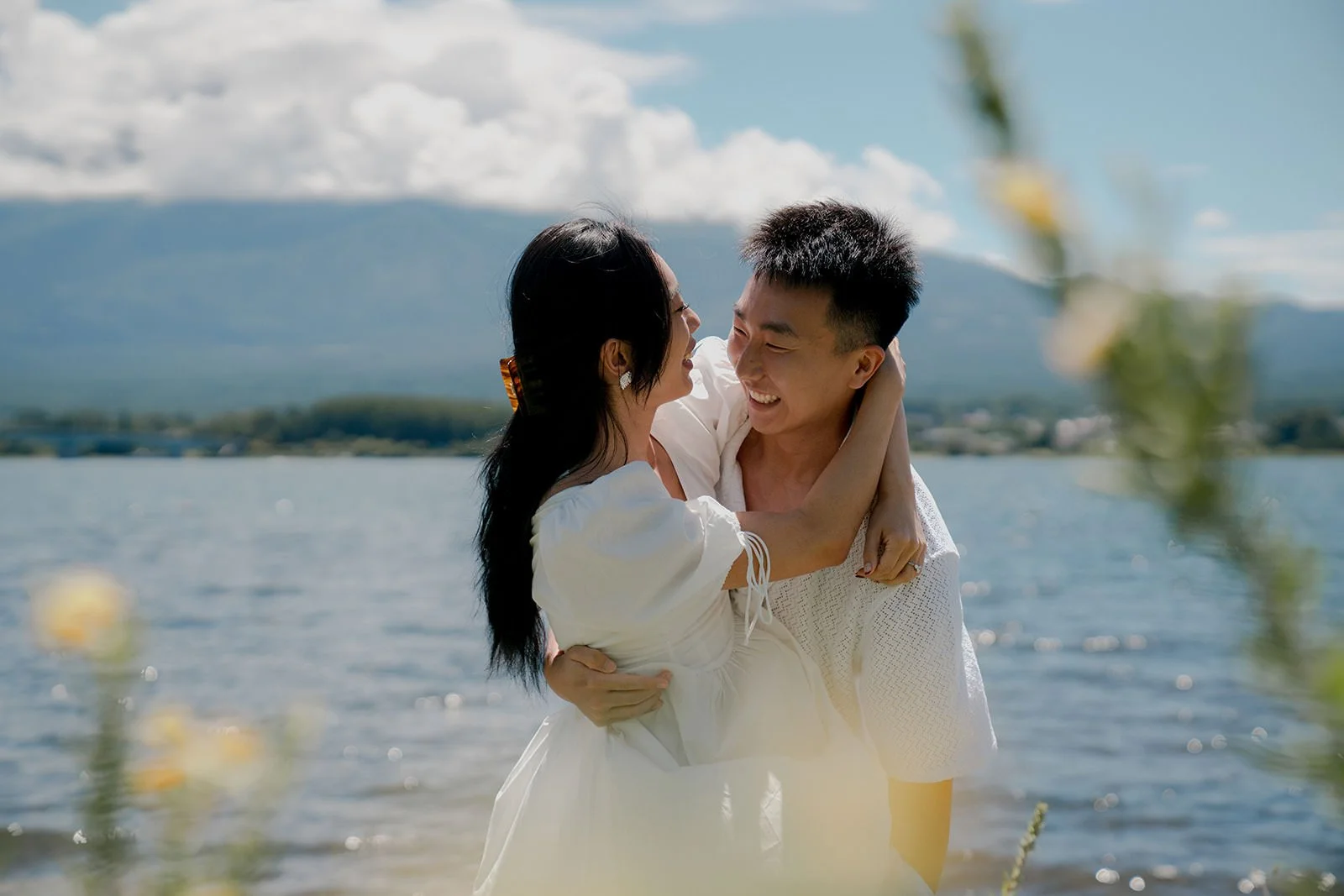
Summer: Heat, Humidity, and the Two Windows That Work
July and August in Tokyo run 30 to 35°C with 70 to 80% humidity, and it feels worse than the numbers suggest. Visitors from car-dependent countries in particular tend to underestimate how much cumulative walking between air-conditioned stops adds up in that kind of heat.
June, technically part of the same summer stretch, is a different story. Temperatures are still mild before the July heat sets in, but it also overlaps with rainy season -- the rain tends to be frequent rather than heavy, which still leaves plenty of room for good sessions. More on how that plays out in practice in the rainy season section below.
Two windows actually work. The first is early: 7 to 9 am, before the city fully heats up and before crowds arrive. Light is soft without being flat, and it hardens fast after 9 to 9:30. The second is evening, after 6 pm, when the city recovers, and outdoor eating, festivals, and street life pick back up. Midday, roughly 11 am to 3 pm, is close to a non-negotiable avoid window; that time is better spent indoors than fighting the heat for a shoot.
Kyoto's summer is worse than Tokyo's. The basin geography traps heat and humidity more effectively than Tokyo's more open layout, and the same early-morning rules apply with less room for error. Kyoto has its own cooler mountain escape in the Kurama area, with river-deck restaurants and its own festival culture; Tokyo has equivalents too, in mountainous areas like Okutama and Takao, worth asking about specifically if summer heat is a concern and a mountain break fits the trip.
Summer is also matsuri season (neighborhood festivals through July and August), with the larger ones drawing hundreds of thousands. Yukata, lantern light, and the natural movement of a crowd enjoying itself make for some of the most interesting evening light of the year. It's not a consolation prize for missing cherry blossoms or autumn color, but a reason to specifically choose summer. We covered the Tokyo side of this in more detail in our guide to shooting Tokyo in summer.
One upside worth knowing: tourism drops in summer compared to spring and autumn, which means shorter queues and easier bookings generally, even if the heat is the tradeoff.
Autumn: Three Different Calendars in Three Places
Autumn is where the micro-seasons idea matters most, because "autumn" genuinely means three different things depending on where you are.
In Tokyo, color arrives in stages. October still looks like summer. Temperatures are dropping, and the late-afternoon light turns soft, but the trees that actually carry Tokyo's autumn color, ginkgo and sycamore, are only just starting to fade from green toward yellow. Call it a fade-summer month rather than a true autumn one. November brings the yellows properly. Reds and oranges, carried by Tokyo's maples, don't arrive until December -- meaning counterintuitively, the last week of December into the first week of January can be more visually striking in Tokyo than the actual start of autumn in October.
Kyoto doesn't work that way. Its tree mix and its geography compress the transition into one dramatic window: mid-to-late November delivers yellows, oranges, and reds simultaneously rather than in Tokyo's staggered sequence. Visitors who've already experienced a Tokyo-paced autumn arrive in Kyoto expecting the same slow build and are often surprised by how sudden and total Kyoto's peak actually is. That peak week draws heavy demand for the same reason cherry blossom peak does: a narrow, well-known window means limited photoshoot availability, and booking ahead matters more here than in almost any other Kyoto season.
There's a counterintuitive upside to Kyoto's autumn crowds: because foliage color is citywide rather than confined to a handful of spots, and because most visitors queue at the same two or three famous locations, secondary temples and less-visited gardens end up with real color and manageable crowds during exactly the season everyone assumes is impossibly busy. Autumn is one of the only times our usable location list actually expands rather than contracts.
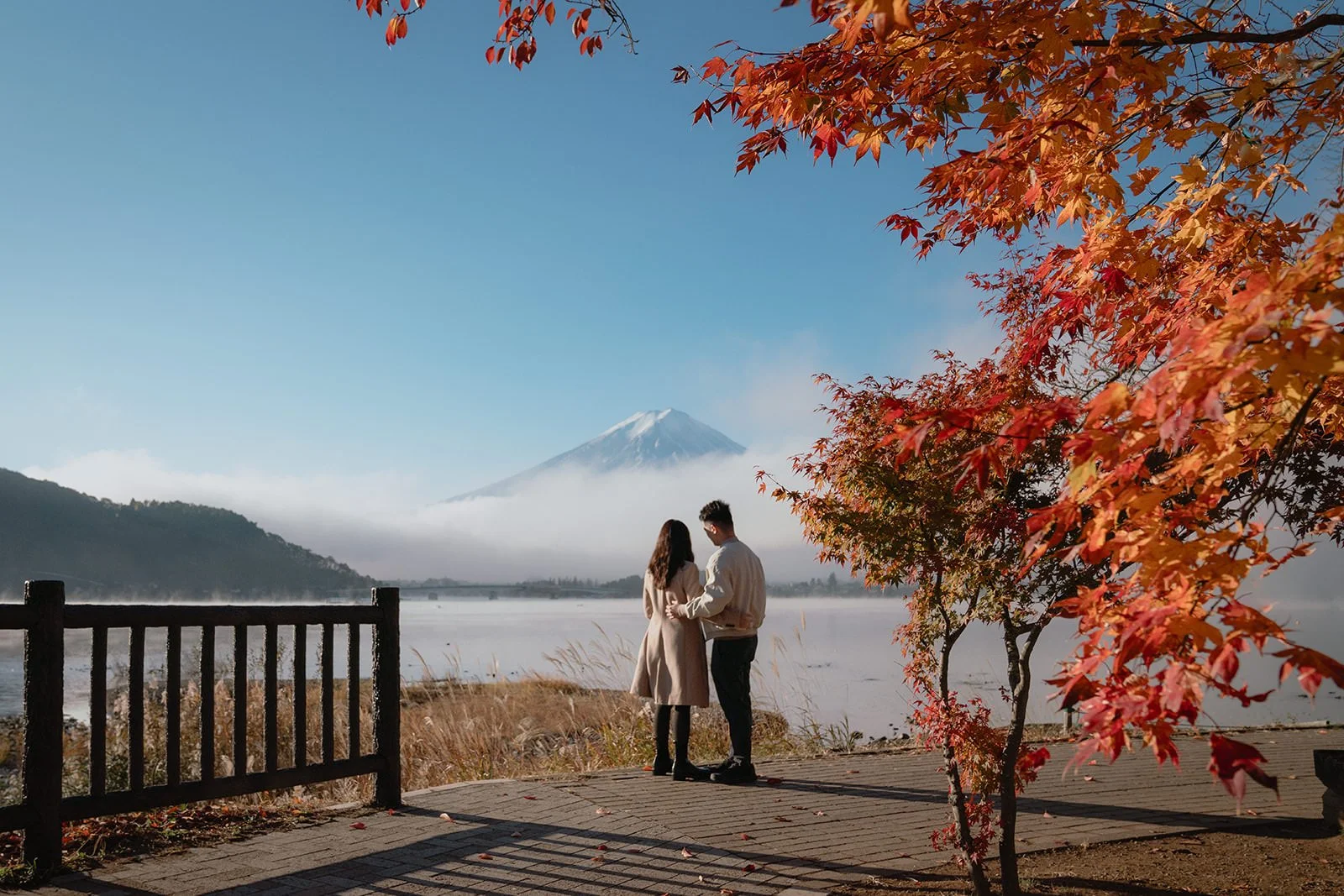
Kawaguchiko runs on its own autumn calendar entirely. November is the busiest month of the year there, driven by peak lake-area color plus events like the Momiji autumn-leaves festival. Oishi Park gets an additional crowd spike around its kochia (burning bush) display in mid to late October. If Mount Fuji and autumn color together are the goal, Kawaguchiko works, but November needs more careful timing than any other month there - we go into the Fuji-specific side of this in the Kawaguchiko proposal guide.
And in the background of all three: Hokkaido has usually already finished its own foliage peak by the time Kyoto is just getting started, typically landing in early-to-mid October. It's one more reminder that a single "best month for autumn in Japan" answer doesn't really exist without naming a destination first.
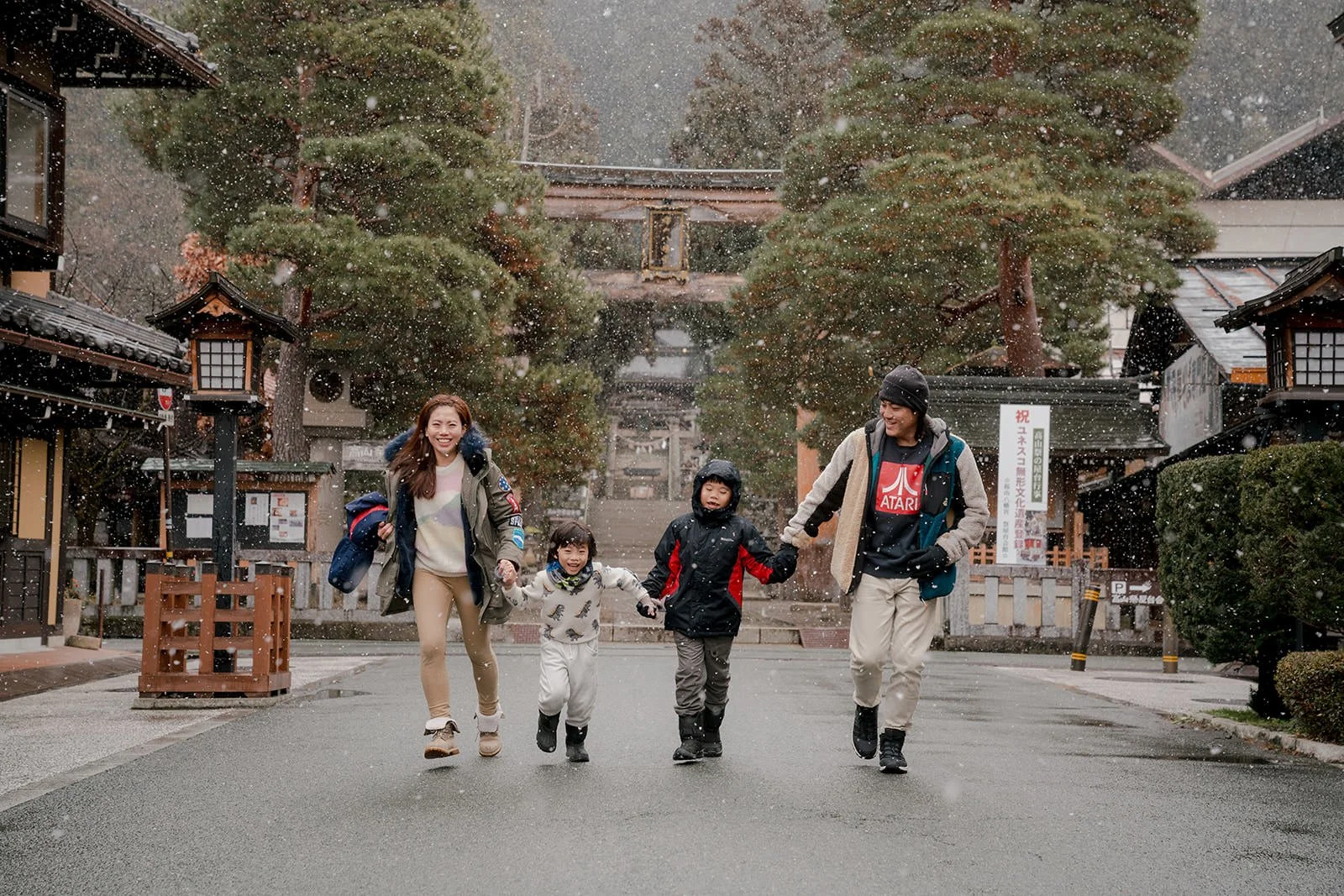
Winter: Underrated, Clear Skies, and Where Snow Actually Happens
Winter is the most consistently underrated season for photos in Japan, and it's almost entirely a marketing problem. Visitors from North America and Europe arrive expecting the grey, bare winters of home and get something different: clear blue skies, persistent sunshine, and a city that stays greener than expected.
In Tokyo and Kyoto, ground-covering snow is rare enough that it shouldn't be planned around. Treat it as a bonus if it happens, not an expectation. Kyoto sees snow slightly more often than Tokyo because of its mountain-surrounded basin, and a light dusting on temple roofs is one of the more striking things the city can offer when it happens.
What winter reliably delivers everywhere is thinner crowds. Locations that require strict early-morning timing in spring or autumn become far more workable across more of the day.
Sapporo is a different story, and it's worth being upfront about the gap here. Hokkaido reliably gets heavy, consistent snowfall through winter in a way central Japan doesn't, and Sapporo's winter illuminations and snow festival draw large crowds of their own.
Rainy Season (Tsuyu): The Month Most Guides Get Wrong
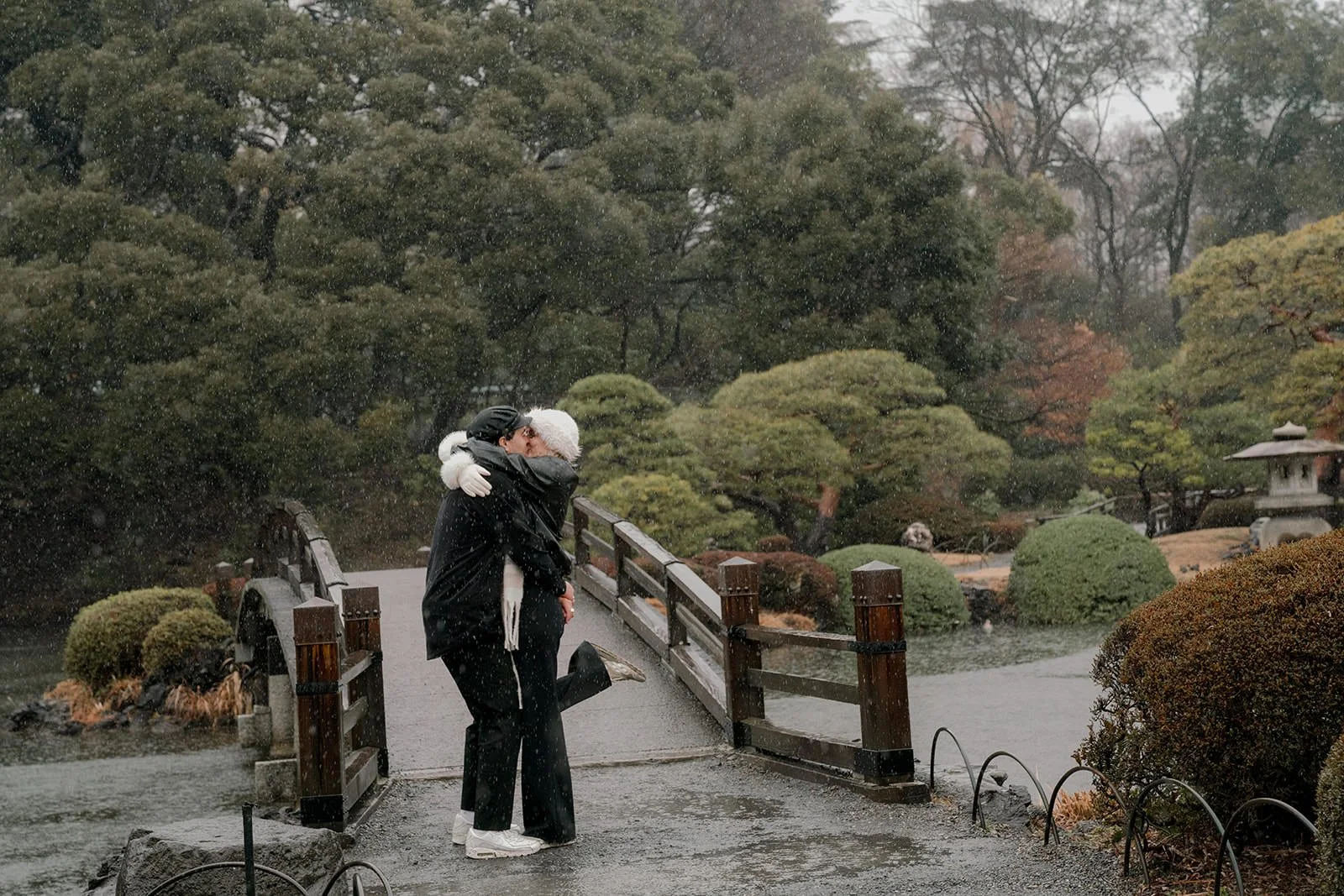
Rainy season, roughly June into early July, has a reputation that overstates the problem. In practice, the rain is usually frequent rather than heavy. It's more a steady pattern of showers across many days than sustained, session-ending downpours. It rarely forces a full cancellation, and when it does affect timing, we build in flexibility to reschedule around it rather than treating the whole month as unworkable.
The upside is real: it's genuinely low season. Locations that are difficult in spring or autumn are noticeably quieter, and the temperature - while heading toward summer - is still comfortable in a way July and August aren't. For visitors comfortable with some uncertainty in exchange for smaller crowds and easier planning, tsuyu is a legitimate option rather than a month to avoid outright.
Best Month for Photos in Japan: Quick Reference
| Month | Conditions | Best For |
|---|---|---|
| January | Clear, cold, thin crowds | Uncrowded classic spots, occasional snow bonus |
| February | Clear, cold, plum blossoms begin | Quiet season, early flowering interest |
| March | Warming, cherry blossoms begin late month | Early sakura, narrow window opens |
| April | Peak cherry blossoms (Tokyo/Kyoto), then spring flowers | Sakura, book well ahead, ten-day peak window |
| May | Mild, wisteria, spring flowers; Hokkaido cherry blossoms peak | Quieter spring color in Honshu, Hokkaido sakura |
| June | Rainy season (tsuyu), mild temperatures | Low season value, flexible scheduling needed |
| July | Hot, humid, matsuri season begins | Early morning or evening shoots, festivals |
| August | Hottest, most humid, peak matsuri | Evening festival light, early morning only |
| September | Still warm, transitioning | Fewer crowds than peak seasons |
| October | Hokkaido autumn peak; Tokyo still fade-summer | Hokkaido foliage, early color outside major cities |
| November | Peak Kyoto foliage (all colors at once), staggered Tokyo yellows, peak Kawaguchiko | Kyoto's narrow all-color peak, Kawaguchiko lake color, busiest month overall |
| December | Tokyo peak reds/oranges, clear winter skies begin | Tokyo's latest and most striking foliage |
Sapporo, Osaka, and Nara are intentionally left out of the destination-specific rows above -- current field data for these destinations is limited (see the Winter section for Sapporo, and ask directly for Osaka/Nara seasonal specifics).
FAQ
What is the best month to take photos in Japan?
There isn't one universal answer. It depends on what you want and where. Late March into early April is best for cherry blossoms in Tokyo and Kyoto (May in Hokkaido). Mid-to-late November is best for foliage in Kyoto; December for Tokyo's latest color. January and February give the thinnest crowds if quiet, uncrowded classic locations matter more than seasonal color.
When is cherry blossom season in Japan?
Peak bloom typically falls in the last days of March into early April in Tokyo and Kyoto, and roughly five weeks later, late April into early May, in Hokkaido - the bloom front moves south to north. This shifts year to year and should be checked closer to your trip. Some locations, like Tokyo's Shinjuku Gyoen, extend the usable window to more than two months with early and late-blooming varieties.
Is rainy season a bad time for a photoshoot?
Not as bad as its reputation. Tsuyu (roughly June) brings frequent but usually light rain rather than heavy, session-ending downpours, and it comes with real advantages: quieter locations and comfortable temperatures. Flexible rescheduling around specific rainy days is generally enough to make it work.
What should I wear for a winter photoshoot in Sapporo?
Sapporo's winters are colder and snowier than central Japan's, so layering and weather-appropriate footwear matter more there than in Tokyo or Kyoto. For general photoshoot styling and layering guidance that applies across destinations, see our guide to what to wear for a photoshoot in Japan.
None of Japan's micro-seasons are a wrong choice, but treating them as one long season each is how a lot of trips end up planned around the wrong week. Cherry blossoms and Kyoto's peak autumn color are genuinely narrow windows - book early rather than late if either is the goal. Summer and winter give more room to work with, in exchange for heat or cold. Rainy season gives up some certainty for real quiet.
If you're planning around a specific destination, our Tokyo, Kyoto, and Kawaguchiko guides go deeper on what each place offers month by month.