What to Wear for a Photoshoot in Japan
Outfit choices matter more in Japan than in most places. The settings here -- bamboo groves, temple streets, lake shores, city night lights -- are visually dense. What you wear either works with that backdrop or competes with it. Getting it right is less about fashion and more about a few practical decisions made in advance.
This guide covers what those decisions are. The first section applies regardless of which season you are visiting. The rest breaks down what changes by time of year.
In this guide:
The rules that never change
These apply in every season and at every location.
Coordinate colors, do not match them exactly. Identical outfits within a group tend to look rigid in photos. Complementary tones -- a light and a dark version of the same palette, or two colors that sit naturally together -- look more considered. A quick test: lay everything on a bed before you pack and check that it reads as a coherent set without being identical.
No logos, text, or heavy graphics. A shirt with a brand logo or a large graphic pulls the viewer's eye immediately. In a Japanese garden or traditional street, the contrast is especially jarring. Plain is almost always the right call.
Limit patterns to one person. A patterned outfit on one person in a group can work well. Two or more people in patterns at the same time creates visual noise that competes with the background. If someone wants to wear a pattern, the rest of the group should wear plain.
Consider the location when choosing colors. Japan's settings have strong visual identities. Cherry blossom backgrounds are soft pinks and whites. Autumn foliage is saturated oranges, reds, and yellows. Traditional streets are earthy browns and greys. Colors that contrast gently with the backdrop tend to produce the clearest results -- you should stand out from the setting, not disappear into it or clash with it.
Match your shoes to the outfit. Shoes are more visible in photos than most people expect -- especially at locations where you are walking, sitting, or crouching. Shoes that do not match the rest of the outfit rarely go unnoticed in the final images.
Comfort is not optional. A photoshoot in Japan typically involves meaningful amounts of walking, often on uneven stone paths, steps, or garden terrain. An outfit that looks good but makes movement difficult will affect the whole session. Thin high heels on cobblestones or grass create practical problems that show up in the photos.
Spring
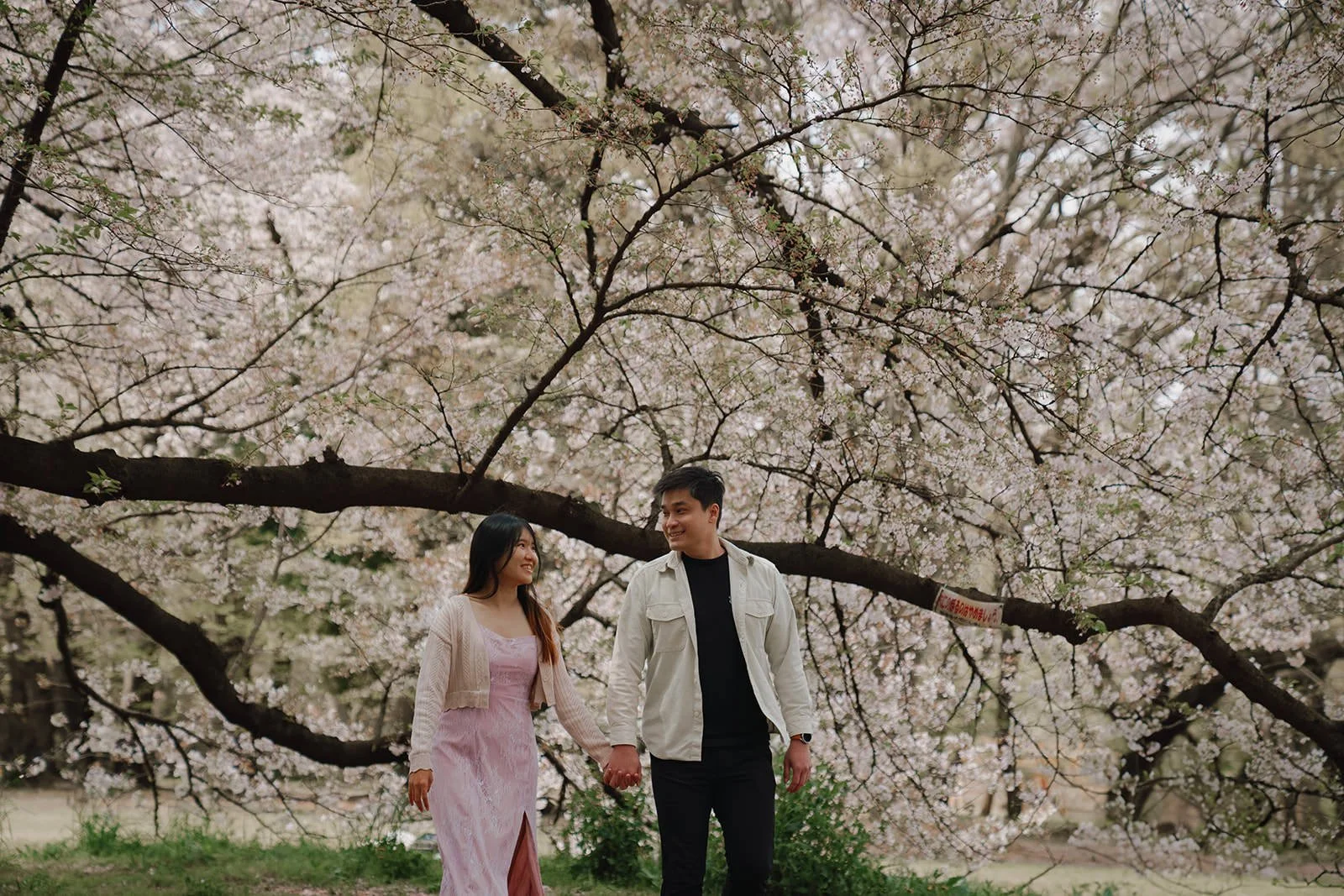
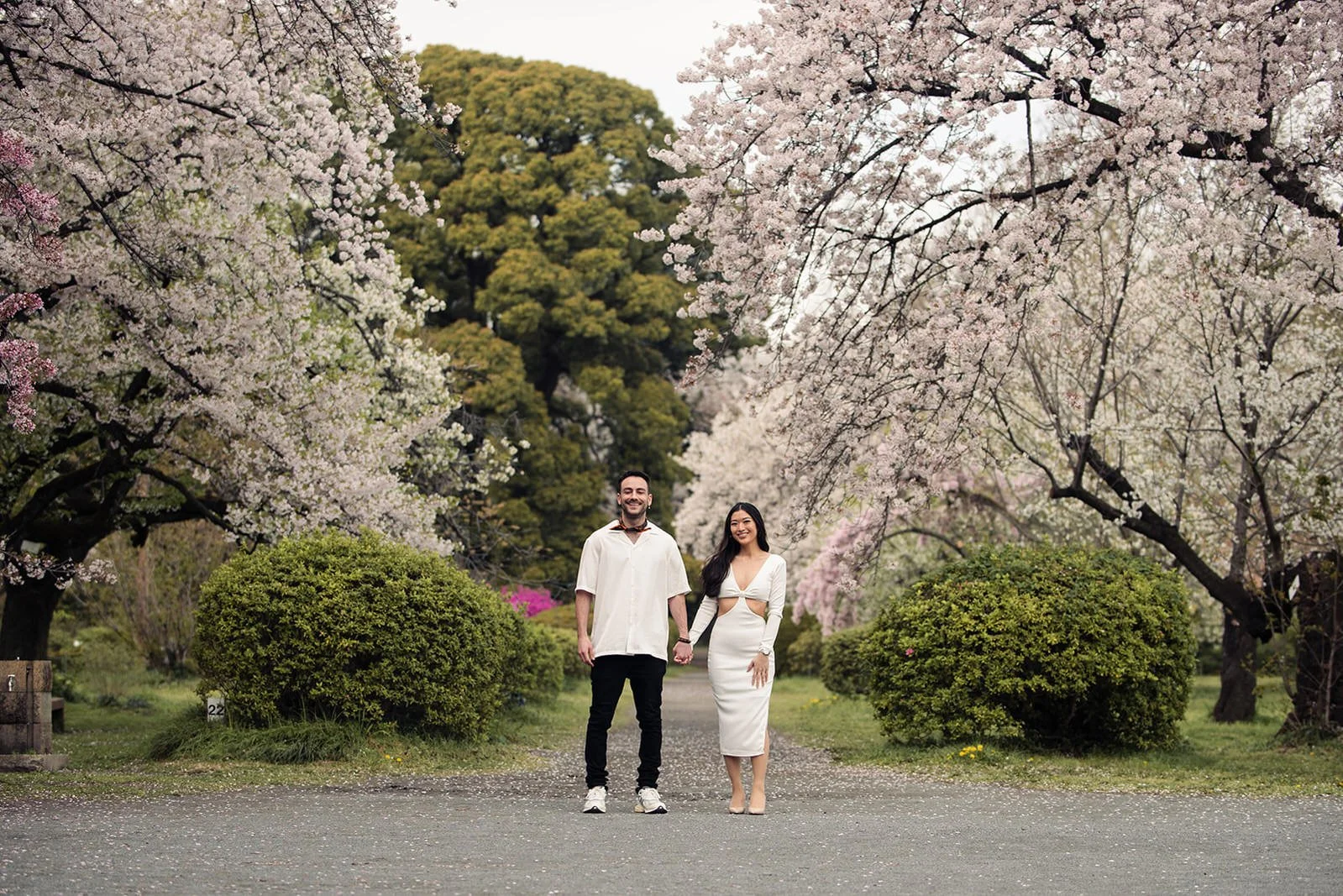
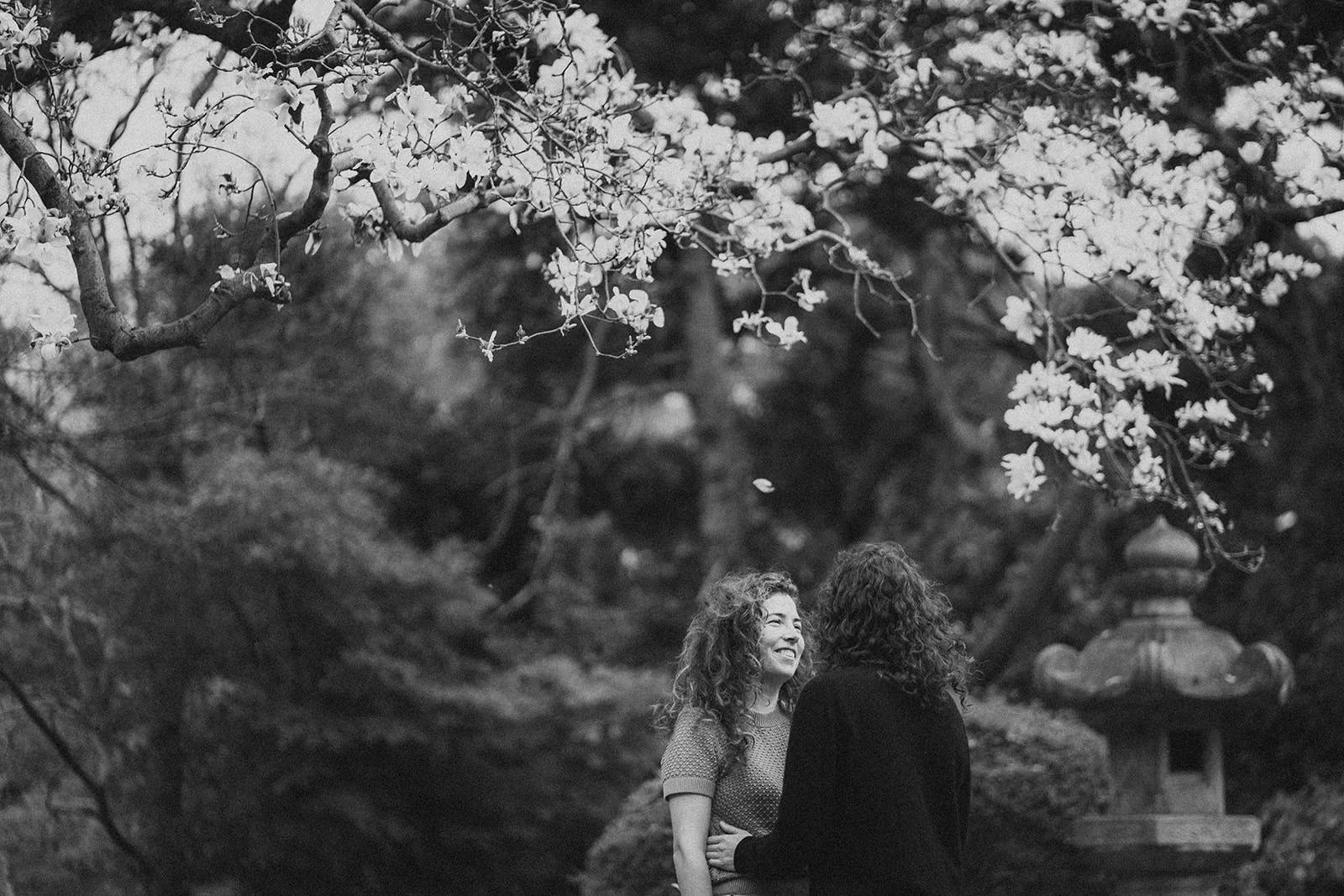
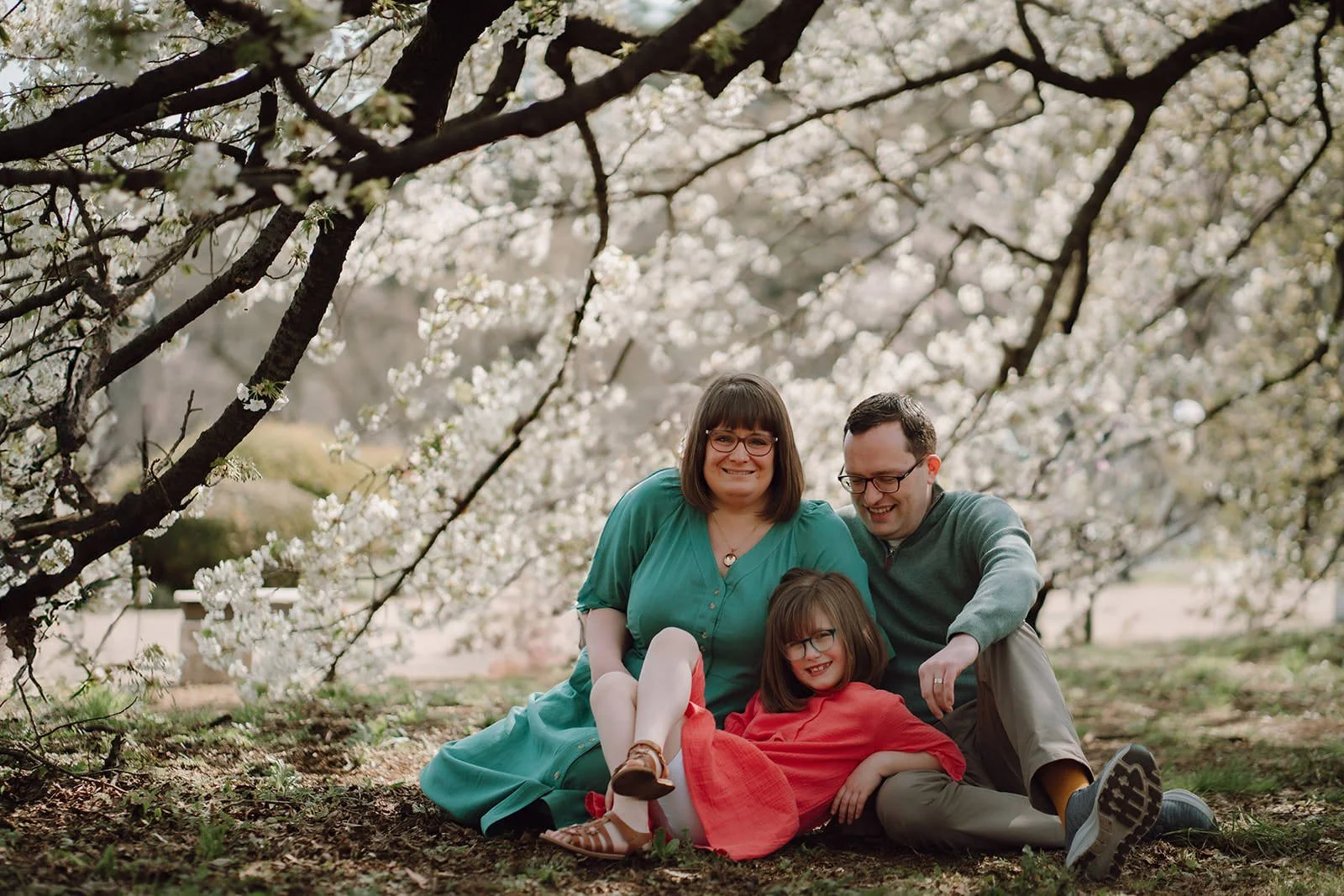
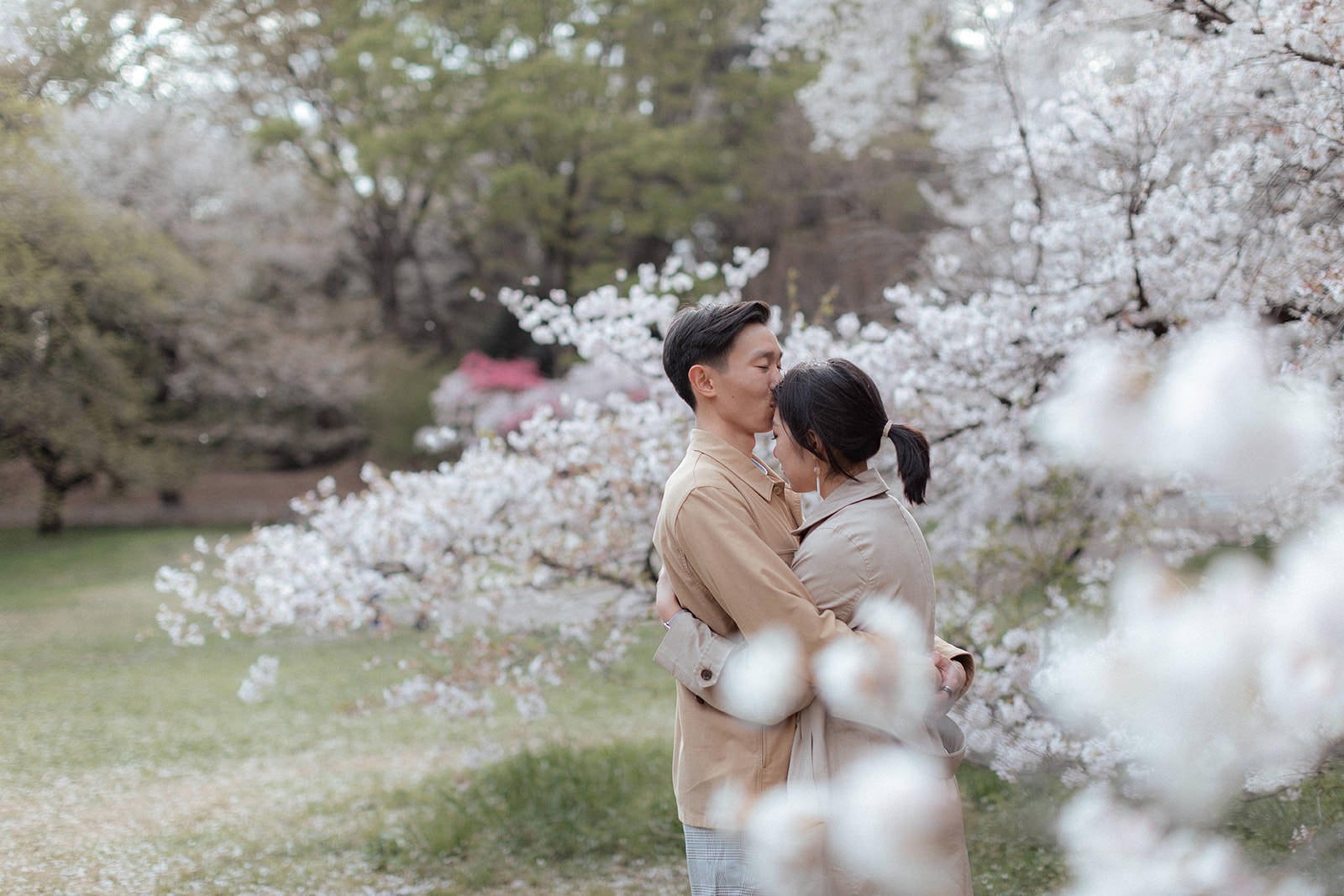
Spring in Japan means cherry blossoms, and cherry blossoms are already competing hard for visual attention. The canopy is pale pink and white, the light is soft, and the backdrop does a lot of the work. Your outfit just needs to not get in the way.
Pastels and soft neutrals are the safe choice -- they complement the season without fighting it. Deeper tones work too, especially if you want to stand out against the blossom background rather than blend with it. Heavy patterns or prints tend to fail here -- they compete with the flowers for exactly the wrong reasons.
Spring weather is variable. Tokyo in March and April can shift between genuinely warm afternoons and cooler mornings or evenings. A light jacket adds flexibility and also gives you a natural wardrobe change mid-session if you want variety in the photos. Scarves work the same way -- just keep them loosely worn rather than pulled tight, which tends to look stiff.
If you are shooting in a garden setting, practical shoes matter. Grass, stepping stones, and uneven paths are standard. Thin heels are not a comfortable choice here.
.jpg)
.jpg)
Summer
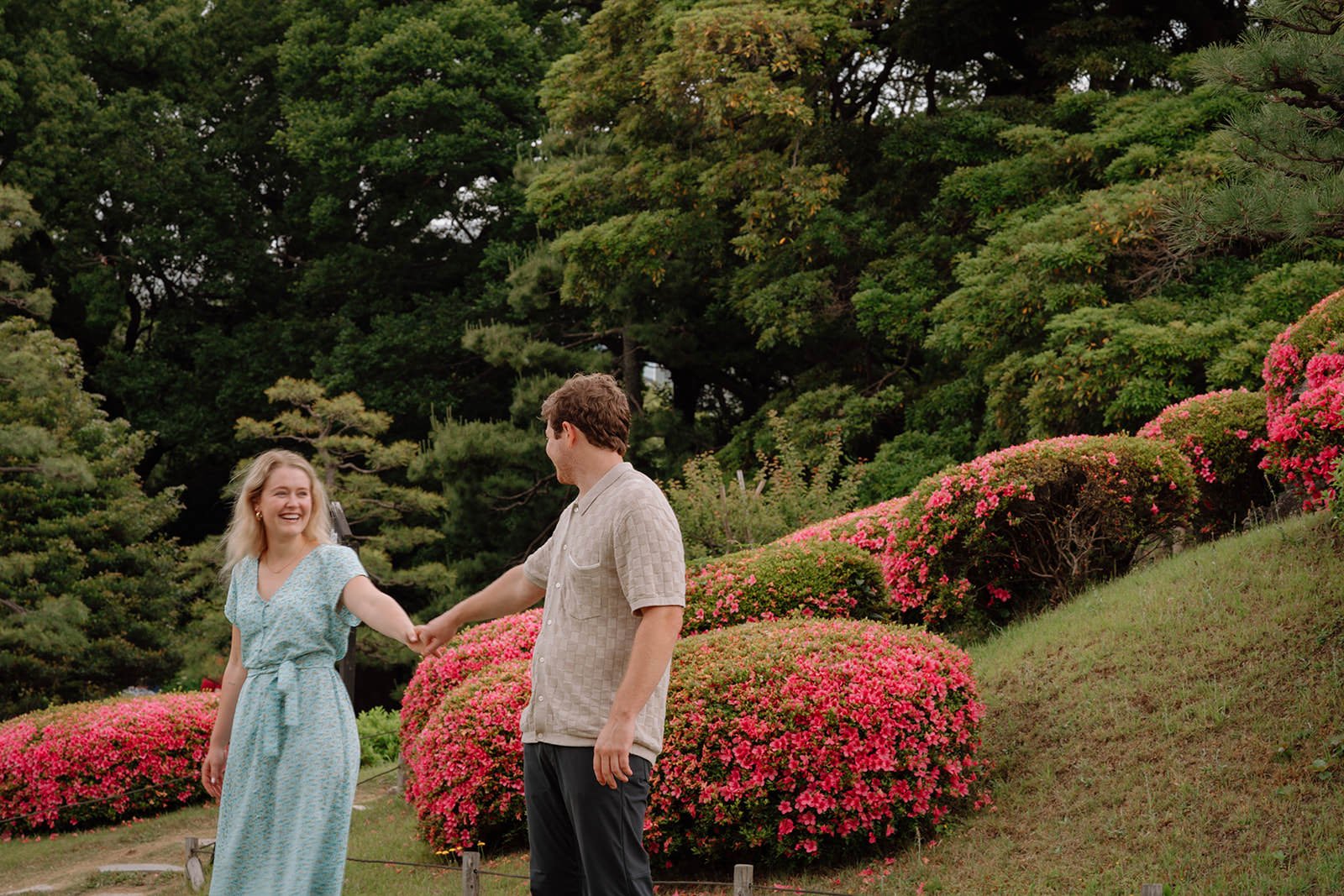
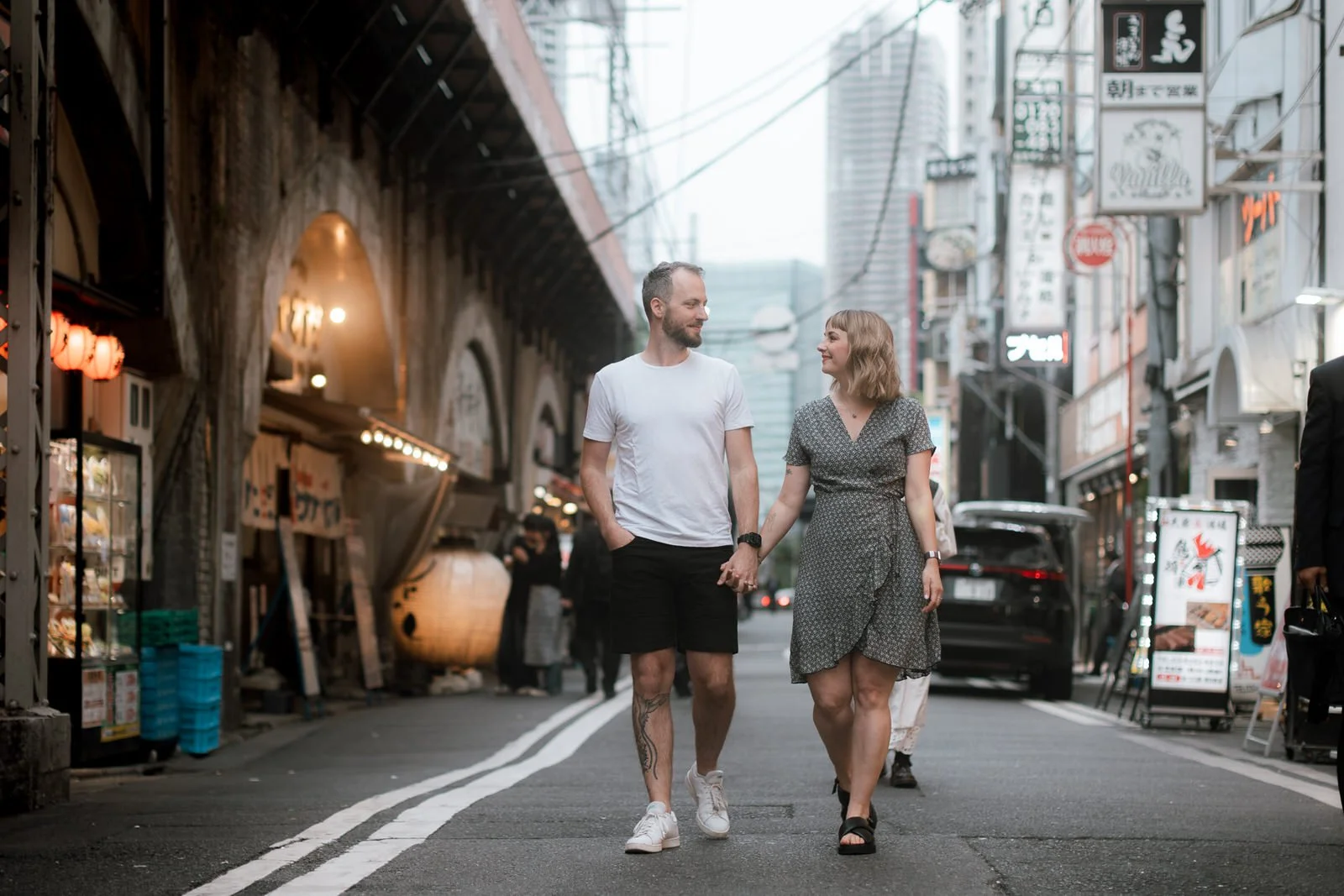
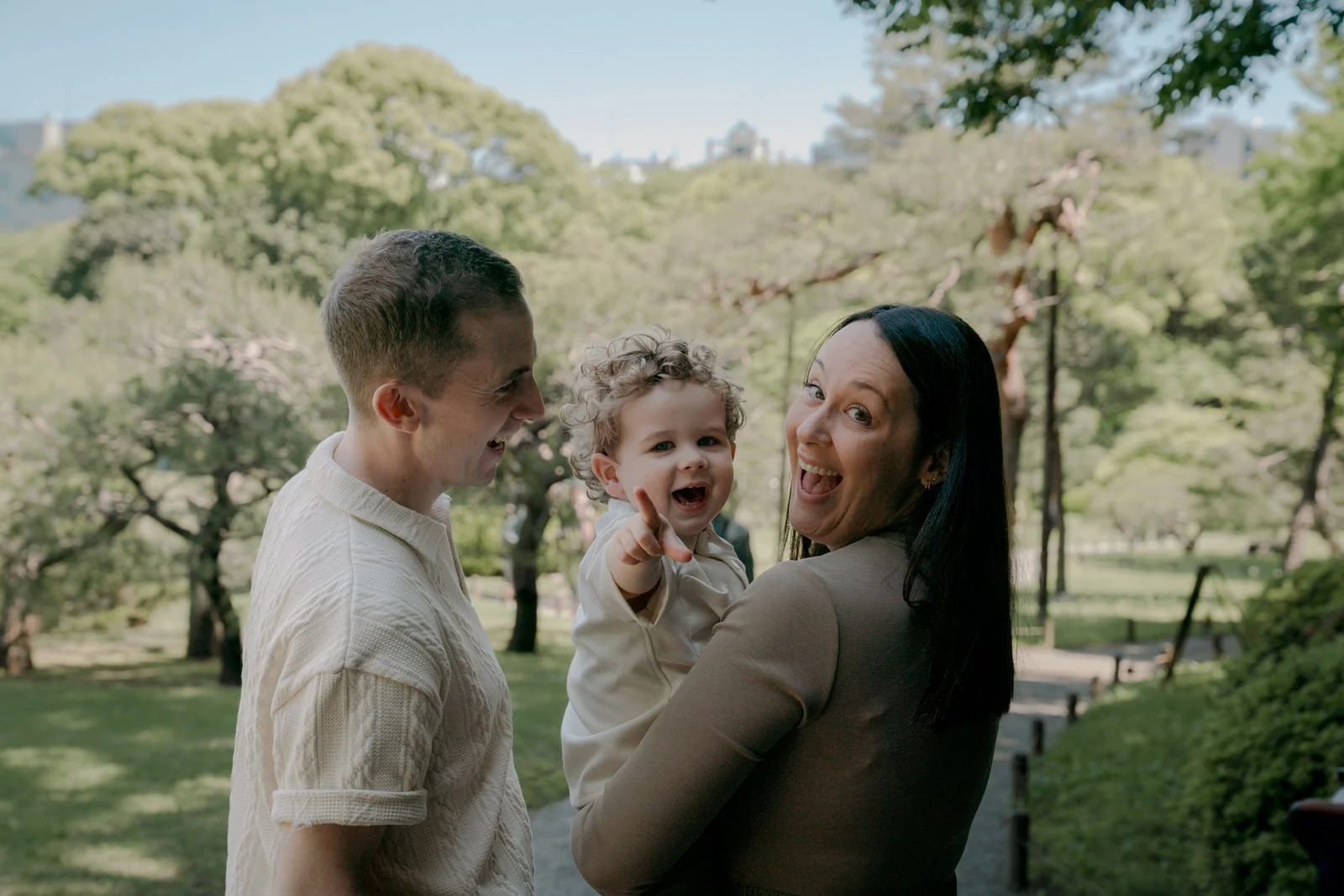
Japan's summer heat is significant -- Tokyo runs 30 to 35 degrees Celsius with high humidity from July through August. This shapes everything about what to wear. The priority is fabric first: light, loose, and breathable. An outfit that looks right but traps heat will make a difficult morning measurably harder.
Light and airy fabrics are the practical answer: linen, lightweight cotton, anything that moves air rather than holding it. White and light pastels work particularly well in summer light, and beach or coastal settings suit those tones especially well.
A Japanese hand fan (uchiwa) is worth knowing about. They are sold everywhere in convenience stores and 100-yen shops, and they can be carried and used during the shoot without looking out of place. Many clients keep them in hand between shots and they occasionally appear in photos in a way that adds to the summer feel rather than detracting from it.
Summer shoots in Tokyo typically start early -- before 9am, often before 8 -- to use the cooler morning hours and softer light before the heat peaks. Darker colors absorb more heat. Layers become counterproductive. The aim is as few fabric layers as possible while still looking deliberate.
.jpg)
Autumn
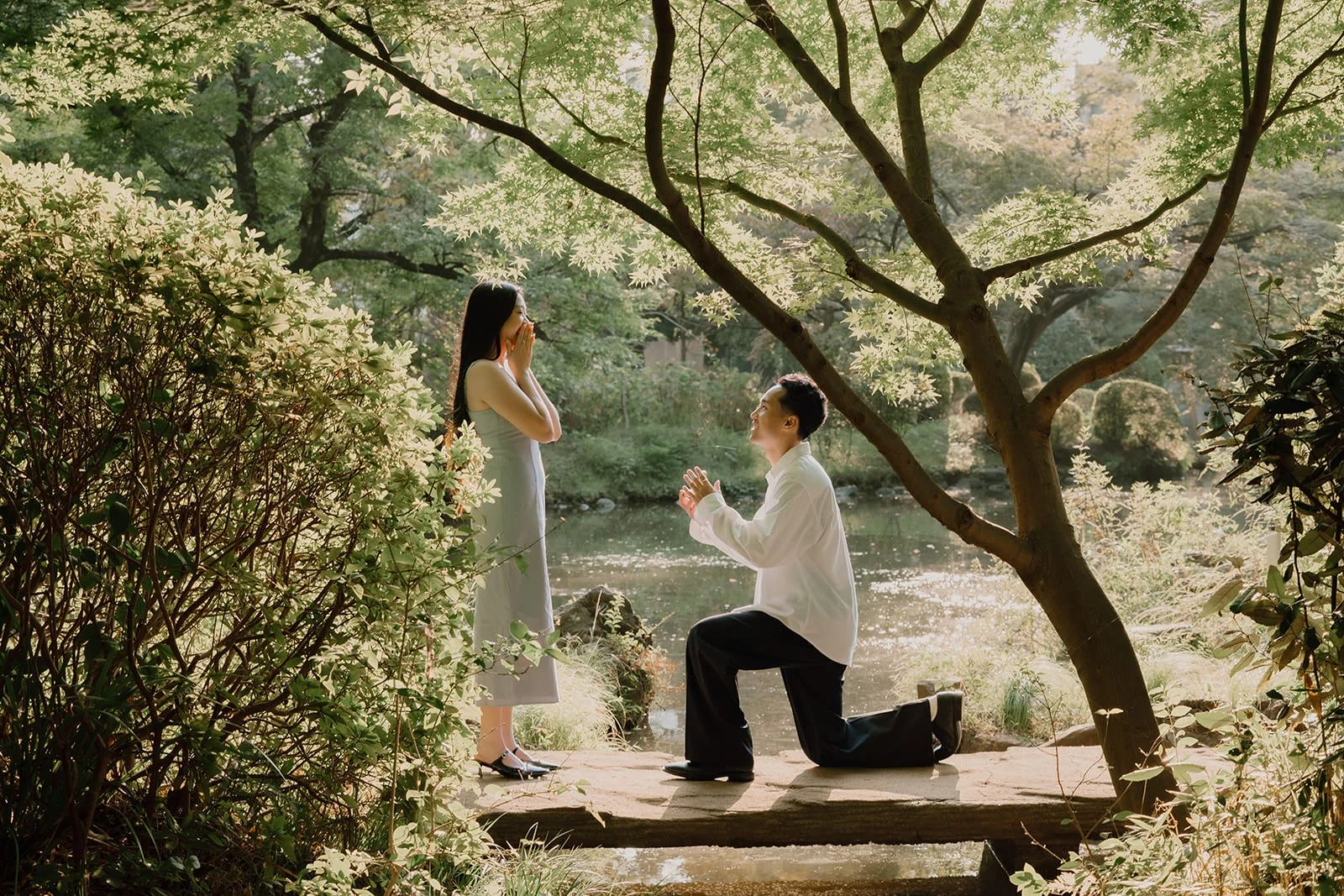
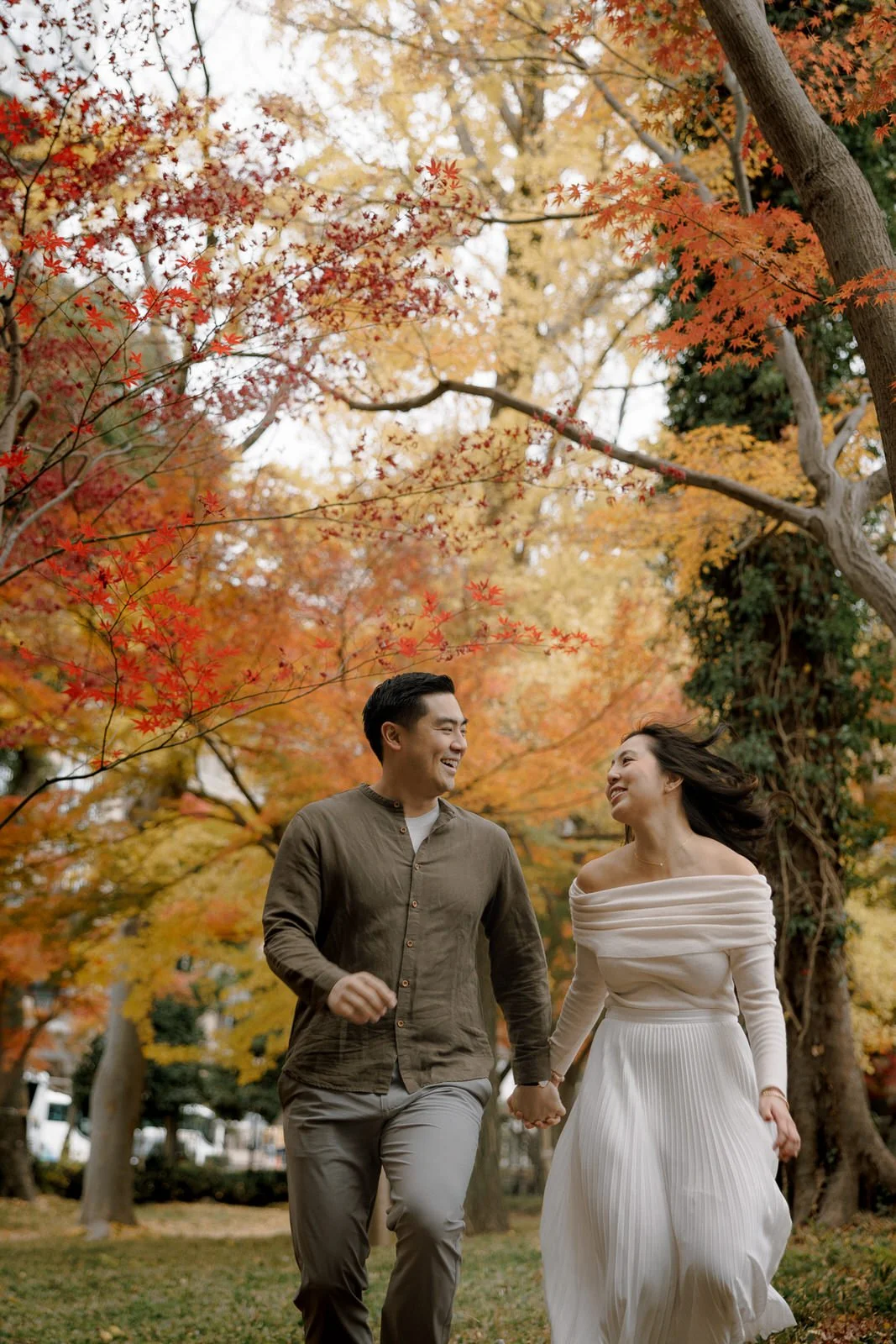
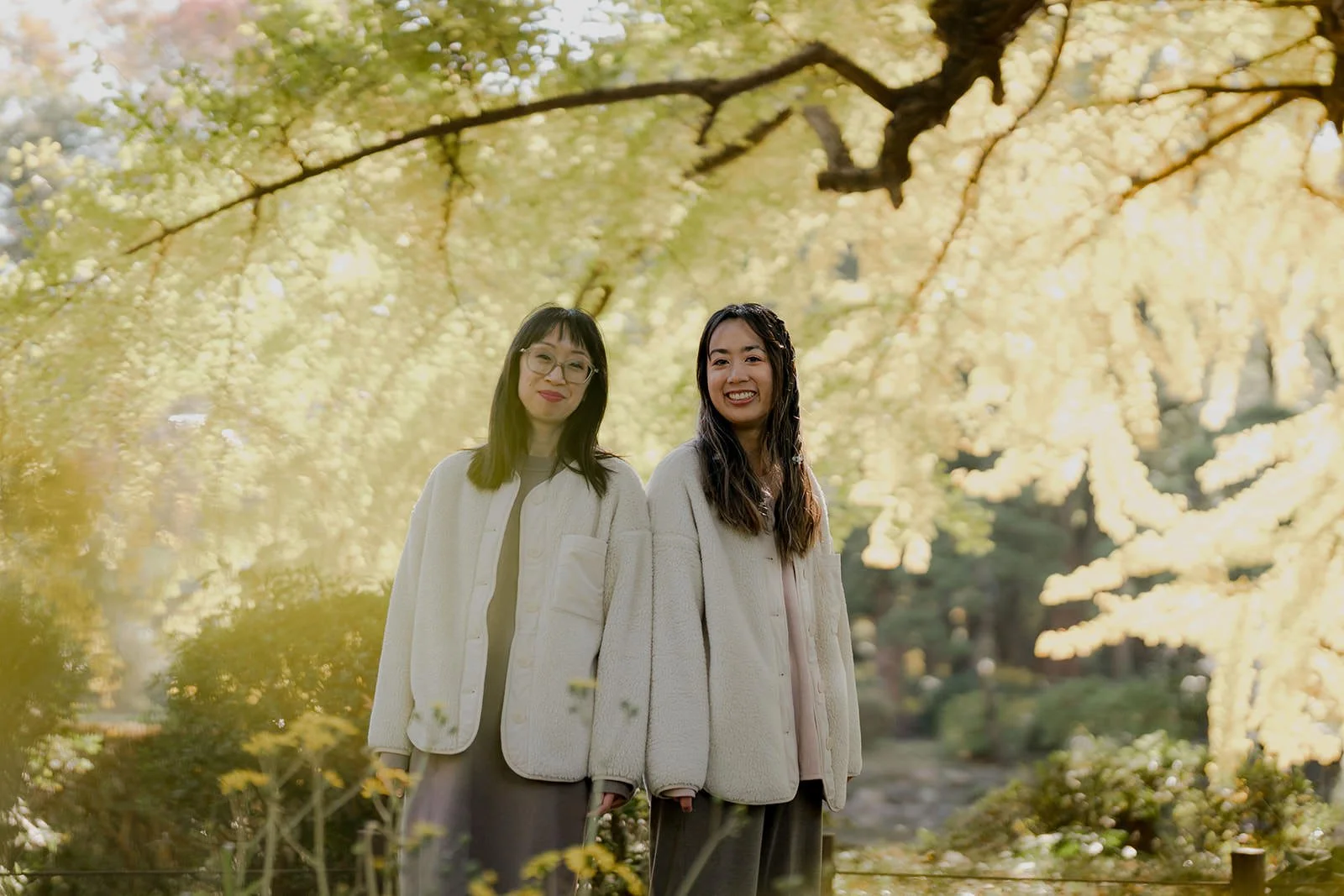
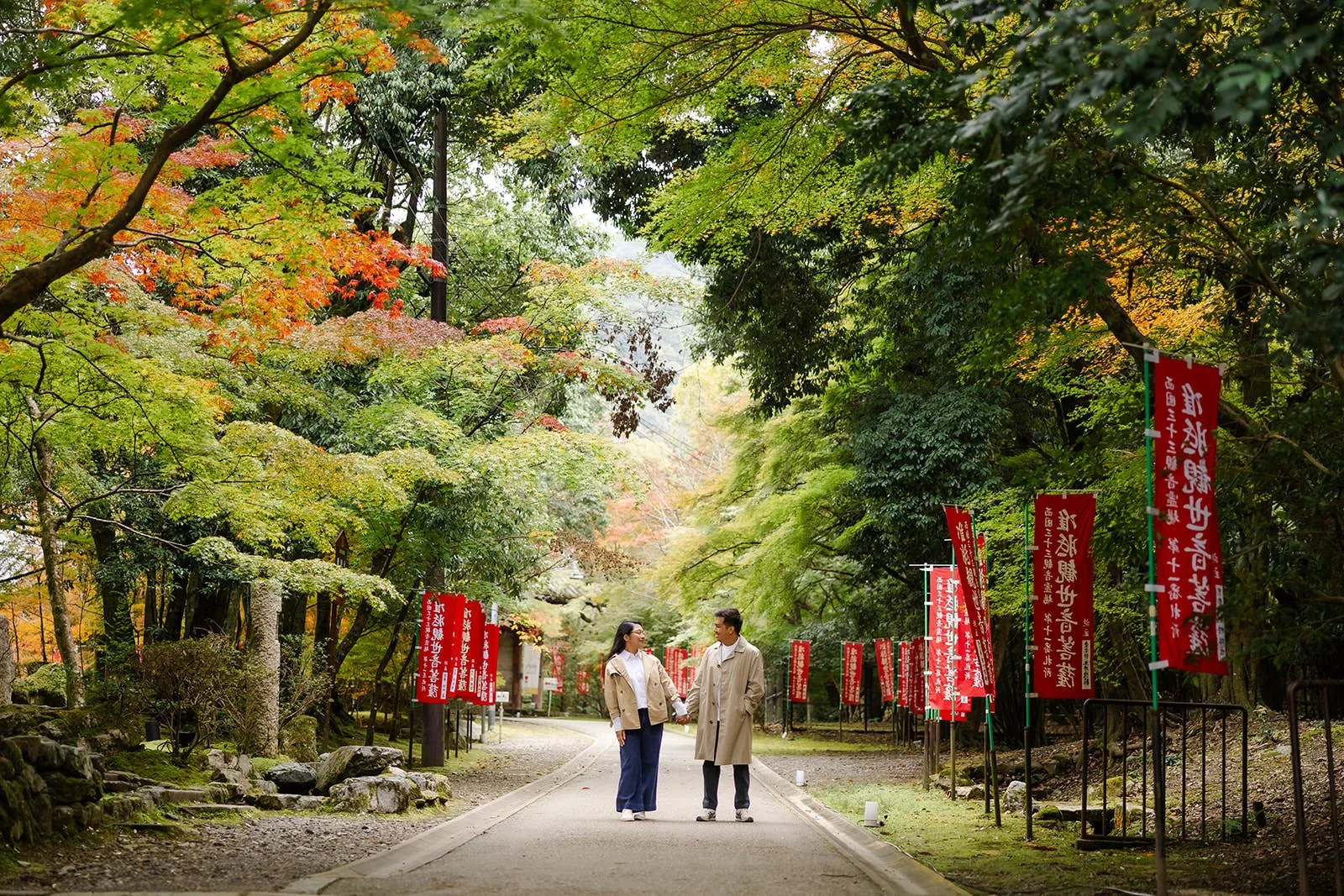
Autumn is the season where outfit choices have the most direct impact on photos. The foliage -- particularly Tokyo's ginkgo yellows and Kyoto's maples -- is already doing a lot visually. Outfits that add more pattern or color to that mix tend to get lost in the noise.
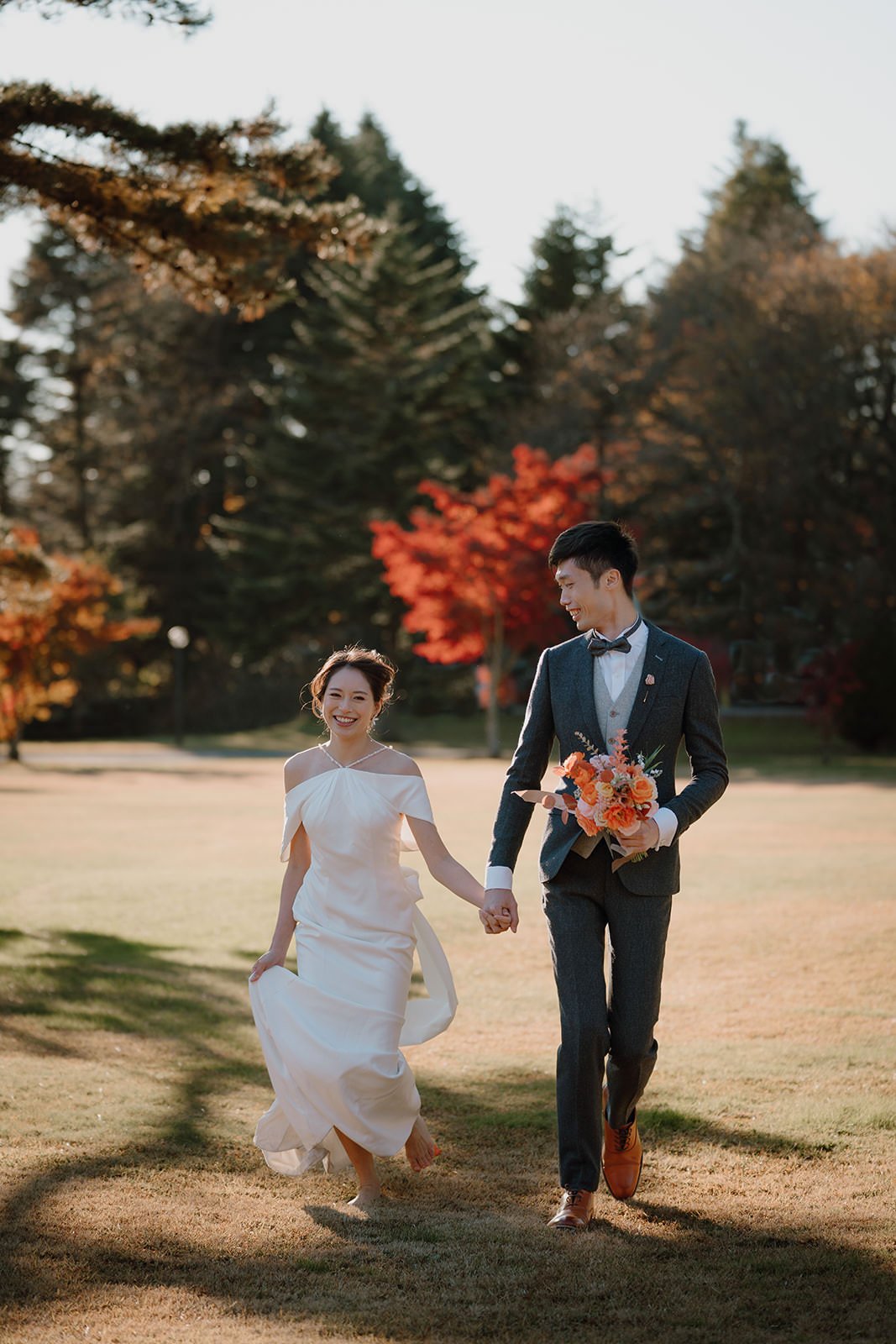
Plain outfits are the consistent recommendation for autumn. The background handles the color; the outfit just needs to sit against it clearly. Neutral tones and earthy palettes work naturally here -- they complement rather than compete. Jewel tones like deep teal, burgundy, or mustard can also work well, providing contrast without clashing.
Temperatures in autumn are genuinely comfortable for most of the season -- cooler mornings and evenings, mild afternoons. Layers are useful for adjusting across the day, and a good coat can serve both practical and visual purposes. Choosing an anchor piece -- a coat or jacket -- first and building the rest of the outfit around it is a reliable approach for the whole group.
One practical note for Tokyo specifically: the autumn color progression is slower than most visitors expect. Yellows arrive in November, but reds and oranges from maples often do not peak until December. If specific foliage colors matter to what you want in the photos, it is worth factoring in when you are visiting.
.jpg)
.jpg)
Winter
Winter in Japan is colder than it looks in photos -- temperatures in Tokyo regularly drop to around 5 degrees Celsius, and wind makes it feel sharper. The practical challenge is staying warm enough that you are not visibly cold in the photos, without adding so many layers that the outfit looks bulky.
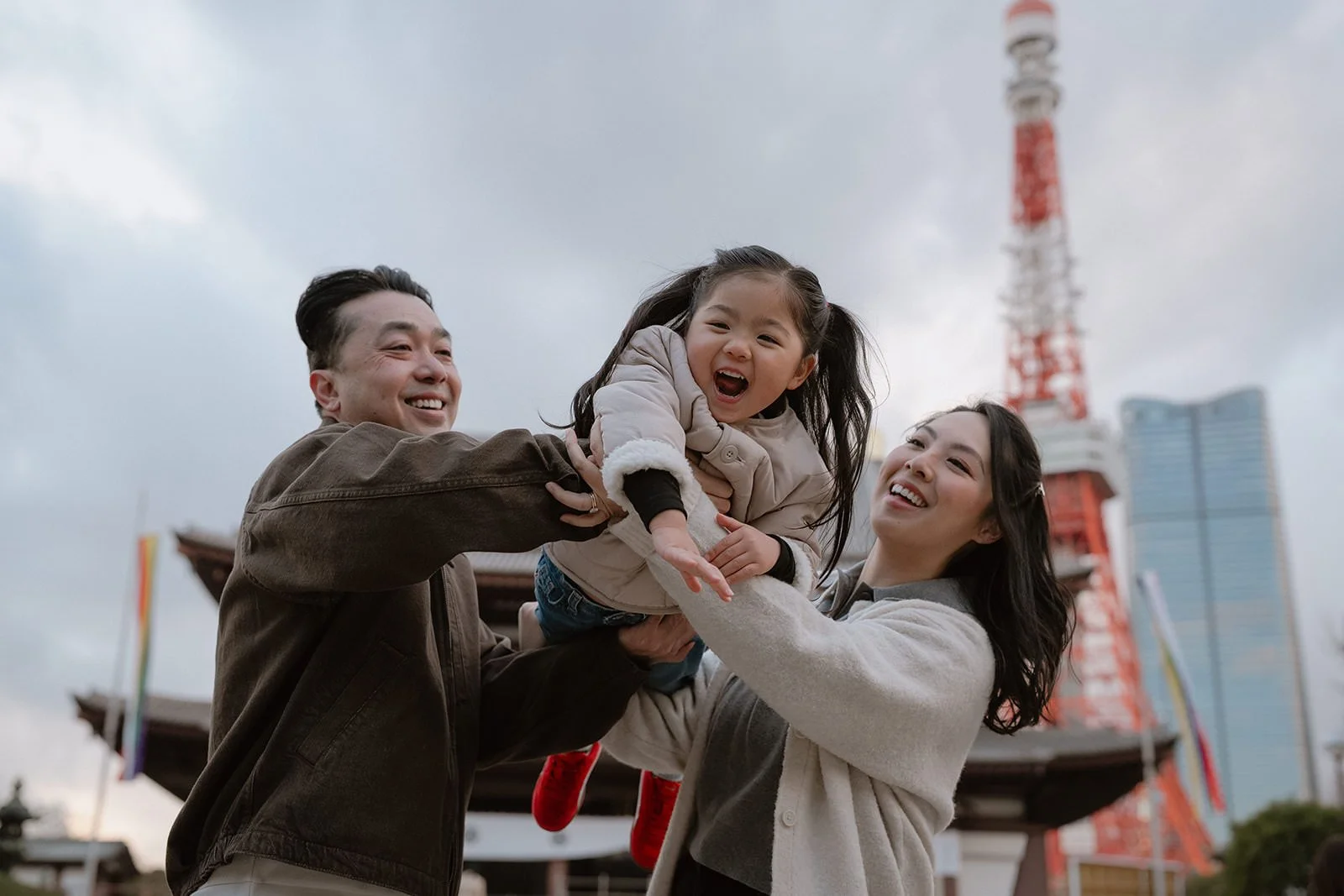
The approach that works best is layering in a specific order: thermal or heat-tech base layers under the visible outfit, then a coat or outer layer that anchors the look. The base layers add warmth without bulk; the coat defines the visual. Choosing the coat first and planning the rest of the outfit around it is the right starting point, because it is what will be most visible in most shots.
Winter accessories -- hats, scarves, gloves, boots -- add warmth and also add visual texture. A well-chosen scarf or hat worn loosely can improve the photos rather than just solving a practical problem. The trap is scarves pulled tight around the neck, which tend to look stiff. Worn loosely or draped, they work better in both directions.
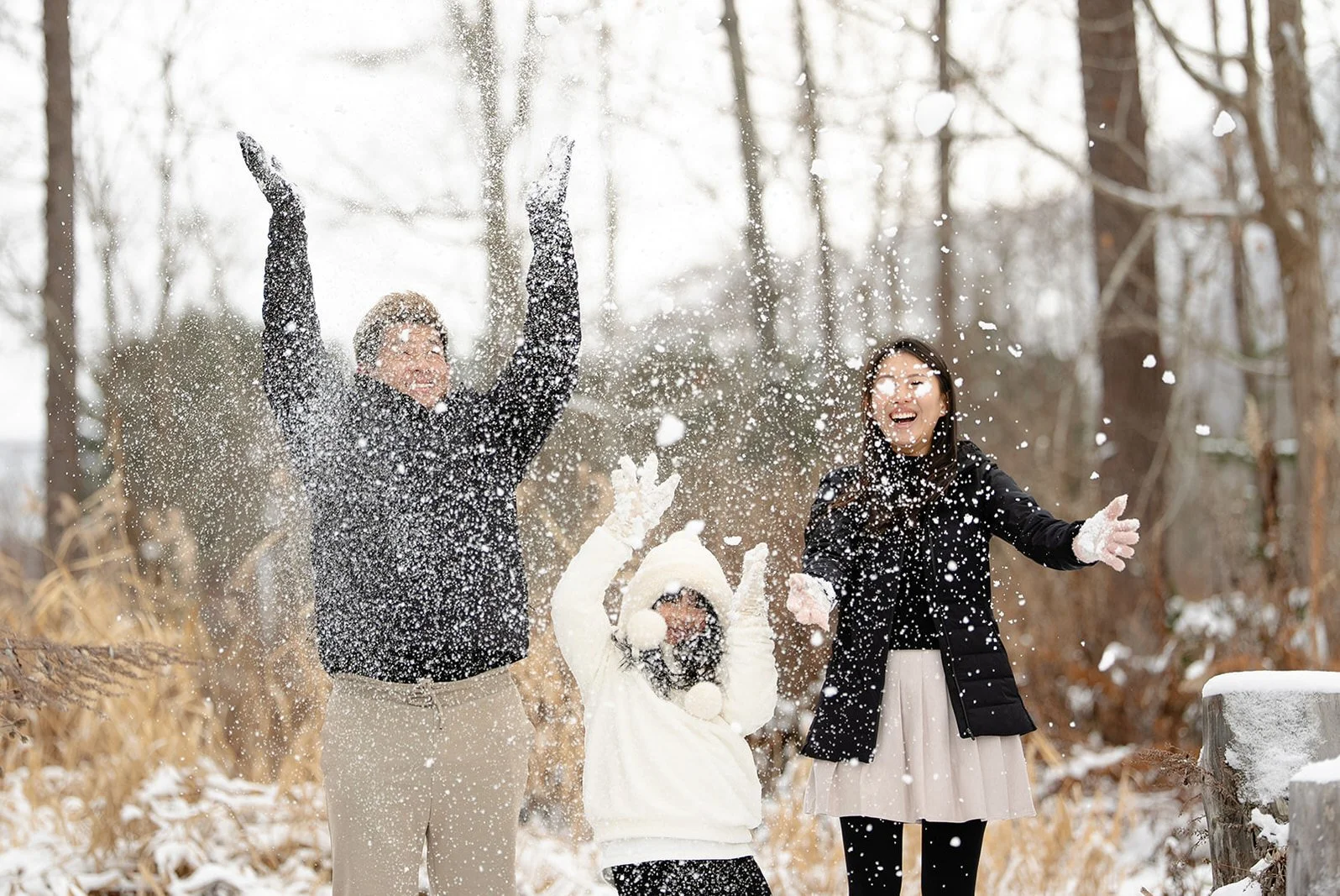
If there is any chance of shooting in snow -- rare in Tokyo but more possible in mountain destinations like Kawaguchiko -- waterproof footwear matters more than aesthetics. Feet that get cold and wet early in a session affect everything that follows. For snow settings specifically: all-white outfits tend to disappear against a white background. Colors that contrast with the snow produce clearer results.
Hand warmers (kairo) are sold at every convenience store in Japan from autumn through winter. They are worth having in pockets between shots, and the difference in comfort between sessions with and without them is not small.
.jpg)
.jpg)
.jpg)
.jpg)
.jpg)
One last thing
Whatever you decide to wear, send a photo to your photographer before the session if you have any uncertainty. It takes a few minutes and removes one variable from the day. Most photographers will flag an issue in advance if they see one -- a clash with the planned location, a pattern that might be problematic, shoes that will not work on the terrain. That conversation is easier before the session than during it.
The outfit is one decision. Once it is made well, it stops being something to think about and the session can focus on everything else.
If you are still planning which session type or destination fits your trip, the How It Works page covers what to expect from a shoot with PMT and how the booking process works.