
Best Places to Propose in Japan: Tokyo, Kyoto, Mount Fuji and Beyond
Japan is one of the most searched proposal destinations in the world, and for good reason. The country gives you traditional gardens, modern skylines, mountain views, and quiet temple grounds within the same trip. PMT has photographed proposals across Tokyo, Kyoto, Kawaguchiko, Osaka, and Nara, working with couples at every stage of planning, from those who’ve picked an exact spot to those who only know they want to propose somewhere in Japan. This guide breaks down where that’s actually worked, destination by destination, with the honest version of what each location offers and what it asks of you in return.
In this guide:
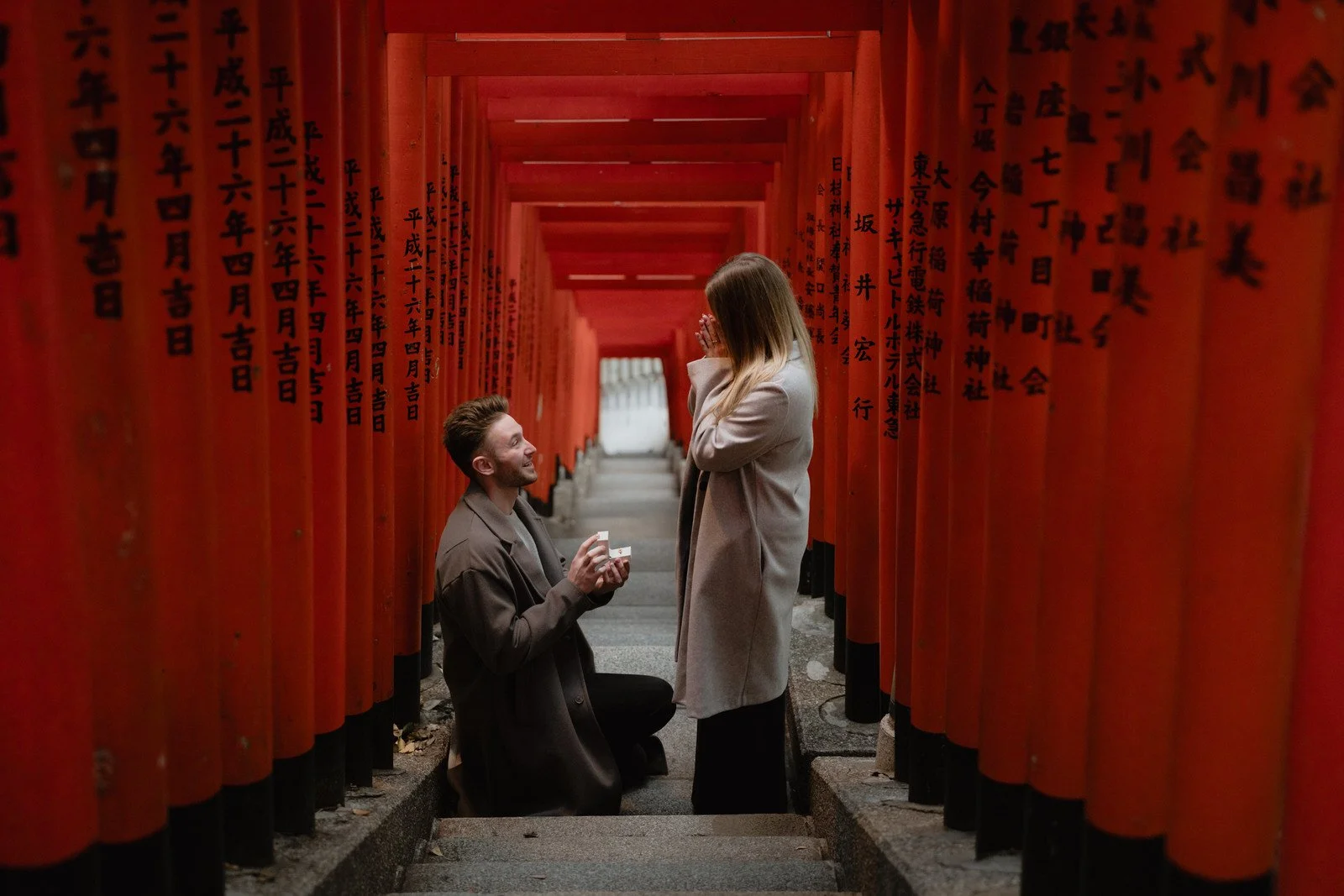
Tokyo
Tokyo’s strength for a proposal is range. You can have a quiet garden moment ten minutes from a train station that drops you into the middle of the city’s energy, and both are genuinely available in the same afternoon.
Shinjuku Gyoen
Shinjuku Gyoen is the most versatile park in Tokyo for a shoot: large enough to offer real variety, compact enough to cover in a single session. What most visitors don’t know is that the park has an unusually long cherry blossom window. Early winter blossoms, the standard peak, and late-blooming varieties extend flowering across more than two months, not the two-week window most people plan around. During peak cherry blossom the park does get crowded, but specific crowd behavior by entrance gate makes certain pockets workable even then. That’s the kind of detail that only comes from doing this repeatedly rather than visiting once.
Hamarikyu Gardens
Hamarikyu’s pathways are narrow throughout, which sounds like a limitation but is actually what makes it work for proposals. The narrowness creates intimate, contained framing that a wide-open park doesn’t. The garden’s bridges and landmarks give a proposal a clear visual anchor rather than an undefined “somewhere in the park” moment. One thing worth knowing before you book: Hamarikyu sits surrounded by office buildings and commercial high-rises on every side, so the traditional garden is always shot against a visible modern skyline. Some couples love that contrast. If you’re picturing a fully secluded moment away from the city, this isn’t quite that, and it’s better to know going in than to be surprised on the day.
Kyoto
Kyoto concentrates traditional Japan more than anywhere else in the country: wooden townhouses, stone paths, temple gates, bamboo groves around almost every corner. It’s the clearer choice over Tokyo for couples who want the proposal photos to read as unmistakably Japan.
Arashiyama Bamboo Grove
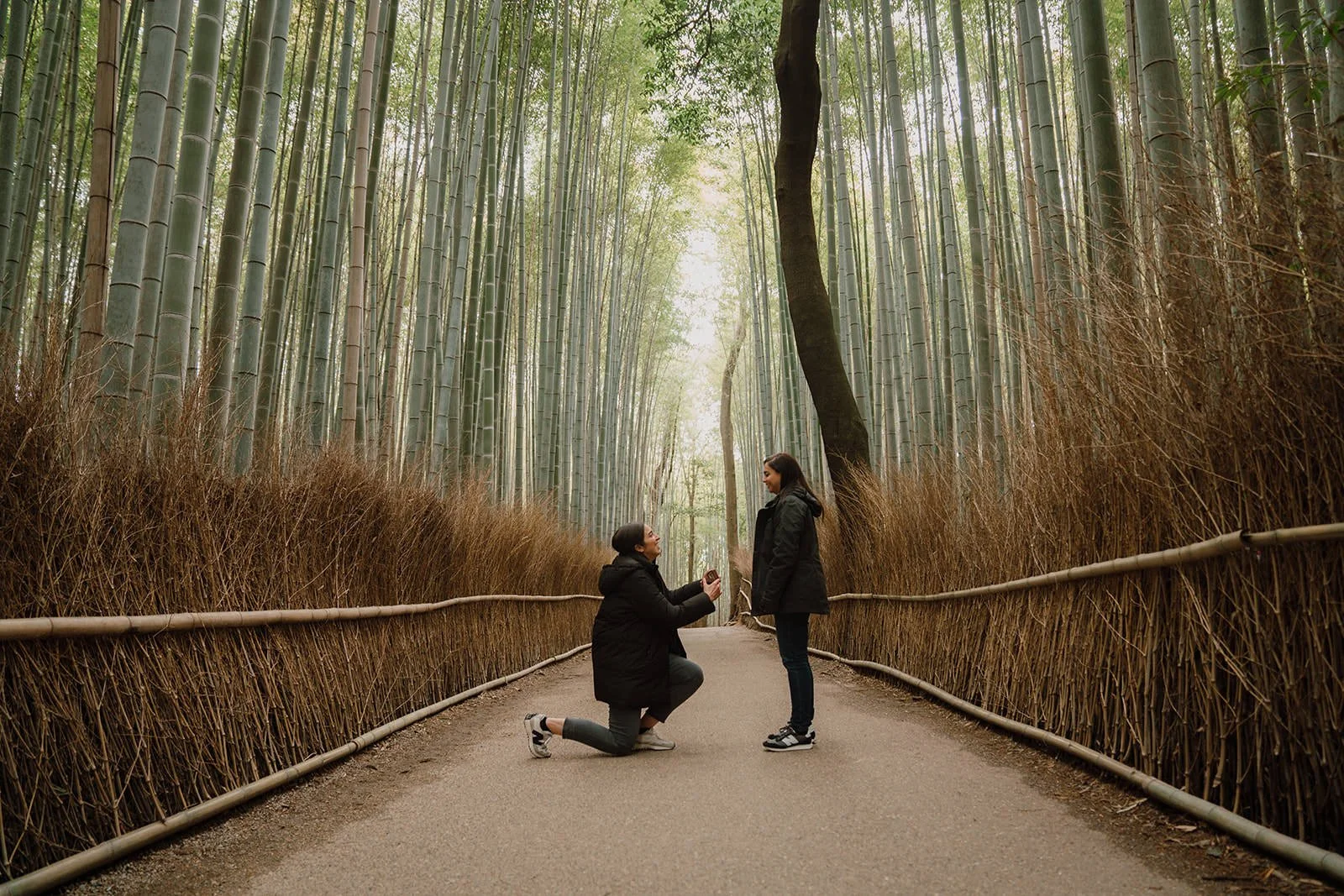
The bamboo grove is one of the most photographed places in Japan and also one of the most crowded once the morning gets going. Most visitors assume arriving at 9am counts as early. In peak season, it’s often already too late for a clean, quiet shot. The window before 8am is close to essential, and the exact timing shifts with the season. Summer light is already hardening by 7am, while winter gives a much longer stretch of soft morning light. PMT works angles beyond the handful that get photographed millions of times, which helps even when the grove is busier than ideal.
Daigo-ji
Daigo-ji sits slightly south of central Kyoto, just outside most standard tourist itineraries without being remote. That relative inconvenience is exactly what keeps it quiet on most days, in most seasons. The grounds center on a red bridge over a pond, strongest in autumn when foliage color surrounds it, with cherry blossoms in spring and lush green in summer giving the same spot three distinct looks across the year. Unlike Arashiyama, Daigo-ji doesn’t demand strict early-morning timing. Opening at 9am is the quietest window, but the bridge stays workable well beyond that, even if peak autumn foliage makes a fully private moment harder to guarantee.
Maruyama Park and Surrounding Streets
Maruyama Park works year-round and pairs naturally with the quieter streets nearby, particularly Nene no Michi. The atmosphere matches Kyoto’s more famous lanes, with traditional architecture and cobblestone streets, but without the strict before-8am-or-after-dark timing that governs Ninenzaka and Sannenzaka. The park is at its most striking during autumn foliage and cherry blossom season. Pairing it with the surrounding streets gives a single session two genuinely different visual settings without meaningful travel time between them, which is useful when a couple wants variety but not a packed itinerary.
Planning a proposal in Kyoto? See our Kyoto proposal photography page →
Mount Fuji and Kawaguchiko
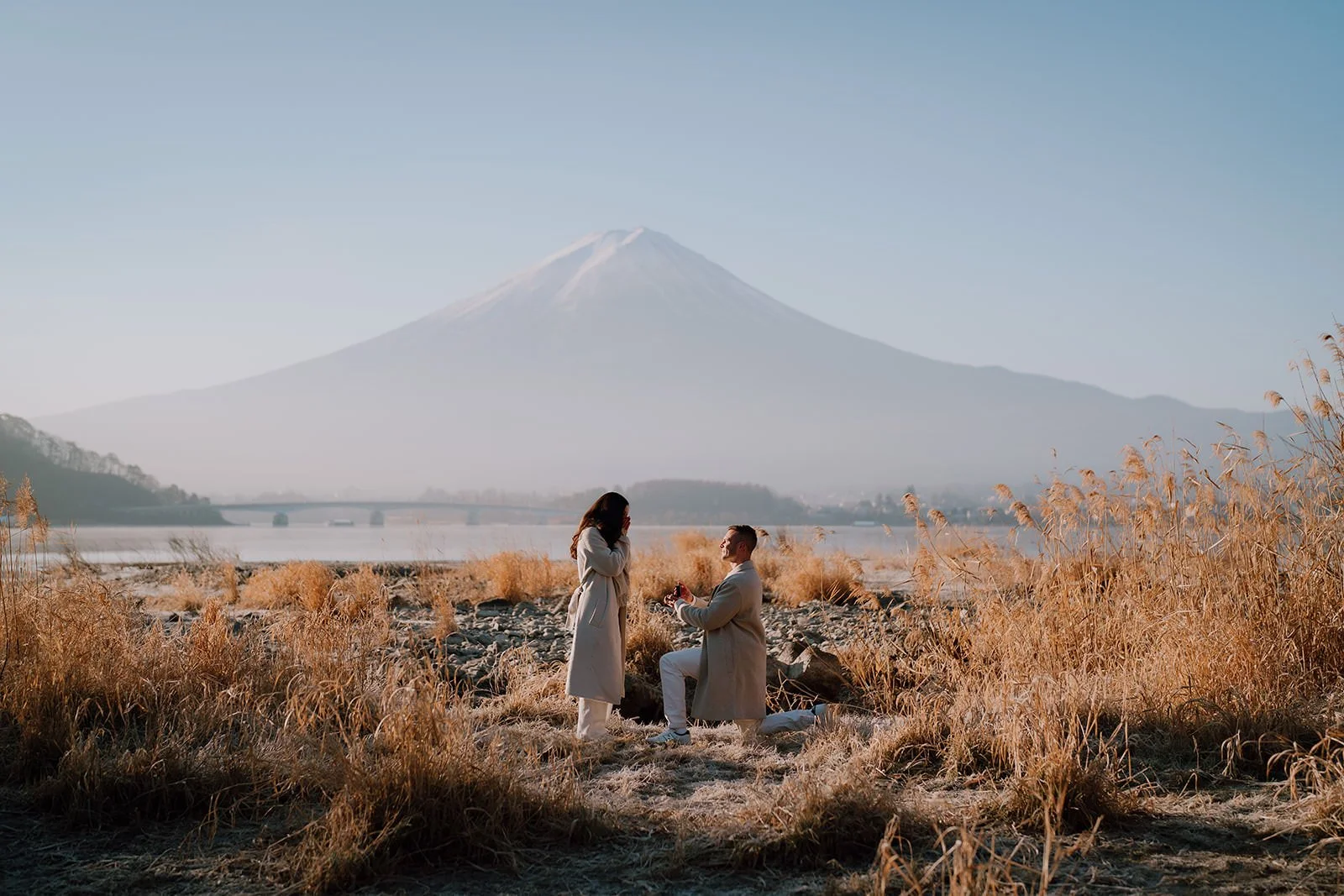
A Kawaguchiko proposal means proposing with Mount Fuji in the frame, or at least attempting to. Fuji visibility is never guaranteed. The basin geography around the lake means weather can turn within well under an hour in either direction, and clients who plan rigidly around a clear Fuji shot often end up disappointed in a way that flexible clients don’t.
PMT’s strongest North Shore spots are locations we deliberately don’t publish. Naming them tends to draw enough traffic to undo what makes them work. The North Shore generally is the right area to aim for, since it offers the best combined view of the lake and Fuji together, but the specific spot matters less than your willingness to adjust timing around the mountain’s conditions that day.
Chureito Pagoda
Chureito Pagoda delivers the famous pagoda-and-Fuji composition that shows up in nearly every Japan travel feature, and the crowds reflect that. The iconic version requires an early morning arrival well before the crowds build through the rest of the day. Worth treating as a crowd-management exercise first and a guaranteed photo second.
Oishi Park
Oishi Park is well known and busy across most of the year, with crowds peaking around the kochia flowering display in mid-to-late October. It’s a solid lakeside option, particularly for couples building a broader Kawaguchiko visit around the proposal rather than a single dedicated shoot, but it’s not where PMT would direct a couple looking for a quiet, undisturbed moment.
The honest version of a Kawaguchiko proposal: be ready for Fuji to be hidden. The two paths that actually work are building in flexibility to shift timing when the photographer reads good conditions, or accepting the conditions you get and using the lake as the backdrop, which still produces a strong result. The failure mode isn’t a cloudy Fuji. It’s stalling and waiting for the mountain to appear while your partner’s patience and the moment quietly drain away.
Planning a Mount Fuji proposal? See our Kawaguchiko proposal photography page →
Osaka
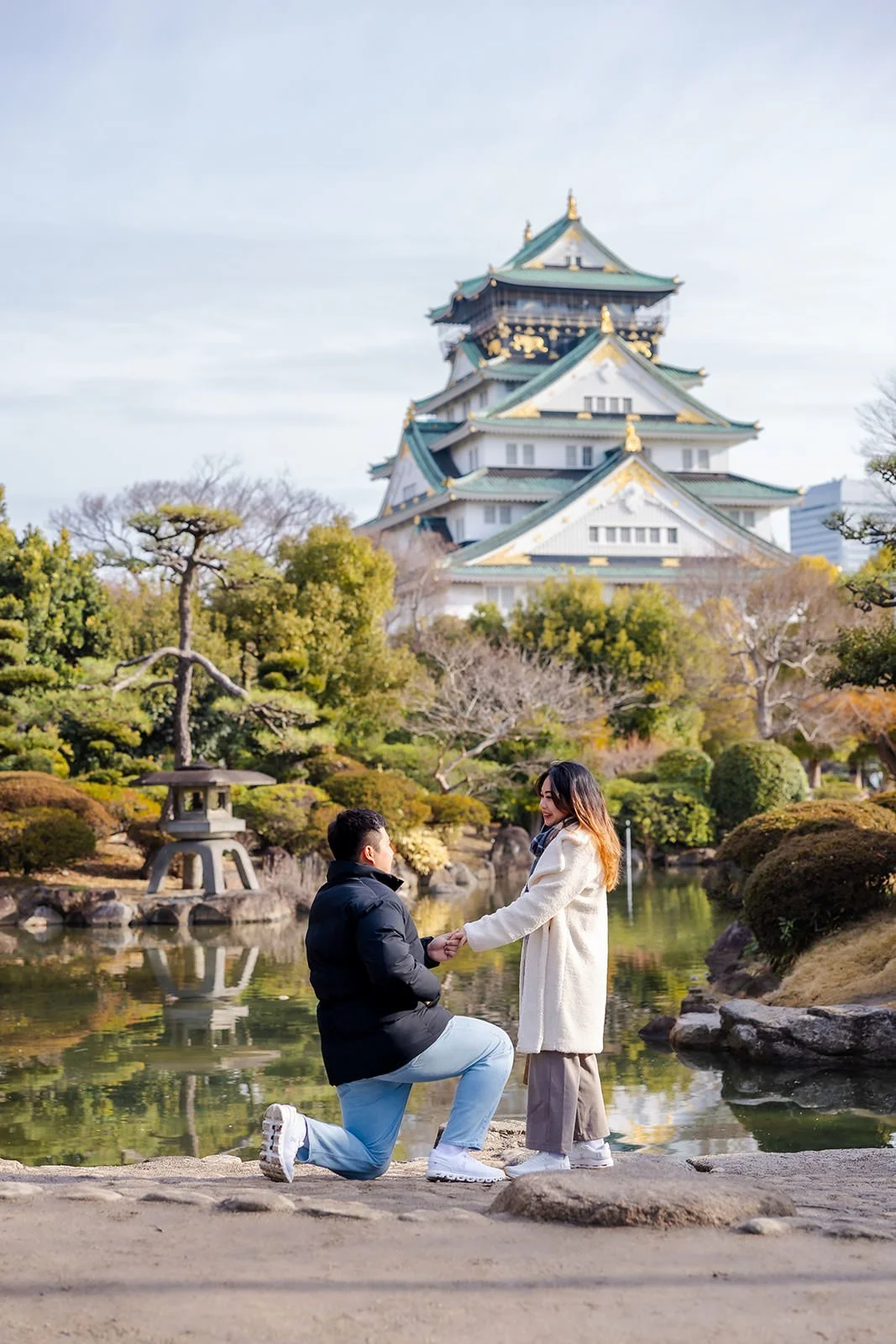
Osaka’s pitch is a castle-and-city mix: urban energy and a traditional landmark in the same destination, without leaning fully into either the way Tokyo or Kyoto does.
Osaka Castle Park
Osaka Castle Park is the one Osaka location PMT has real shoot experience with, across general session types. Being direct about this: Osaka isn’t a destination we’ve built a proposal-specific track record in yet, the way we have in Tokyo or Kyoto. What we can say with confidence is that the castle and surrounding park give a session a clear, recognizable Japanese landmark without the full-day commitment that a Kawaguchiko trip requires. Osaka is well connected enough by rail that travel time isn’t the same factor it is for a Fuji shoot.
If a proposal at Osaka Castle Park is something you’re seriously considering, it’s worth a direct conversation with us before booking, given the limited data we’re working from compared to our other destinations.
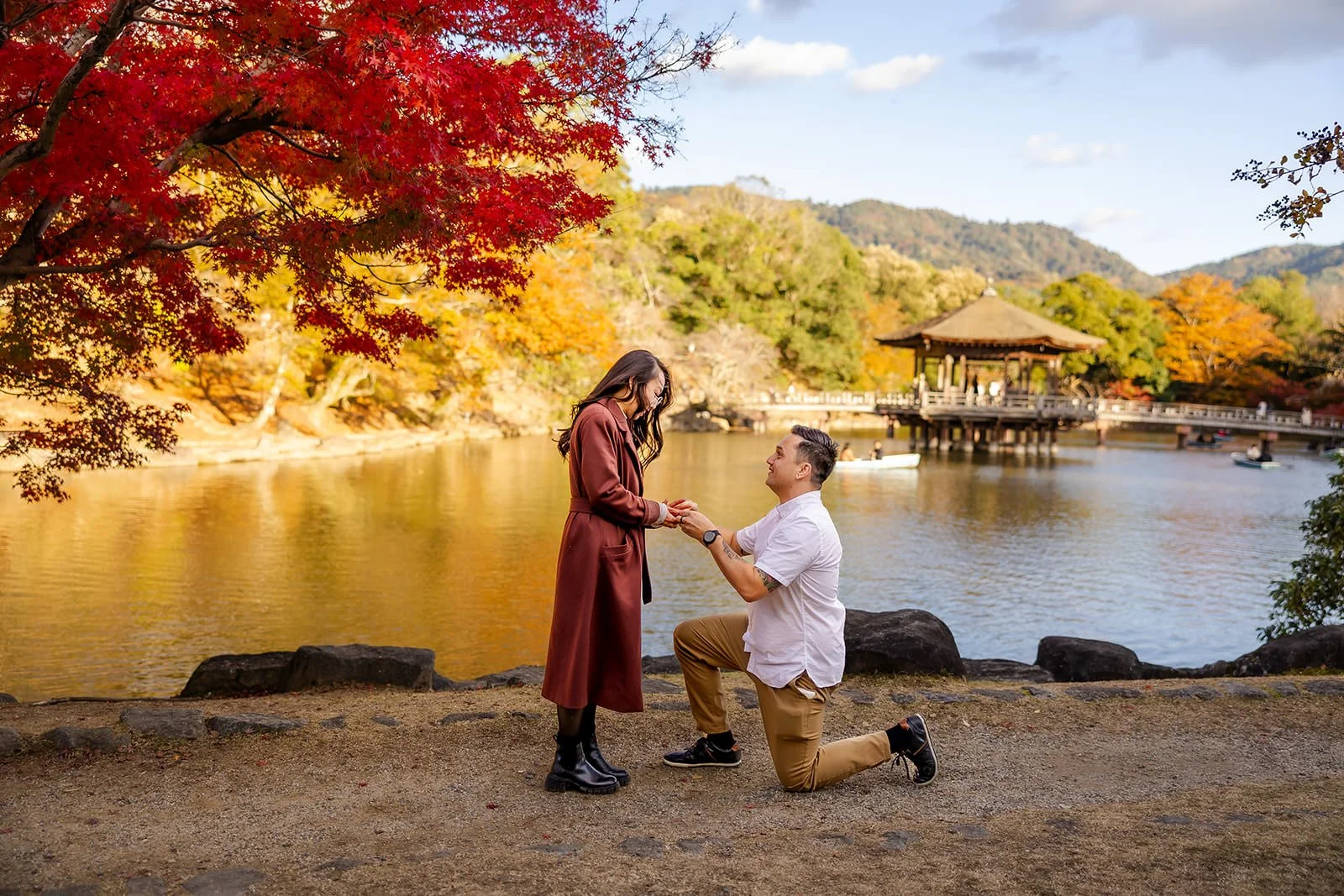
Nara
Nara is a genuinely occasional destination for PMT. We don’t shoot here often, and we want to be upfront about that rather than overstate our experience.
Nara Park
Nara Park is the one location we have real field experience with, defined by the free-roaming deer throughout the grounds. The deer and the crowds compound each other in a way that’s easy to underestimate: wherever tourists are feeding the deer, both deer activity and crowd density spike at the same spot at the same time. The park itself is large enough that this isn’t a problem across most of it, since the compounding effect is localized to the feeding areas specifically. Sunset is the strongest window for a shoot here, combining good light with deer that are still active rather than dispersed. That’s the opposite of what most visitors assume about a quiet evening park.
When to Propose in Japan
Cherry blossom season (late March to early April) is the most requested window, and for good reason. It’s also the most crowded. Locations like Maruyama Park and Shinjuku Gyoen reward early timing and some flexibility on exact dates, since peak bloom shifts year to year.
Summer (July to August) is the honest tradeoff season. Heat and humidity in Tokyo and especially Kyoto make midday shoots difficult, and Kawaguchiko loses its snowcapped Fuji entirely during these months. Early morning sessions still work well, and summer’s thinner crowds are a real advantage if you’re flexible on timing.
Autumn (November) is arguably the strongest all-round window. Kyoto delivers all its foliage colors simultaneously in November, while Tokyo’s color arrives more gradually through December. Crowds are significant but more spread out than during cherry blossom season.
Winter (December to February) is underrated. Clear skies and thin crowds across Tokyo and Kyoto, plus better odds for a clear Fuji at Kawaguchiko, make this a strong choice for couples who don’t need blossoms or autumn color in the frame.
How to Plan a Japan Proposal
Book earlier than feels necessary, particularly for Kawaguchiko, where photographers travel in from Tokyo and early booking is what makes a flexible backup date possible. Keep the proposal a surprise by routing the unaware partner to the spot through a planned cover story, coordinated with your photographer in advance. A dinner reservation nearby works well, as does a simple “let’s just walk through here” on the way to something else. On the day, the photographer’s job is to read the moment as it unfolds rather than direct it. The more precisely the location, timing, and cover story are planned beforehand, the more they can focus on that.
For the full breakdown of planning a Japan proposal from start to finish, see our complete guide to planning a proposal in Japan.
Frequently Asked Questions
What is the most popular place to propose in Japan?
Cherry blossom locations in Kyoto and Tokyo see the highest demand, particularly Kyoto’s traditional gardens and temple grounds and Tokyo’s Shinjuku Gyoen. Mount Fuji from Kawaguchiko is the most requested single landmark, though visibility is never guaranteed.
Which city is best for a proposal, Tokyo or Kyoto?
It depends on what you want in the photos. Kyoto concentrates traditional Japanese scenery more densely than anywhere else in the country, making it the clearer choice if that’s the priority. Tokyo offers more range, from quiet gardens to modern skylines, and works better if you want variety rather than one consistent traditional look.
Is a Mount Fuji proposal too complicated to plan?
It’s more weather-dependent than other Japan proposal locations, not more complicated logistically. Fuji visibility can change within under an hour due to the surrounding basin geography, so the plan needs built-in flexibility rather than a fixed, single-shot itinerary. Couples who build in that flexibility tend to have a much better experience than those who don’t.
When is the best time of year to propose in Japan?
Autumn (November) offers the strongest combination of good weather, manageable crowds, and reliable scenery across most destinations. Cherry blossom season is more in-demand but significantly more crowded. Winter is underrated for clear skies and thin crowds, especially at Kawaguchiko for Fuji visibility odds.
How much does a proposal photographer in Japan cost?
Pricing varies by destination, mainly driven by travel requirements. A Kawaguchiko shoot costs more than a Tokyo shoot because photographers travel in and the session takes a full day. See our pricing page for current rates by destination and session length.
Do you need a permit to propose at Japanese parks or shrines?
Most public parks and gardens don’t require a permit for a proposal itself. Some shrines and temples have photography restrictions or require discretion, particularly at active religious sites. If you have a specific location in mind, it’s worth checking with your photographer before booking.
How do I keep my proposal a surprise in Japan?
A cover story coordinated with your photographer in advance is the most reliable approach. A dinner reservation, a “let’s just walk through here” on the way to something else, anything that gets your partner to the spot without raising suspicion. The more specific the plan, the less likely something derails it on the day.
Can I propose in Japan without hiring a photographer?
Yes, plenty of couples do. The tradeoff is relying on a phone timer, a stranger, or your own memory rather than someone reading the moment as it happens. A photographer who has handled proposals before can anticipate the emotional arc in a way that’s hard to replicate without that specific experience.
Tell us where you’re thinking of proposing and we’ll help you plan it. Get in touch →