
How to Plan a Proposal in Japan: 14 Tips That Actually Matter
Planning a proposal in Japan means building around three things general advice doesn't cover: weather and crowd windows that can shift within an hour, the logistics of getting an unaware partner to an exact spot without tipping them off, and a photographer with backup if plans change. Below are the 14 decisions that actually affect whether the day goes the way you pictured it, from choosing your season to what to do in the seconds after they say yes.
Most proposal advice you'll find online is universal: make it personal, practice what you'll say, book a restaurant after. True, but none of it accounts for what's different about doing this here: the crowd patterns, the weather variables, and the logistics of getting an unaware partner to a specific place at a specific time without raising suspicion. The consequences of getting it wrong also land harder in Japan, since most couples have traveled a long way to make this happen.
What follows is the proposal guide we share with clients before their shoot, expanded with everything that's useful to know before you book anything at all.
In this guide:
Before the day
1. Build flexibility into your itinerary
This is the tip that separates a good proposal in Japan from a great one, and it has nothing to do with the proposal itself.
Most international visitors arrive in Japan with packed schedules. The train network is exceptional, the cities are dense with things to do, and everything feels achievable. The trap is that an efficient itinerary and a proposal that responds to conditions are often in direct conflict.
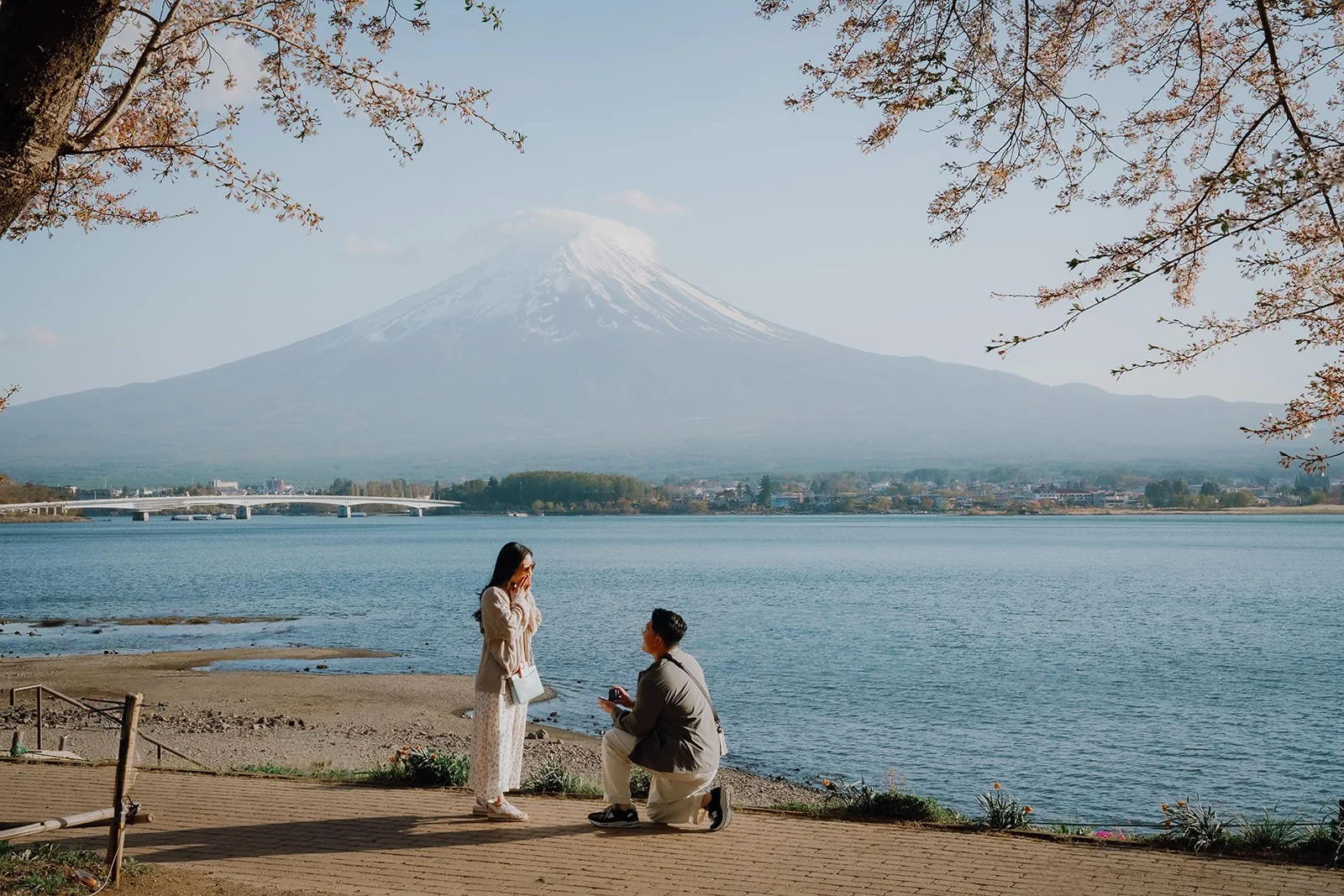
The clearest example is Kawaguchiko, where Mount Fuji visibility changes fast — clear at 7 am, completely covered by 9 am, occasionally clearing mid-afternoon again with no warning. Clients who can adjust their day based on what conditions are doing come away with dramatically different results than those locked into a checkout at 10 am and a train back to Tokyo at noon. The same principle applies in Tokyo and Kyoto: crowd windows, light, and weather all reward flexibility.
Proposals also don't happen on your timetable. If the moment needs a couple of extra minutes — to wait for a small group to pass, to get to exactly the right spot — a packed itinerary creates pressure that bleeds into the moment itself. White space in a Japan itinerary is not wasted time. For a proposal specifically, it may be the most important thing you build in.
2. Create an excuse to dress well
Partners around the world consistently say the same thing after a surprise proposal: they wish they'd dressed better. It doesn't have to be formal, but no one wants to be caught in trainers and a day-pack in their engagement photos.
The easiest solution is a restaurant reservation or a tea ceremony booking near the proposal location. Something with a dress code, or at least an occasion that justifies asking your partner to wear something nicer than usual. The booking can be real, or it can be a plausible story — the point is that it gives you a natural reason to set expectations about how to dress without revealing anything.
One nuance specific to Japan: many couples divide itinerary planning unequally, with one partner handling the logistics while the other goes along for the ride. If that's your dynamic and you're the one who usually lets your partner plan everything, suddenly showing up with a booking and a schedule can itself raise suspicion. In those cases, it helps to start planting ideas and taking initiative on smaller plans well before the trip — so that by the time you book the cover story, it doesn't feel out of character.
3. Create a schedule anchor for the location
Getting an unaware partner to a specific location at a specific time — without explaining why — is one of the practical problems that most proposal guides skip entirely.
The cover story does double duty here: it doesn't just solve the outfit problem, it also gives you a reason to be at a particular place at a particular time. "We have a reservation at 7 pm, so we should get to the gardens by 6" is a natural instruction. It removes the negotiation around where to be and when, and it gives your partner a logical reason to follow the plan without sensing that you have a separate agenda.
The more precisely this is coordinated with your photographer in advance — exact meeting point, which entrance, what the route looks like from the street — the less mental load you're carrying on the day itself. Your photographer should be able to confirm all of this before the shoot.
4. Plan your timing around Japan's crowd reality
Crowd management in Japan is different from most destinations — not necessarily harder, but it requires more specific knowledge to get right.
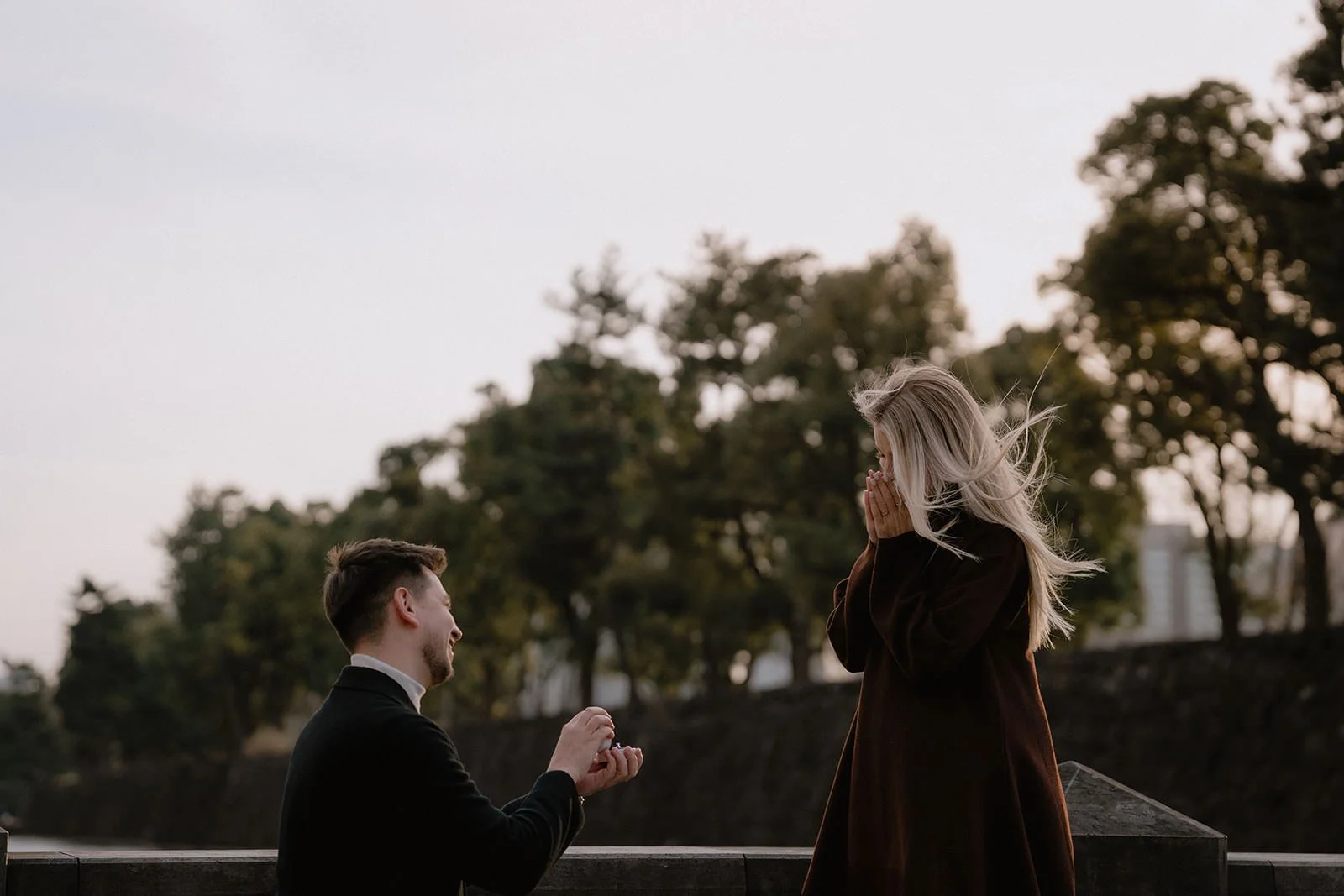
The broad rule is that early mornings are consistently better across every season. Before 8 am at locations like Kyoto's Arashiyama bamboo grove or Tokyo's Shinjuku Gyoen, the experience is genuinely different from what you'll find two hours later. Most visitors assume arriving at 9 am counts as early. At peak-season locations, that can already be too late for a quiet shot. On the other hand, cities like Nara and Osaka offer more flexibility in terms of crowd planning.
What "early" actually means also shifts depending on the season and the city. In summer, the sun rises before 5 am in Tokyo, and the light is already hardening by 7 am. In winter, you have a much longer soft-light window in the morning. The same arrival time produces completely different results depending on the month.
For proposals specifically: you want to plan your timing so the location feels calm, not navigated. A proposal in a crowd is manageable — photographers work around this — but the mood is different, and the person proposing is carrying more variables. Early mornings in Japan almost always reduce those variables.
For a full breakdown of the best places to propose in Japan, check out this blog post.
5. Choose your season knowing the tradeoffs
Every season in Japan has genuine advantages for a proposal. None of them is wrong. But the tradeoffs are real and worth understanding before you book.
Cherry blossom season (late March to mid-April) is the most requested window, and the crowds reflect that. The blossom is as good as advertised. The location availability and the calm you might be hoping for require more careful timing and planning than other times of year.
Autumn splits differently between cities. Kyoto peaks in November with all the colors arriving simultaneously — yellows, oranges, and reds together, which makes it particularly strong for photos. Tokyo's color progression is slower and more staggered: yellows arrive in November, reds don't come until December. Clients expecting a Kyoto-style November in Tokyo often find it less dramatic than they expected. Both are excellent — they just need to be understood on their own terms.
Summer brings heat and humidity, but also a city that comes alive at night. Tokyo in summer with a festival, lantern light, and warm evening air is a genuinely different proposal setting than anything you'd find in spring or autumn. The trade is that you'll want to propose early in the morning or in the evening, not midday.
Winter is underrated. Tokyo winter is consistently sunny and clear, crowds are thinner than at any other time of year, and some of the city's most popular locations become accessible in ways they aren't during peak seasons. If your partner isn't expecting winter in Japan to feel this way, the surprise is a good one.
One seasonal detail specific to Kawaguchiko: from summer into early autumn, the snowcap on Fuji melts off the summit entirely. If the image you have in mind is the classic snow-capped Fuji, this is not the window for it. Worth knowing before you plan.
6. Make sure your photographer has backup
For most photoshoots, a last-minute cancellation is an inconvenience. For a proposal, it can mean the moment you've planned for months goes undocumented — or, if your itinerary is tight, doesn't happen at all.
Solo freelancers are common in the Tokyo photography market, and many of them do excellent work. The structural problem is that a solo operator has no fallback if something goes wrong the day before your shoot. Family emergencies happen. Illness happens. A photographer with a team behind them can cover; a solo photographer cannot.
We've received inquiries from clients in genuine distress after a photographer cancelled on them the day before a proposal, sometimes after months of planning. When we've been able to step in, it's been possible to turn the situation around. But not everyone finds that option in time, and the outcome when they don't is exactly what you'd expect.
When you're evaluating photographers for a proposal in Japan, ask directly: what happens if you're unavailable the day of the shoot? The answer tells you a lot.
7. Practice kneeling
This sounds unnecessary until you actually try it.
Kneeling puts your clothes under a kind of strain they aren't under when you're standing or walking. Trousers that fit perfectly on a normal day can pull or bunch in ways you won't notice until you're already down on one knee. Testing your outfit in the kneeling position before the day — actually getting down on one knee in what you plan to wear — removes one variable from a moment that already has enough of them.
In Japan, the surfaces you're likely to be kneeling on also vary more than in a living room rehearsal: stone pathways, wooden bridges, uneven garden ground, wet surfaces after rain. Worth practicing the motion enough that the physical act of kneeling feels settled, so your attention can stay on your partner and what you're saying.
The position itself matters for the photographs, too. You'll need to think about where your partner is standing relative to you so both of you are within the frame. Practice the hug that leads into it (more on that below) and use it to settle both of your positions before you go down. Your photographer will guide you through this during the pre-shoot coordination, but arriving with some familiarity helps.
8. Study the spot before you arrive
A proposal works best when the person proposing arrives confident and settled, not navigating. The best way to arrive that way is to know exactly where you're going.
Your photographer will give you reference photos of the specific spot, a map of the area, and guidance on which entrance to use and how to get there from wherever you're coming from. Spend time with those materials before the day. Know the route well enough that you can move through it naturally without checking your phone at every turn.
This is especially relevant in locations with multiple access points or areas that can look similar to an unfamiliar visitor. Gardens in Tokyo, areas around Kyoto's traditional streets, the North Shore of Lake Kawaguchiko — these all have spots that reward being known in advance. Your partner won't know where they're going. You being calm and certain about the direction is what allows the approach to feel natural rather than logistically strained.
During the moment
9. Don't stall — but don't rush either
Stalling is one of the most common things that goes wrong in a proposal, and it's rarely about waiting for a specific condition. It's the pause that stretches past the point where it's useful.
It creates two problems at once. The person proposing gets more nervous with every minute that passes. And the partner — who can't understand what's happening — starts picking up that something is off. They don't know what, but the energy has shifted, and they can tell. By the time the proposal happens, the element of surprise has been partially eroded by ten minutes of ambient tension.
The alternative isn't to rush. If you arrive at the spot and there are a few people standing exactly where you need them not to be, it's completely fine to do a slow walkthrough — keep moving, take in the area, circle back in a couple of minutes. That reads naturally. What doesn't read naturally is standing in one place looking increasingly unsettled while your partner waits to find out what's going on.
The goal is to arrive, orient yourself quickly, and move toward the moment with intention. The specific timing within a couple of minutes is not what makes the proposal. The commitment to it is.
10. Signal with a hug
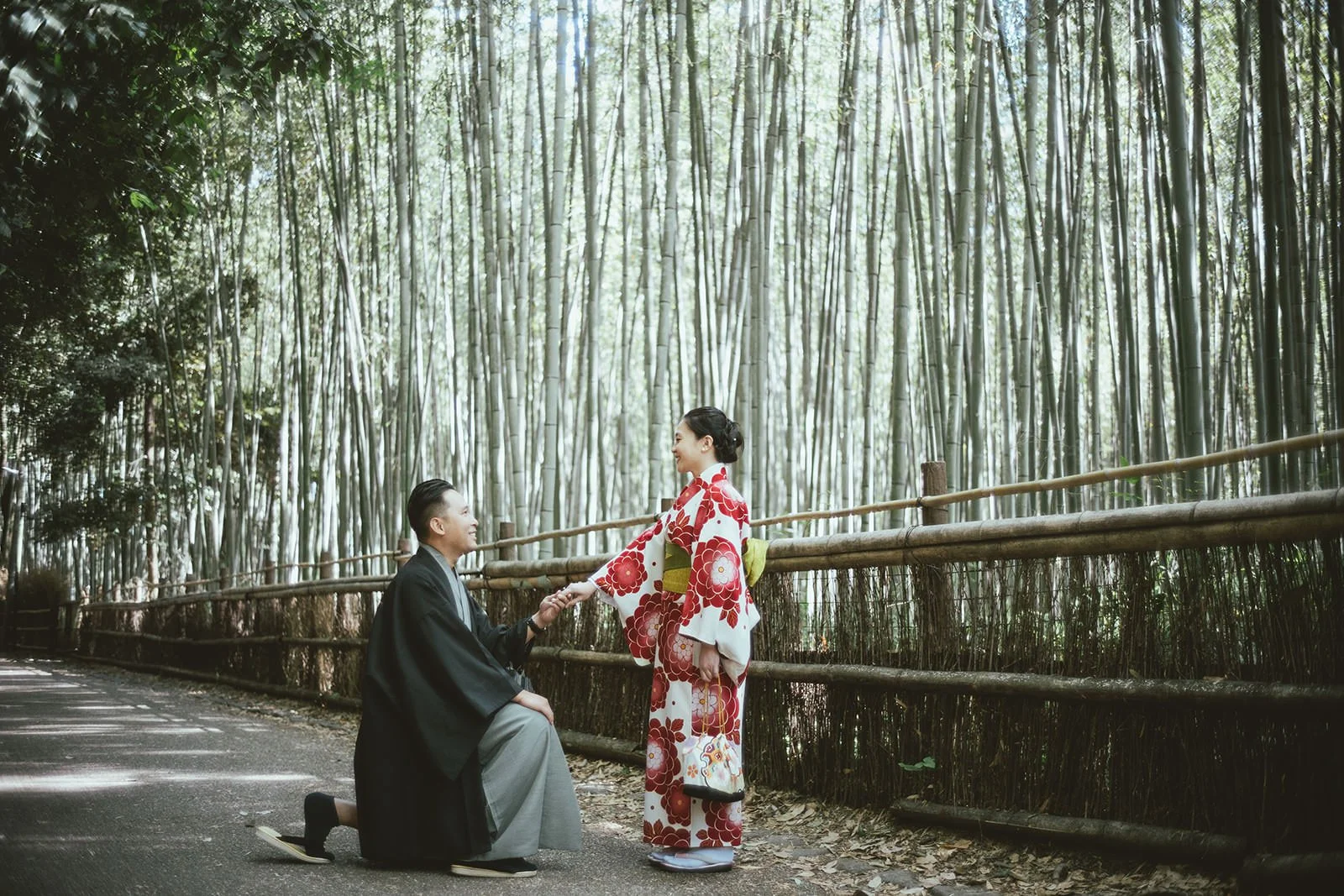
Before you kneel, give your partner a hug.
It serves two purposes. For your photographer, it's a clear signal that the proposal is about to happen — not a guess, a signal — which means they'll be in position and shooting before you go down, capturing the approach and not just the moment itself.
It also lets you adjust your positions. A hug lets you gently shift where your partner is standing so that both of you end up in frame when you kneel. It's natural, it's brief, and it buys you the half-second of positioning that makes a significant difference to the photographs.
11. Stay in the kneeling position longer than feels natural
The instinct when you're on one knee is to stand up as soon as you hear yes. Resist it.
Staying in position — for fifteen to twenty seconds at minimum — gives your partner time to move through the full range of what they're feeling. Surprise, recognition, emotion, laughter, tears: these don't all happen in the same second, and the photos from the first three seconds are rarely the best ones. The ones that come ten or fifteen seconds in, when both of you have settled into the moment, often are.
Take your time with what you're saying. Don't rush through it to get to the question. The words you prepared are part of the moment, not a preamble to it. And you know what makes staying down easier? Having practiced it enough that the position doesn't feel uncomfortable.
12. Forget about everything else
Once you're in the moment, let it go.
Don't think about where the photographer is. Don't worry about whether other people can see you. Don't manage the scene. The people around you will respond to a proposal the way people in Japan typically respond to other people's private moments: with discretion. Your photographer is handling the logistics of position, light, and timing. Your job is to be present with your partner.
The proposals where people try to manage everything at once — checking the angle, watching for the photographer's signal, making sure no one is in the background — produce photos that look like someone managing everything at once. The ones where the person proposing is just there, fully, with their partner, produce something else entirely.
After
13. Take a breath before anything else
After the proposal, your photographer will introduce themselves to your partner — up to this point they've been working at a distance — and give you both a few quiet minutes. Use them.
The adrenaline of the proposal and the reaction leaves very little room for the moment to land while it's happening. The minutes immediately after, when the pressure is gone and you're just the two of you with what just happened, are often the ones people remember most clearly. There will be plenty of time for photos, calls, and everything else. Take the breath first.
14. Hold the announcement for a few hours
The impulse to share immediately is understandable. Hold it anyway.
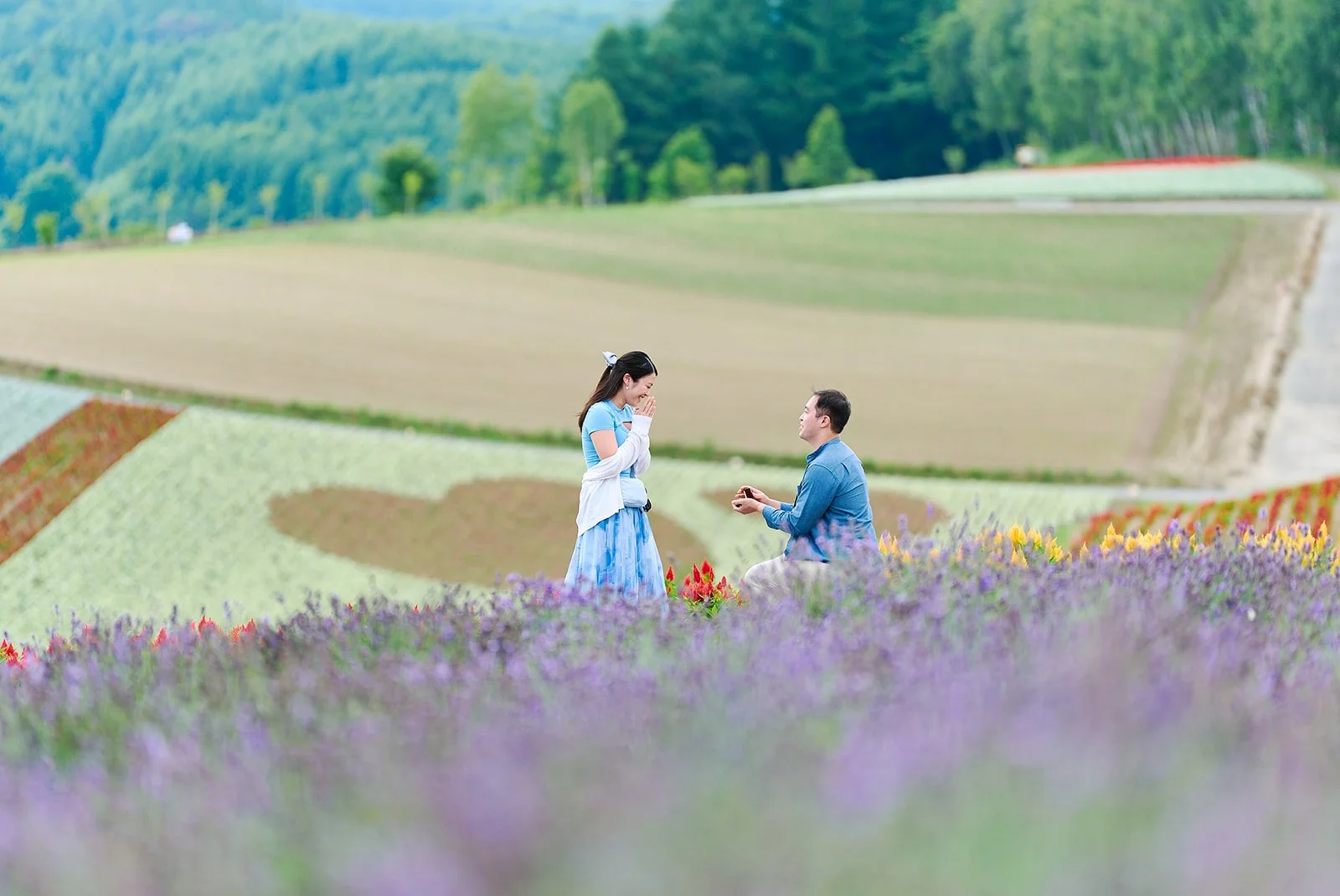
Your photographer will edit one photo from the proposal on the same day — usually within a few hours — so you have a professional image ready to share when you do announce. The difference between posting a phone photo taken in the first excited minutes and posting a properly edited image from the proposal itself is significant, and the window to wait is short.
If you genuinely can't wait, don't wait. But if you can hold it a few hours, you'll have something worth the wait.
One last thing
The best proposals in Japan we've been part of had one thing in common: the person proposing was prepared enough that they could stop thinking about the plan and just be there. The logistics were handled. The cover story was solid. The timing was right. And so when the moment came, they were free to be fully in it.
That's what all of this planning is actually for — not to control the outcome, but to clear the path for it. If you're thinking about proposing in Japan and want to talk through the specifics of your situation, we're easy to reach.
Frequently Asked Questions
What's the best season to propose in Japan?
There isn't a single best season — each one trades something for something else. Cherry blossom season looks the part but needs the most careful timing to avoid crowds. Kyoto's November delivers every autumn color at once; Tokyo's autumn is slower and more staggered into December. Winter is underrated: clear skies, thin crowds, and locations that are hard to get quiet the rest of the year. The right season depends on what you're willing to plan around, not which one is "best."
What if it rains, or Mount Fuji isn't visible?
Build the plan around the possibility rather than against it. At Kawaguchiko, Fuji can be completely clear at 7am and gone by 9am — visibility is never guaranteed, in either direction. Couples who keep a flexible morning and are willing to shift timing based on their photographer's read of conditions consistently get better results than those locked into a fixed schedule. Rain shoots, when clients stop trying to control the weather, often produce some of the strongest sets.
Do I need to worry about my photographer canceling?
It's worth asking directly before you book. Solo freelancers have no fallback if they're unavailable the day before your shoot — illness or a family emergency can mean a proposal goes undocumented, especially on a tight itinerary. A photographer backed by a team can cover that gap. Ask any photographer you're considering what happens if they can't make it, and see how confidently they answer.
How do I get my partner to the exact spot without them suspecting anything?
A cover story that doubles as a schedule anchor works best — a restaurant or tea ceremony booking near the location gives you a natural reason to be there at a specific time, without any negotiation on the day itself. The more precisely this is coordinated with your photographer in advance — meeting point, entrance, route — the less you have to manage on the day, which also makes the moment itself easier to be present for.
How long does a proposal shoot take?
This varies by location and by how much time you want before and after the moment itself, so it's worth confirming directly with whoever you book. What matters more than the exact length is not rushing the moment once it happens — staying in the kneeling position for fifteen to twenty seconds after hearing yes, rather than standing up right away, is what tends to produce the photos people end up loving most.
What if my partner reacts in a way I didn't expect?
That's normal, and it's exactly why the planning matters. An unaware partner can be overwhelmed, tearful, laughing, or frozen, sometimes cycling through all of it within seconds. A photographer experienced with proposals anticipates that arc rather than reacting to it. Your job in the moment isn't to manage the reaction — it's to stay present with your partner and let it happen.
Should we announce it right away?
Holding it a few hours is usually worth it. Photographers typically edit one photo from the proposal the same day, so you have a properly edited image ready rather than a phone photo taken in the first excited minutes. If you genuinely can't wait, don't force it — but if you can hold off, the difference is noticeable.