
How to Avoid a Bad Photoshoot in Tokyo
Hiring a photographer for your trip to Tokyo is mostly a research problem, not a creative one. The difference between a session you're glad you booked and one you quietly regret is usually decided before anyone picks up a camera. It’s in what you checked, what you asked, and what you assumed. The good news is that most of the ways a Tokyo photoshoot goes wrong are predictable, and almost all of them are visible before you pay.
This is a guide to those failure points: the common ways hiring goes sideways, and the specific questions that prevent each one. It applies whether you book with us or with anyone else.
In this guide:
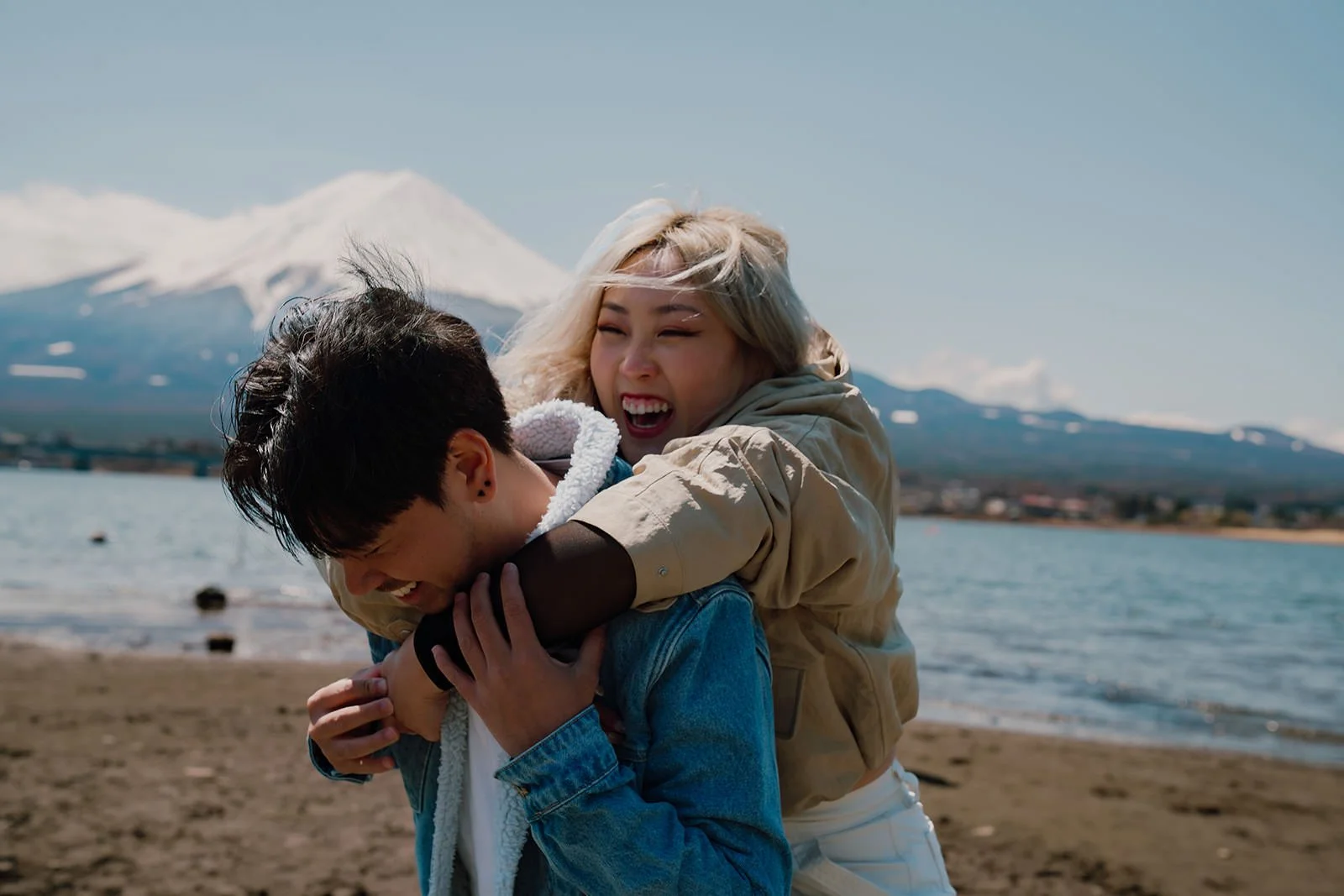
Kawaguchiko, Spring. She broke her leg one day before her surprise proposal
The "private" session that isn't
A private session means one group, one photographer, your time only. Most professional services in Tokyo work this way, but not all of them, and the word "private" gets used loosely. Some lower-cost options run group photo walks or schedule several clients into the same window and move between them. You can end up sharing a photographer's attention without realizing that's what you booked.
This matters most for the shoot types where the experience is the point, not just the output - couples, families with young children, proposals. A shared or rushed session changes how relaxed you can be, which changes the photos.
The check is simple: confirm in writing that the session is exclusively yours, that no other clients are booked in your window, and that the full session time is shooting time rather than time split with a group.
Vague deliverables, the biggest source of regret
The most common gap between a happy client and a disappointed one isn't the photography. It's the difference between what someone pictured receiving and what actually landed in their inbox. That gap is almost always created at booking, by deliverables that were never pinned down.
Get these answered before you pay, ideally in writing:
How many final, edited images? "Photos taken" and "edited photos you receive" are very different numbers. Ask for the second one.
Edited or raw? Confirm whether the final images are professionally retouched or delivered as unedited files. Some operators hand over a large dump of untouched shots, which is not the same product.
Watermarks and resolution. Are the previews watermarked, and are the final files clean and high-resolution? Watch for setups where the only un-watermarked, full-resolution versions sit behind an extra fee.
Delivery time. A clear window matters. Most professional services in Tokyo deliver an edited gallery within roughly a week.
Extra-edit and usage costs. Ask whether additional retouching is charged separately and whether you can use the images freely, including printing.
A photographer who answers all of this clearly and quickly is telling you something useful about how the rest of the booking will go.
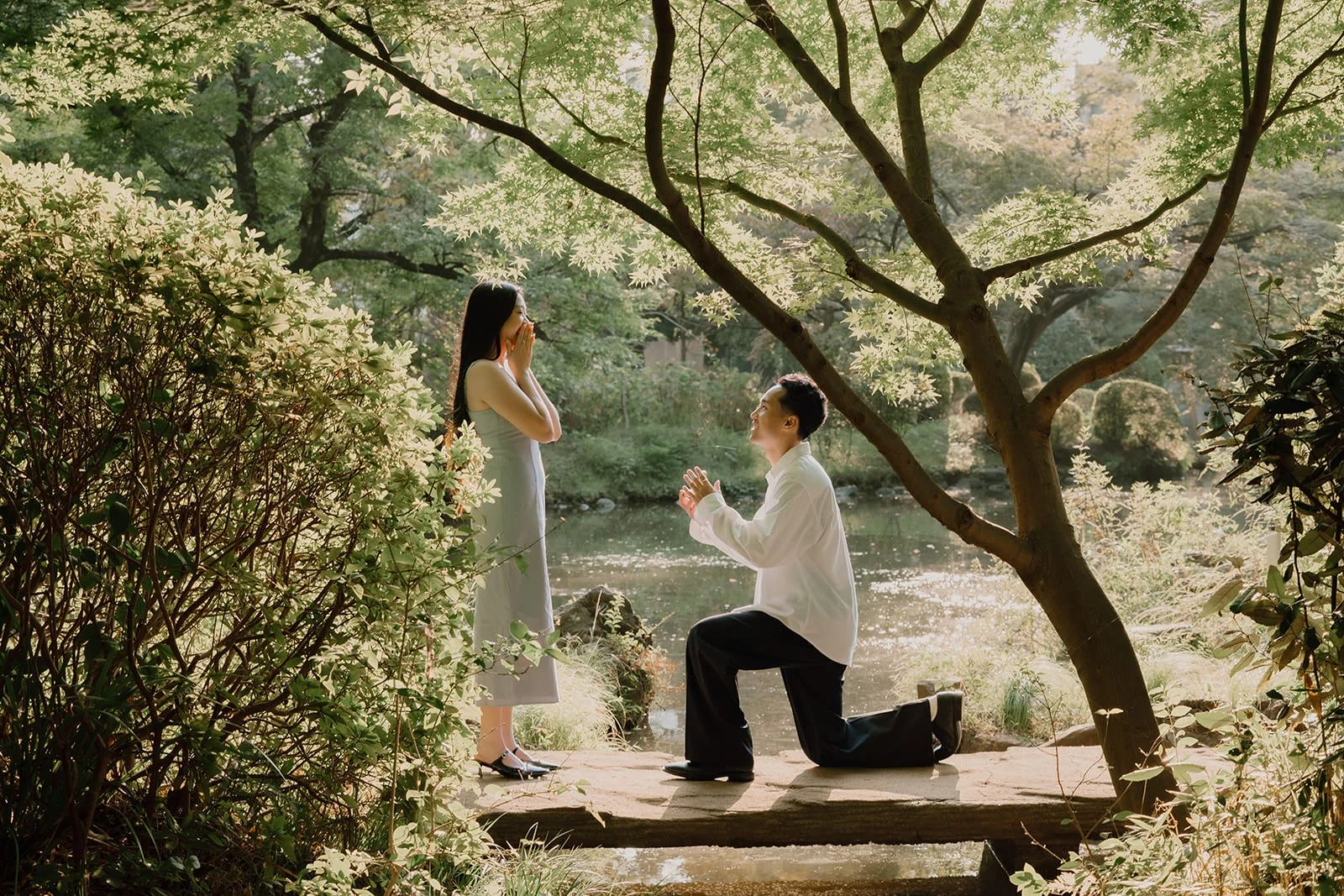
Tokyo, September. 39 C / 102 F in the shade
Experience that doesn't survive a second look
"Years of experience" is the easiest claim to make and one of the hardest to verify, and the gap between marketing and reality is real. Plenty of people present themselves as seasoned professionals on the strength of a short, carefully curated highlight reel.
A few standout frames prove someone can occasionally get a good shot. They don't prove consistency, which is what you're actually buying. The thing to look at is full, recent sets from real client sessions, and not just six hero images. Everything from a single shoot in conditions close to yours: the same season, the same kind of light, the same shoot type. Consistency across a complete set is the signal. A portfolio that's strong in bright autumn parks tells you little about how someone handles a grey winter morning in the city or a low-light evening in Shinjuku.
Volume matters for the same reason. Anyone can pull their best golden-hour frames from years of shooting and assemble a portfolio that looks flawless. The reality of travel photography is that conditions often aren't on your side: crowded locations, harsh midday light, clients who are jet-lagged and worn out by the time the session starts. What you want to see is a more extensive track record across varied conditions. Galleries that hold up not just at the hero shot but at the difficult end of the range, the busy days, the flat light, the low-energy moments. Consistency from the best frame down to the worst conditions is what separates someone who got lucky with good light from someone you can rely on when the light is bad.
Where someone trained matters less than whether the work backs the claims. The check is to ask for those full sets, and to be a little skeptical of anyone who only ever shows their best ten photos.
A portfolio built on professional models
Some portfolios lean heavily on professional or experienced models. Those images can look excellent and tell you very little about what you'll actually get, because working with a model is a different job from working with you.
Models know how to move, hold a line, find the light, and recover from an awkward frame on their own. Most clients can't, and don't want to spend their one session learning. The real skill in travel and portrait work is getting natural, relaxed results out of people who have never been in front of a camera and feel slightly self-conscious about it. A photographer whose best work is all styled model shoots hasn't shown you that skill.
The check is to look for real clients in the portfolio who clearly aren't models - ordinary couples, families, first-timers - and to see whether those images look as easy and natural as the model shots do. If every strong frame is a polished model session, you don't yet know how they'll do with you.
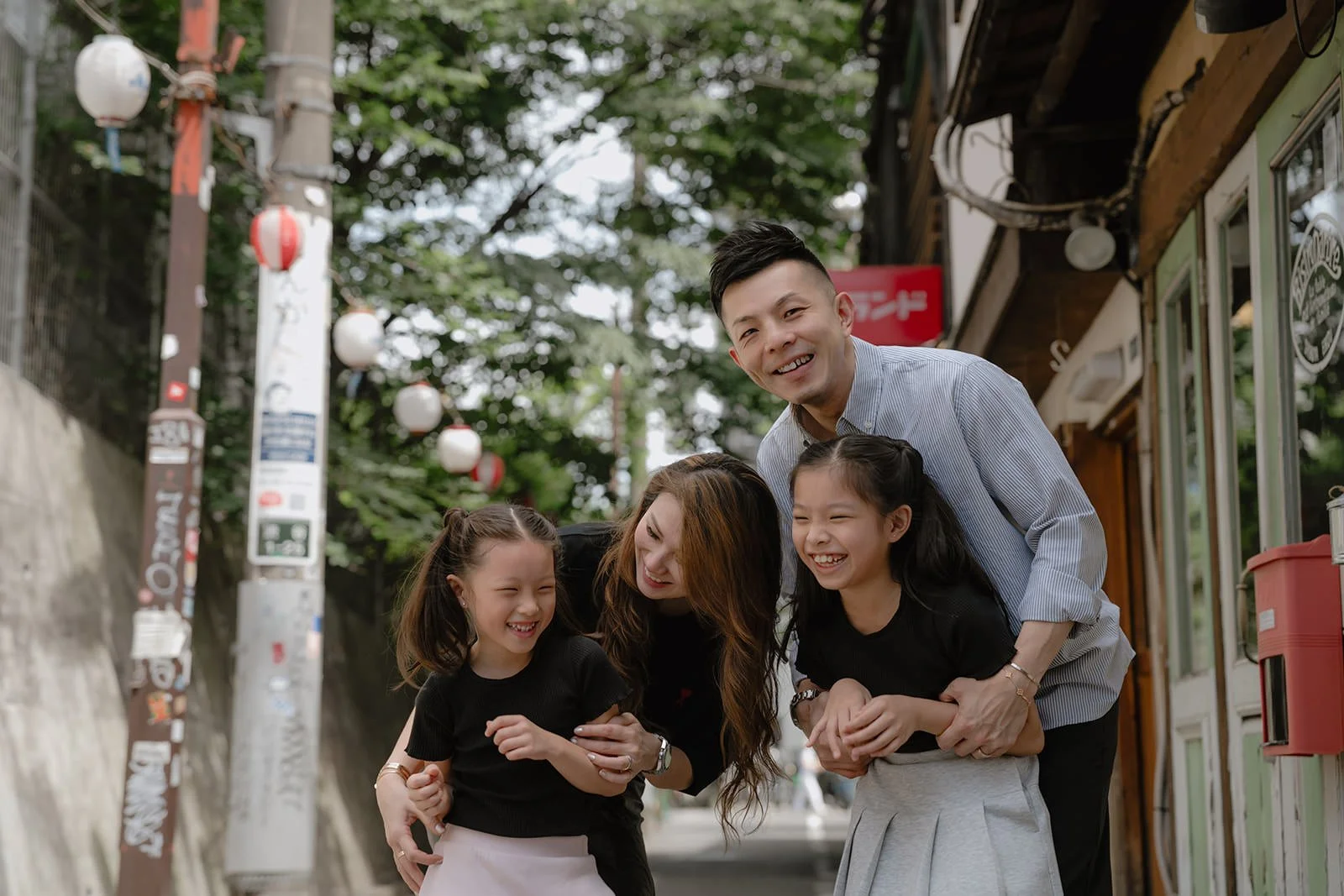
Tokyo, June. 10:40 AM, harsh light
Technically skilled, but can't read the moment
Some photographers are technically strong and still produce stiff, forgettable results, because they treat the session as a series of poses to execute rather than people to work with. The pattern shows up in reviews again and again: the photographer who seemed more interested in getting their own portfolio shot than in working with the client, who arrived without a real plan for what was asked, and who left the client doing most of the directing themselves.
For everyday travel photos, it produces images that look posed and a little lifeless. For proposals, it's the difference between catching the moment and missing it, because the moment doesn't repeat. The skill that matters there isn't technical at all. It's reading a couple's dynamic well enough to anticipate where to be before the moment shifts.
You can't fully test this in advance, but you can look for evidence of it. Do their photos show people reacting naturally, or only holding poses? Ask how they work with first-timers and nervous clients, since most people booking have never done a professional shoot before. For a proposal, ask how many they've done and how they plan the unrepeatable part. Vague answers are a warning.
Families and couples are completely different shoots
Photographing a family is not a scaled-up couples session. It's a different craft, and it's worth checking for specifically, because most photographers offering travel sessions in Tokyo are set up primarily for couples. Two cooperating adults make the work relatively predictable. Families don't work that way.
And "family" covers very different realities. A session with a baby or toddler is led entirely by the child's energy and has a hard time limit before it falls apart. Young children need room to move and a photographer who follows rather than directs. Pre-teens and teenagers bring self-consciousness. Adult children and elderly parents each change the dynamic again, and many family sessions combine several of these at once, which is harder still. A photographer who almost exclusively shoots couples may be very good and still not the right fit for a session with a three-year-old.
The check is to confirm they regularly photograph families like yours, with the specific ages involved, and to ask to see recent full sets from those sessions rather than a single tidy family portrait.
Who actually shows up
The photographer you saw versus the photographer you get is a real risk. Some services market a specific person's portfolio but operate with a rotating roster behind the scenes, assigning whoever happens to be available. You book based on one body of work, and someone else - whose style you've never seen - arrives. The samples that sold you may not represent what you'll receive.
The check is straightforward: ask who specifically will photograph your session, and ask to see that individual's own work, not just the brand's best composite reel.
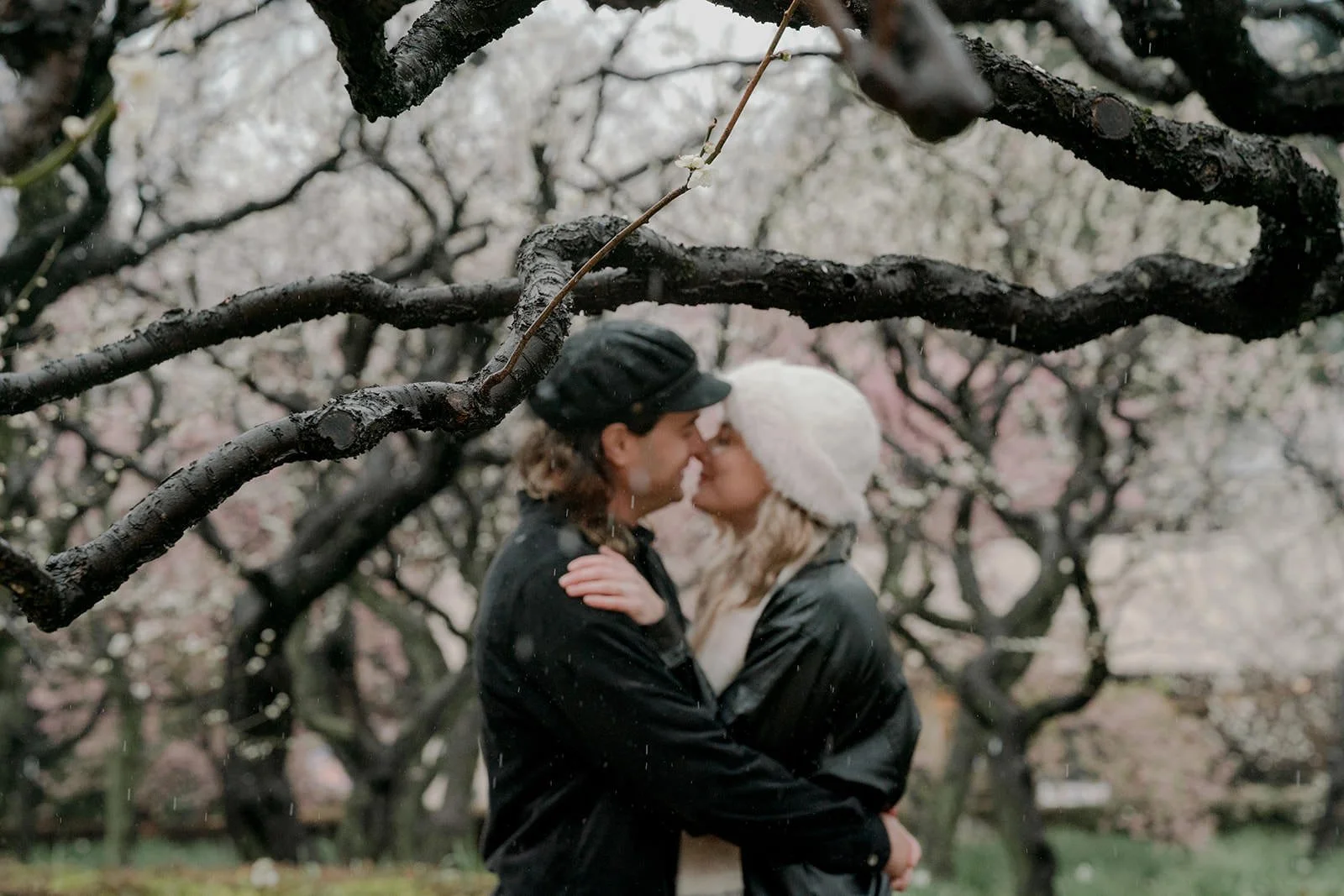
Tokyo, February. No amount of rain and snow can’t stop love
The freelancer with no safety net
A single independent freelancer with no backup is fine most of the time, until it isn't. Freelancers get sick, and emergencies happen, and when a solo photographer has to cancel with no one to step in, a client on a fixed trip can be left with no session at all: no replacement, no second chance at that date or that location.
For a once-only moment like a proposal, or a trip with no spare days, that's the worst failure point of all. A service with a vetted team can usually send a comparable replacement at short notice. A lone operator usually cannot, and it's better to know that before you build a key moment around a single person with no fallback.
The check is to ask directly what happens if your photographer falls ill or can't make it. Whether there's a backup, and whether you can see that person's work, too.
Booked back-to-back, with no room to adjust
A photographer who stacks sessions back-to-back has no slack in the day. If yours runs into a delay, like a late train, weather that turns, a location that's unexpectedly closed or swamped, there's no flexibility to absorb it, because the next client is already waiting. The session becomes a race against the clock, and the parts that need patience get cut first.
This is most dangerous for proposals, where you don't fully control the situation. Your partner doesn't know what's happening, can't be hurried or redirected without raising suspicion, and the timing has to bend around them rather than around a schedule. If the photographer has no buffer, a small delay can compress the moment or derail it entirely. The result that mattered most becomes the one most exposed to a fifteen-minute slip.
The check is to ask how tightly their day is scheduled around your session, and whether there's any room if things run over or shift. Some flexibility on the photographer's side is worth more than it sounds.
One set of hands from planning to delivery
The look of your final gallery is set as much in the editing as in the shooting. A photographer who handles the whole chain - planning, shooting, culling, and editing - is better positioned to deliver a consistent style, because the person who saw the moment is the same person choosing and finishing the images.
Good work can be split across people, one shooting and another editing, and plenty of services run that way well. But there's always a risk that the final delivery doesn't fully tell the story of the shoot. An editor who wasn't there makes different choices about which frames matter and how they should feel, and the gallery can drift from what the session actually was.
The check is to ask who edits the images, whether it's the same person who shot them, and whether the finished galleries you're shown read as one consistent hand from start to finish.
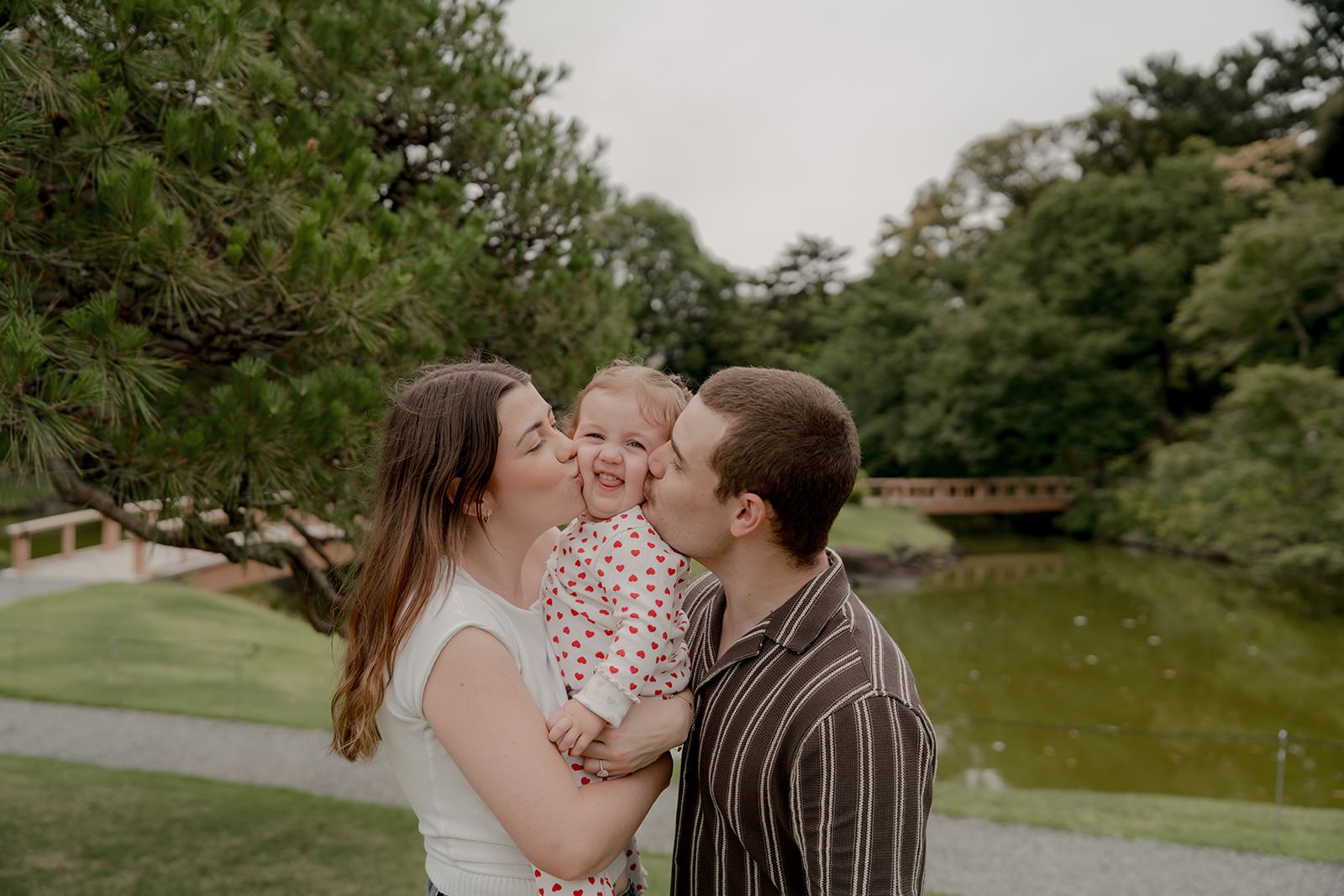
Tokyo, May. The little one was suffering with jet lag and got cranky minutes before the photoshoot.
Location and timing red flags
Real local knowledge shows up as specifics. A photographer who knows Tokyo can tell you why a 7am arrival and a 10am arrival at the same place produce completely different photos, which neighborhoods reward weekday evenings over weekends, and where the crowds actually cluster so you can work around them.
The red flag is the opposite: defaulting to the same handful of crowded postcard spots at the worst possible times, with no reasoning attached. A booking that drops you into the busiest tourist streets at midday on a Saturday, with no discussion of light or crowds, is being run on autopilot.
The check is to ask for a location recommendation for your specific dates and shoot type, and to notice whether the answer is specific or generic. "We'll go somewhere nice" is not a plan. "For your dates and a couples session, here's where we'd start and what time we'd meet, because of how the light and crowds work that week" is.
How deep the local knowledge actually goes
There's a difference between knowing a city and knowing it well, and it ends up in the photos. Whoever plans your shoot and handles the booking is making decisions about where and when based on their own understanding of Tokyo -- and if that understanding is shallow, there's a dissonance that's hard to fix on the day.
Basic, mainstream information is easy to find. The famous locations, rough opening hours, and which season is the busiest. Anyone can look that up. Deep knowledge is different. The pattern recognition and the pitfalls come only from years on the ground: which corner of a popular park stays quiet when the rest is packed, how a street changes between 7 am and 9 am, which areas turn difficult on a weekend, when a normally reliable spot is taken over by an event. If the person planning your session is working from the same surface information you could find yourself, you're paying for coordination, not expertise.
The check is to listen to whether their location and timing advice goes beyond what a guidebook would tell you. Specific, conditional, season-aware answers signal real local depth. Generic ones signal someone repeating what's already online.
Communication and whether there's a real plan
Two practical things separate a smooth booking from a stressful one, and you can see both before you pay.
The first is language. For international visitors, confirm the photographer is comfortable working in English, and not just for the booking emails, but on the day, when timing changes and quick direction matter. Japan's overall English level is lower than many visitors expect, so this is worth verifying rather than assuming. It's rarely a dealbreaker, but it shapes how naturally the session flows.
The second is whether there's an actual plan. A good booking produces a meeting point, a timing window, a rough route, and a sense of what happens if the weather turns. "Just show up at the station" is not that. How someone communicates before you've paid - responsive and specific, or slow and vague - is usually a fair preview of the experience after.
If you want a sense of what a fully planned professional photoshoot in Tokyo looks like end to end, that planning is most of what you're paying for.
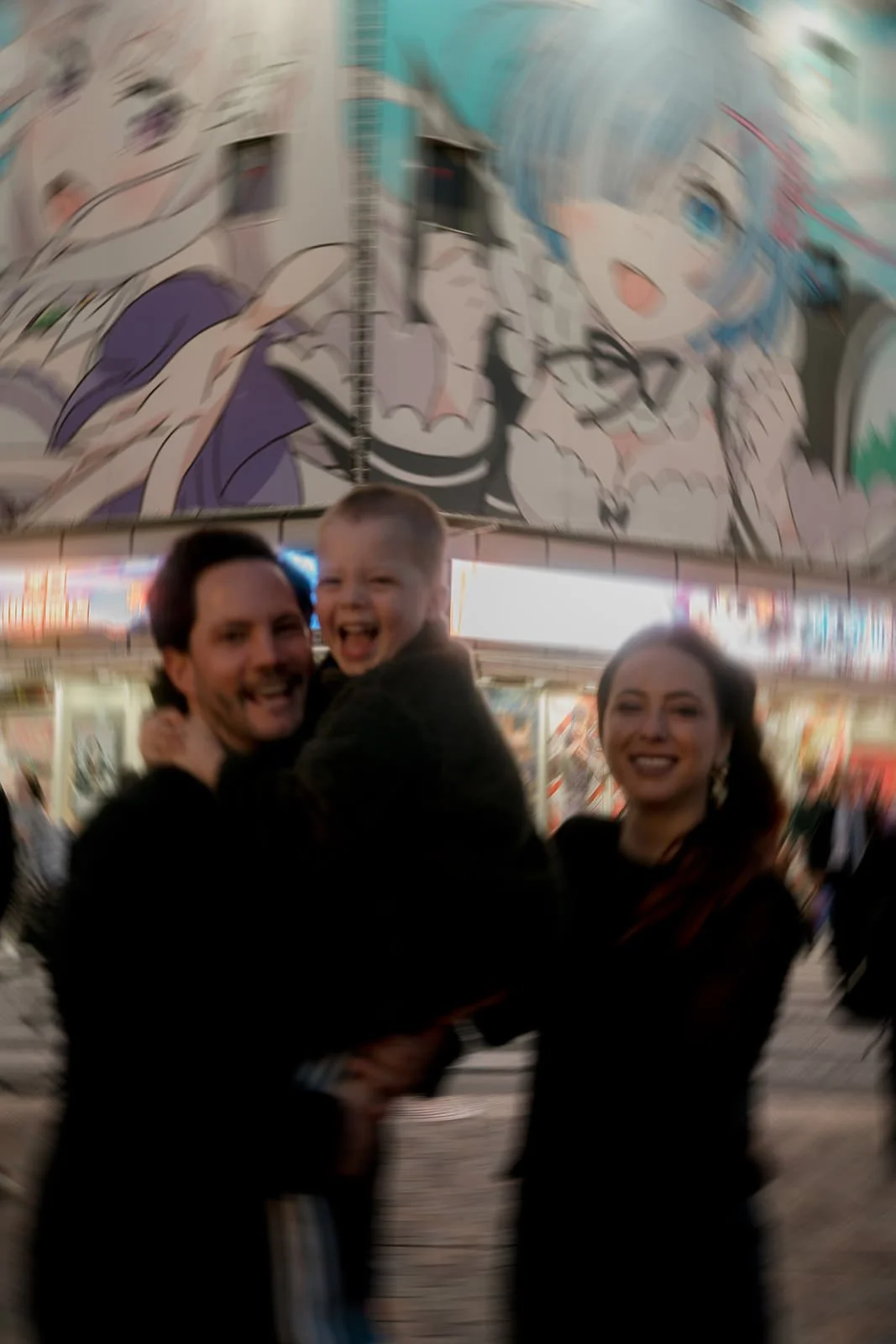
Tokyo, April. Shinjuku on a Holiday night. Super crowded. Family was tired from traveling, but kept great energy through the whole session.
A short checklist before you pay
Most of the failure points above come down to questions you can ask in advance. Before you book, get clear answers to these:
Is the session exclusively mine, with the full time as shooting time?
How many final edited images do I receive, in what format, by when, and are extra edits charged?
Who specifically is shooting, can I see their own work, and is there a backup if they can't make it?
Does one person handle the shoot through to the editing, so the final style matches the session?
Can I see full recent sets in conditions like mine, including difficult ones, not just highlights?
Do they regularly shoot my kind of session, especially if it's a family with young children?
Is there any buffer in their schedule if my session runs late or conditions change?
Does their location and timing advice go beyond what I could find in a guidebook?
Are they comfortable working in English, and what's the plan for the day?
None of this requires you to become an expert. It just requires asking before you pay, while you still have leverage and choices. A photographer who answers these questions clearly is showing you how the booking will run, and the booking is where a good photoshoot in Tokyo is really decided. The day you show up is just where it gets executed.