Tokyo in Summer: What to Expect and How to Make It Work
The visitors who struggle most in Tokyo summer are almost always the ones who planned a spring or autumn trip and didn't adjust anything. The ones who do well make a few deliberate changes to how they move through the city, and those changes make an outsized difference.
This guide is about those changes.
In this guide:
- What Summer in Tokyo Actually Feels Like
- Does It Matter Where You Go?
- What to Bring That Most Visitors Don't
- Summer and Photography in Tokyo
What Summer in Tokyo Actually Feels Like
Temperature-wise, July and August in Tokyo sit between 30 and 35 degrees Celsius on most days, occasionally higher. That number understates the experience. The humidity runs at 70 to 80 percent through peak summer, which means the heat sits on you rather than evaporating. Air conditioning is everywhere indoors - trains, shops, restaurants, convenience stores - but the transitions between air-conditioned interiors and the outside air are their own kind of exhausting.
Rainfall is common, particularly in late June and early July during the rainy season. This doesn't mean constant rain. It means unpredictable rain, sometimes heavy, sometimes brief. Carrying something waterproof is less optional than in other seasons.
By August, the rainy season has passed, and the days are more consistently clear. The tradeoff is that clear days in August are also the hottest ones.
The Walking Problem
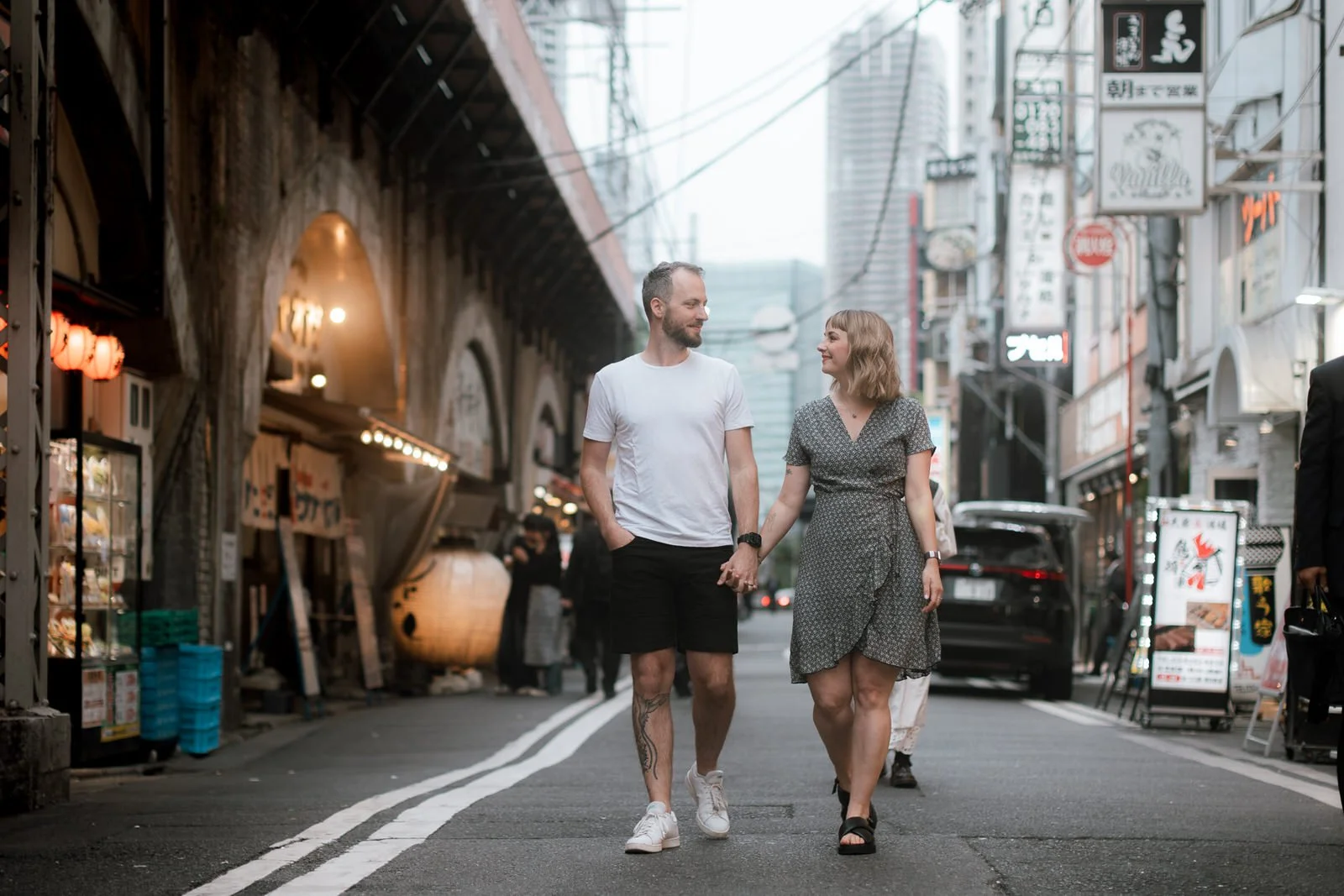
Tokyo is one of the most walkable cities in the world, and that's part of what makes summer harder than visitors from certain countries expect.
In cities where driving is the default, where most movement happens inside air-conditioned cars, people underestimate how much cumulative heat exposure adds up when you're on foot. Tokyo's train network is excellent, and the stations are air-conditioned, but the walks between stations, the time spent on platforms, and the movement between neighborhoods, it all accumulate. A day that looks manageable on a map can feel genuinely depleting by early afternoon if you haven't accounted for the conditions.
This isn't a reason to avoid Tokyo in summer. It's a reason to build your days differently. Shorter outdoor stretches, longer indoor pauses, and a midday break that you actually take rather than push through.
Tokyo’s summer is indeed something else. Our clients from car-dependent cities, such as the majority of the United States, tend to suffer the most. But even clients from tropical areas such as Singapore notice how much worse the humidity is in Japan.
When to Be Outside
The most important adjustment summer visitors can make is timing.
The window between 7 am and 9 am is genuinely different from the rest of the day. The city has cooled slightly overnight, direct sunlight is still low and relatively soft, and Tokyo's streets - which feel relentless at midday - are quiet in a way that's hard to find at any other time of year. Early mornings in summer reveal a version of the city that most visitors never see.
Sunrise itself is too early to be practical for most people. In June and July, the sun is up before 4:30 am. By August, it's closer to 5 am. Planning around sunrise means a 4 am alarm, which is rarely worth it unless you have a specific reason.
The 7 to 8 am window is the practical sweet spot. Light is workable, temperature is manageable, and the absence of crowds makes movement through the city feel easier than at any other point in the day.
The middle of the day, roughly from 11 am to 3 pm, is when conditions are at their worst. This is not the time to be walking between neighborhoods. It's the time to be inside: a museum, a long lunch, a coffee shop, a department store. Building a genuine midday pause into the itinerary isn't laziness. It's how you stay functional for the evening.
Evenings recover well. After 6 pm, the temperature drops enough to make outdoor time pleasant again, and Tokyo's summer evenings have their own quality: festivals, outdoor eating, and a city that knows how to operate in the heat in ways that visitors are still learning.
Does It Matter Where You Go?
Honestly, less than people hope.
The instinct is to look for the cooler parts of the city and concentrate time there. The reality is that Tokyo's summer is fairly uniform across neighborhoods, just in different ways.
High-rise areas like Marunouchi and Shinjuku benefit from shade, since the buildings block direct sunlight for much of the day. But the concentration of concrete absorbs and radiates heat, and the temperature between buildings can feel higher than open areas even without direct sun.
Green spaces like Yoyogi Park and Todoroki Gorge feel different, and the shade from trees is genuinely more pleasant than shade from buildings. But dense vegetation traps humidity in a way that concrete doesn't. It trades one version of uncomfortable for another.
The most useful approach is not optimizing for the neighborhood but optimizing for timing and movement patterns. Anywhere in Tokyo is manageable at 7 am. Almost anywhere becomes difficult between noon and 3 pm, regardless of where you are.

What to Bring That Most Visitors Don't
Japan has a practical culture around summer heat that visitors from other countries often discover too late. These items are available at any convenience store or drugstore, inexpensive, and genuinely useful:
Cool spray - a mist spray that creates an immediate cooling effect on skin and clothing. Most locals carry one. The difference on a hot afternoon is real enough that it's worth buying on day one.
Parasol - carried by men and women in Japan without any cultural weight attached. A UV-blocking parasol reduces direct sun exposure significantly. Visitors who feel self-conscious about it tend to stop feeling self-conscious around day two.
Cool patches - adhesive cooling sheets that attach to clothing or skin. Particularly useful for the back of the neck and wrists. Sounds minor, but it makes a noticeable difference over several hours outdoors.
Isotonic drinks - available everywhere, essential. The combination of heat and walking depletes electrolytes faster than plain water replaces them. Japanese convenience stores stock a wide range. Pocari Sweat and Aquarius are the most common and do what they promise.
Neck cooler - a reusable cooling wrap worn around the neck that combines airflow with a sustained cooling effect on the back of the neck and pulse points. More effective than it looks, and widely used by locals during summer commutes and outdoor events.
Pocket towel - a small, fast-drying towel for wiping down. Standard summer kit for most Tokyo residents.
None of these is a substitute for planning. But visitors who carry them move through summer days with noticeably more comfort than those who don't.
Summer and Photography in Tokyo
Summer is an underrated season for photography in Tokyo, with conditions that reward early starts more than any other time of year.
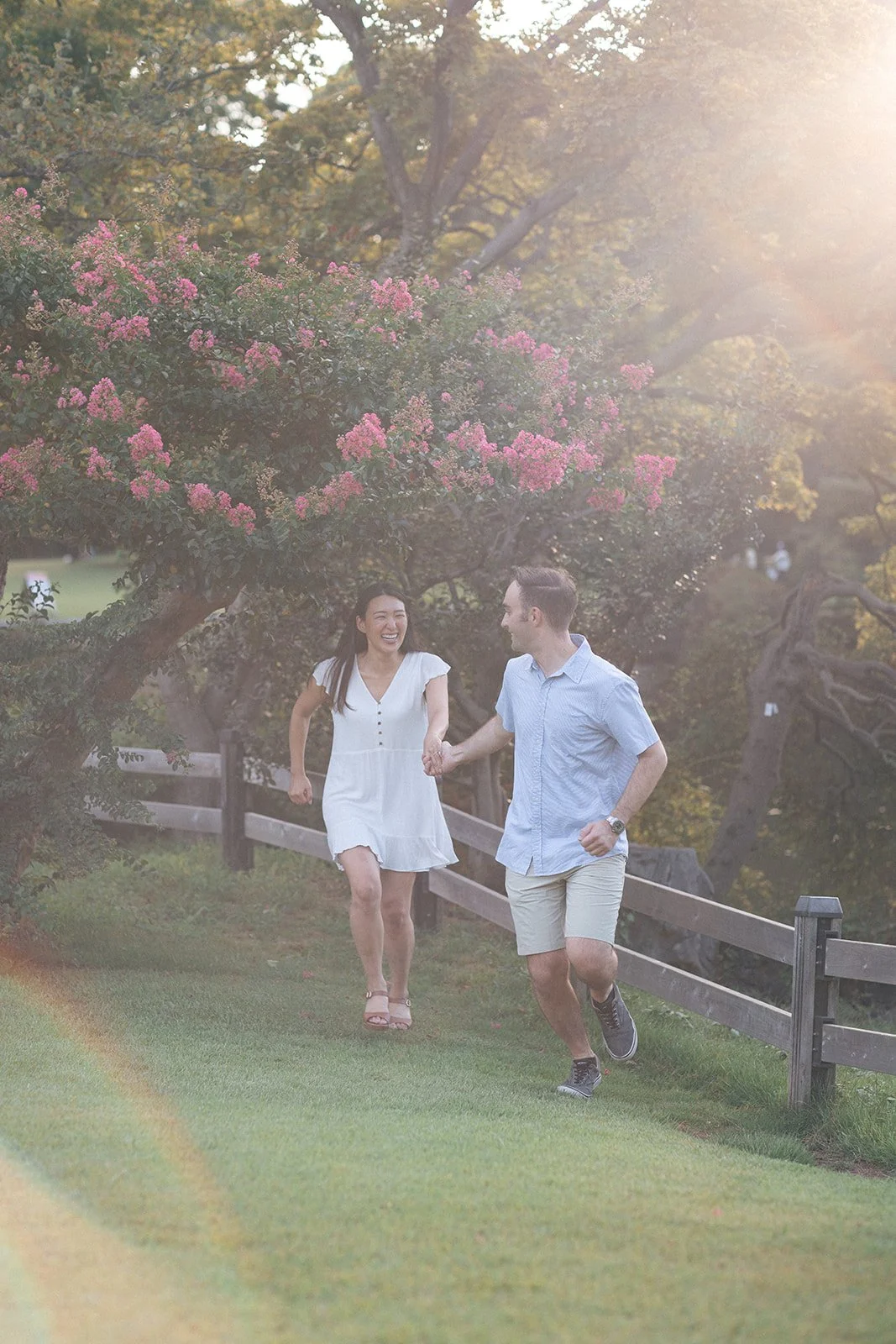
The 7 to 8 am window that makes summer mornings manageable for sightseeing is also when the city photographs best in summer. The light is soft without being flat, the streets are empty in ways they never are in spring or autumn, and the heat haze that develops later in the day hasn't arrived yet. Locations that are nearly impossible to photograph cleanly during cherry blossom season become straightforward.
The tradeoff is that summer sessions need to finish earlier than in other seasons. By 9 or 9:30 am, the light has hardened, and the heat has started to build. A session that starts at 7 am and wraps by 9 am covers the best conditions completely.
For clients planning a photoshoot in Tokyo in the summer, the accessories mentioned above apply directly. Clothing choices matter more than in other seasons. Light colors, breathable fabrics, and nothing that shows sweat easily. The parasol question comes up regularly: they're fine to bring to a shoot and easy to set aside for photos when needed.
Places like Asakusa are quite interesting in summer mornings. The very low crowds, the wider spaces surrounding the Senso-ji area, and the proximity to the Sumida River all conspire to lower the temperatures a bit.
Beach areas within reach of Tokyo - Kamakura, Enoshima, and the Shonan coast - are worth considering for summer shoots specifically. The coastal breeze makes conditions more manageable than in the city center, and the visual variety is significant. PMT occasionally works these locations, and they're worth asking about when planning a summer session.
The Thing Summer Has That No Other Season Does
Everything said above about heat and humidity is true. It's also incomplete without this: summer is matsuri season.
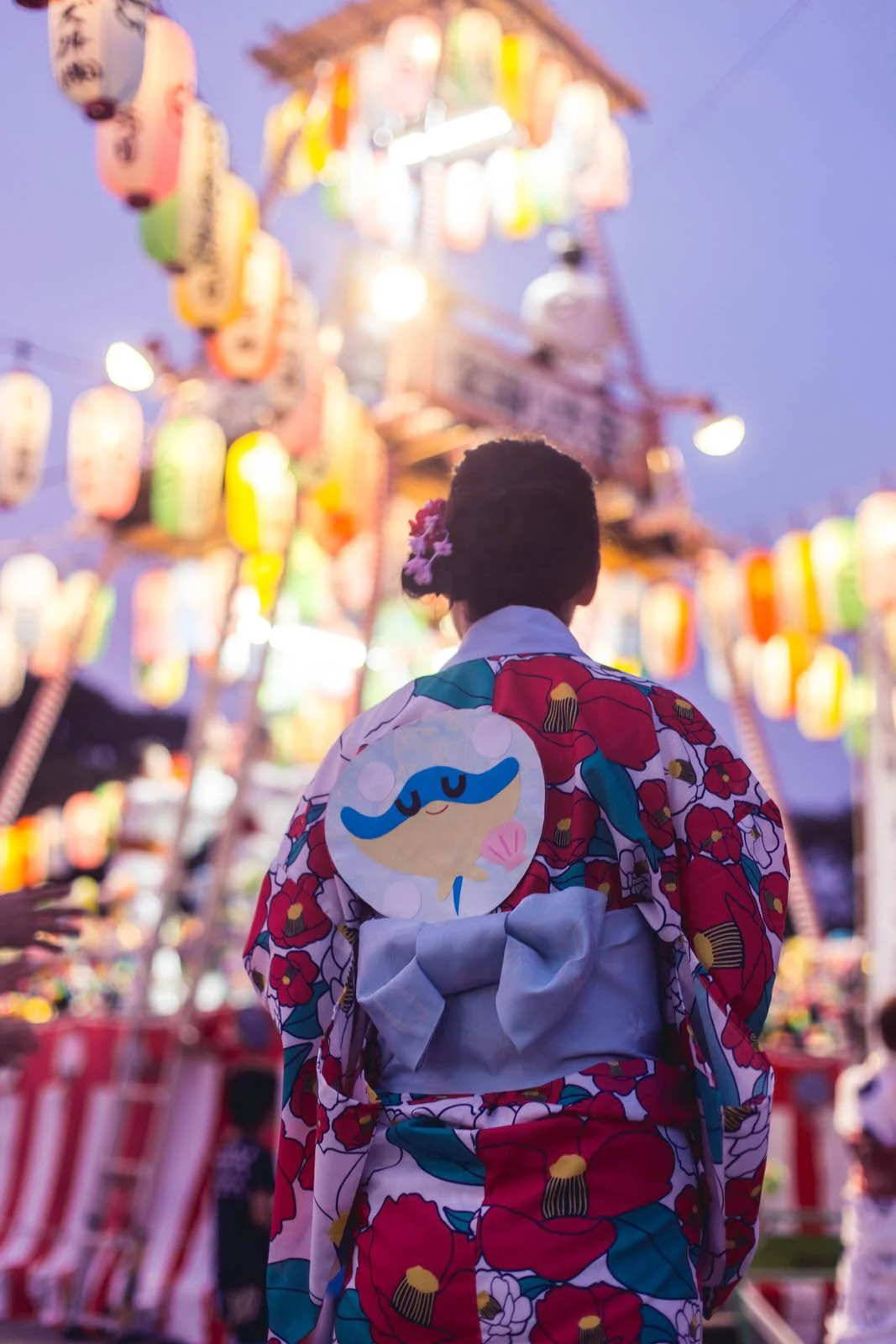
Matsuri are Japanese festivals, and they are concentrated in summer in a way that has no equivalent in spring or autumn. Almost every neighborhood in Tokyo holds at least one during July and August. The larger ones, such as Sumida and Koenji, draw hundreds of thousands of people. The smaller local ones are often more interesting precisely because they haven't been optimized for visitors.
What makes matsuri worth planning around: traditional clothing, portable food stalls, music, dancing, fireworks, and a version of Japanese community life that is genuinely difficult to access any other way as a visitor. The atmosphere at a neighborhood matsuri on a summer evening is one of those experiences that doesn't translate well into description. It's better encountered than explained.
For photography, matsuri are exceptional. The combination of yukata (a summer kimono), lantern light, and the natural movement and emotion of a festival produces images that look unlike anything else in Japan's photographic repertoire. Crowds are present, but they become part of the frame rather than a problem to work around. Evening light at a matsuri is some of the most interesting light of the year.
Smaller, neighborhood-centric matsuri are fantastic both for experiencing and photographing. Yutenji, a small residential area not far from Shibuya, sees several days of festival at its namesake temple - including an earlier version, specific for kids. Shimokitazawa, while less traditional and tending to its countercultural vibes, is also a great choice.
If your Tokyo trip falls in summer, finding at least one matsuri to attend is close to non-negotiable. They are not a consolation prize for missing autumn foliage. They are the reason some people specifically choose summer.
Is Summer Worth It?
For most visitors, yes, with adjusted expectations.
Summer is when tourism in Tokyo drops relative to spring and autumn. That means shorter queues, easier restaurant bookings, more availability across accommodation, and a version of popular locations that isn't fighting cherry blossom crowds. If your travel dates are fixed in July or August, there's genuine upside alongside the heat.
The visitors who have the hardest time in summer Tokyo are those who treat it like any other season. The ones who do well make a few simple adjustments: they start earlier, pause in the middle of the day, carry the right kit, and stop trying to do as much as they would in October.
Tokyo in summer asks for a different pace. It gives back a different city in return.