
Where to Propose in Kyoto: Best Spots & Timing
Kyoto gives a proposal something Tokyo can't: a backdrop that looks like old Japan almost anywhere you point a camera. That's exactly why it draws couples from all over the world for this specific moment. It's also why the location you pick matters more here than it might elsewhere. The wrong time of day at the wrong spot means a crowd of tourists between you and the shot, or worse, between you and the moment itself.
This guide covers seven Kyoto locations that actually work for a proposal, with the timing and crowd realities for each one, followed by the logistics that make or break the surprise.
In this guide:
Best Places to Propose in Kyoto
These are ordered roughly by how iconic they are, not by how much we'd recommend them. A couple of the most photographed spots in Kyoto are also the hardest to get a clean, private moment at, which is part of what you need to know before picking one.
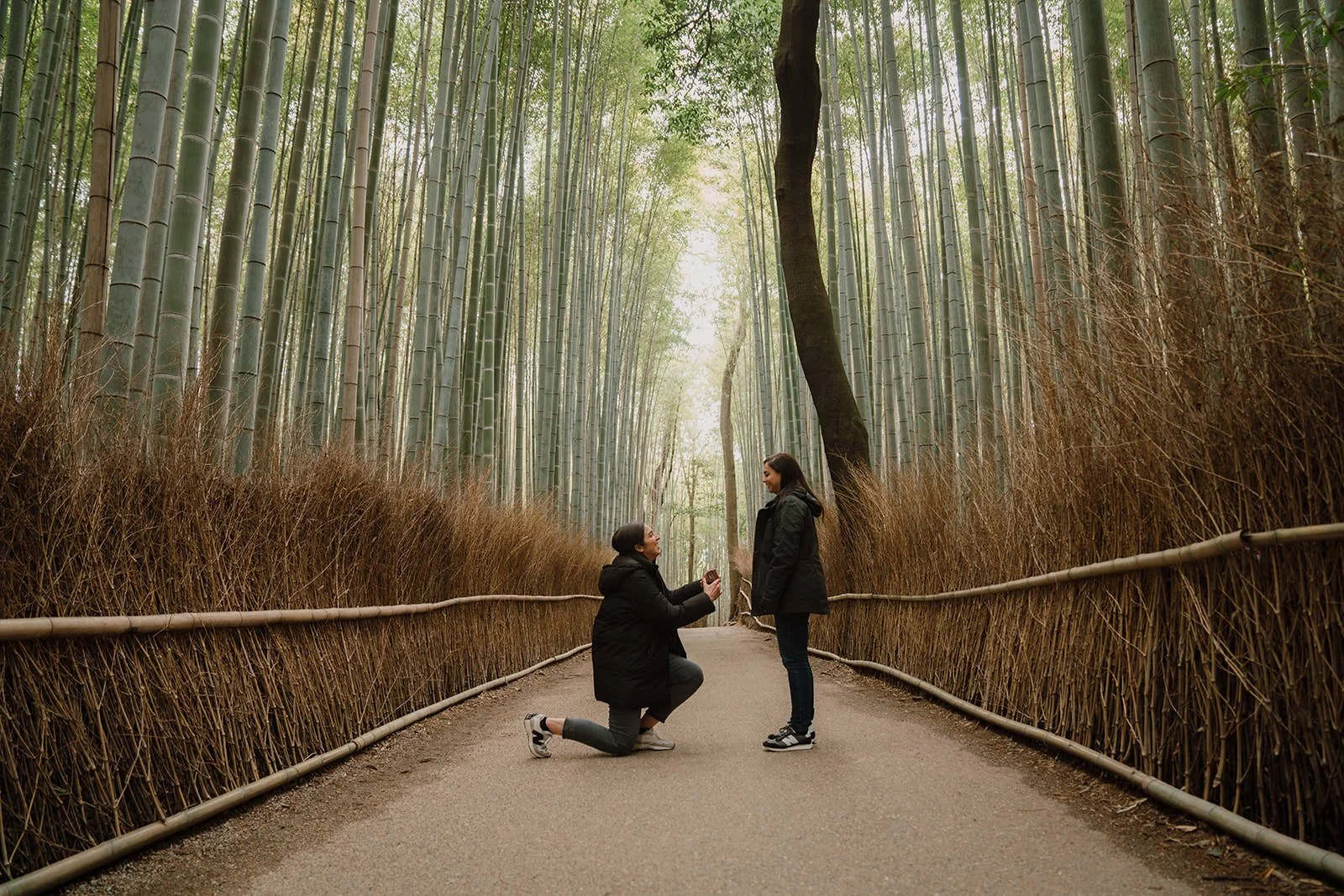
Arashiyama Bamboo Grove
The bamboo grove is the single most requested proposal backdrop in Kyoto, and for good reason: nothing else in the city looks quite like it. The tradeoff is timing. By mid-morning, the paths are dense enough that getting a quiet moment, let alone a clean shot, takes real positioning. Before 8am is the reliable window, though what counts as "early" shifts with the season. In summer the sun is up before 5am and the light is already changing fast by 7am, while winter gives a longer stretch of soft morning light.
If the main grove feels too exposed for a proposal specifically, the Katsura River Valley ten minutes further on is worth considering. It's quieter, feels closer to countryside Japan than central Kyoto, and works especially well in the off-season months when you want privacy over foot traffic. It's not a family location, but for a proposal it's one of the better-kept options nearby.
Fushimi Inari
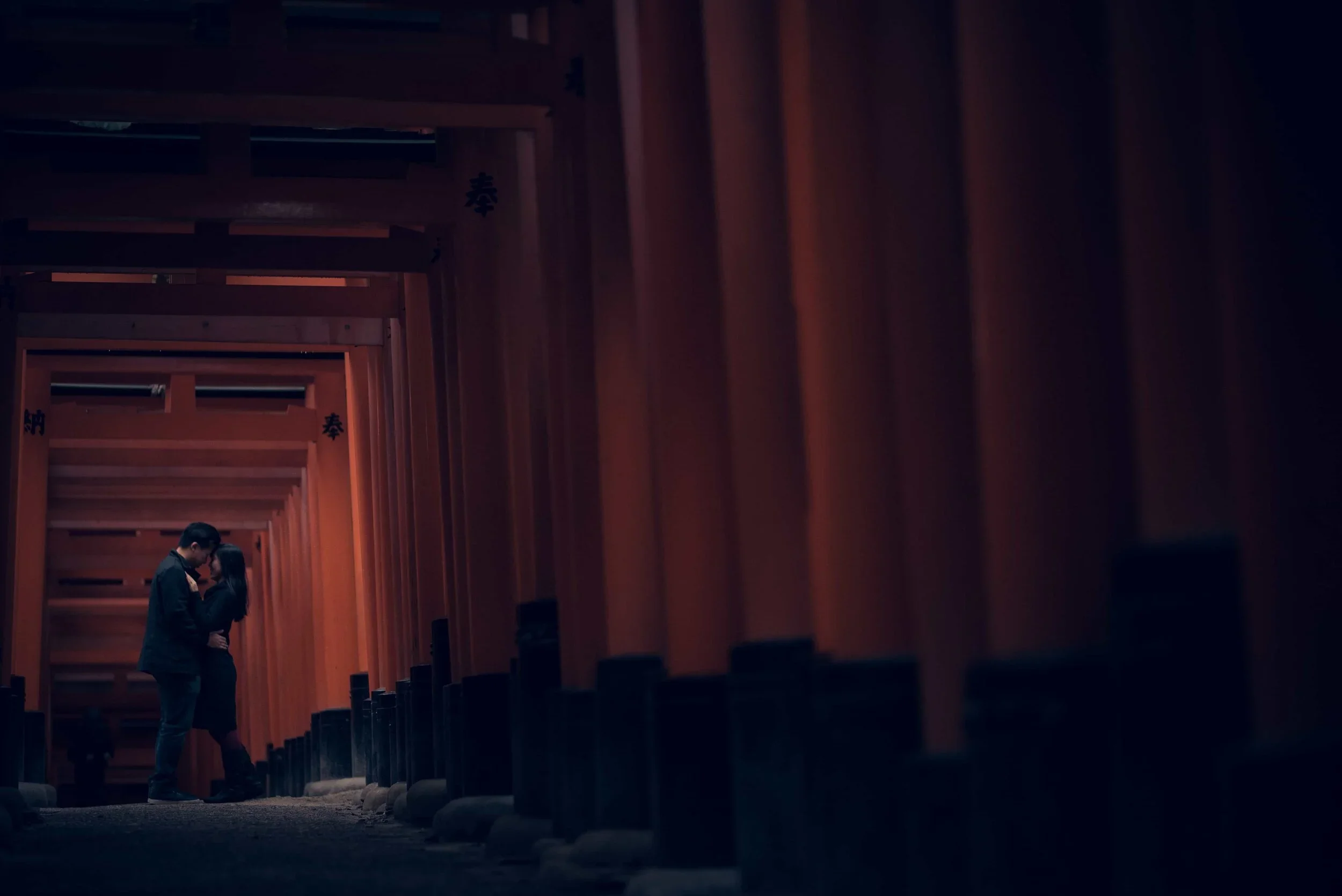
The thousand torii gates are the most searched proposal image in Kyoto, and it would be dishonest to leave them off this list. It's also worth being direct: this is one of the more crowded locations on it. The lower sections of the trail, roughly the first fifteen minutes of walking, hold the most recognizable gate-tunnel imagery, and most couples don't want to hike much further than that anyway, so PMT works within that stretch rather than pushing deeper for solitude that isn't really the point of choosing Fushimi Inari in the first place.
It's a working shrine, so photography is generally fine but discretion matters, particularly if you're planning the proposal itself here rather than just photos afterward. Early is still better than late.
Gion and Higashiyama (Ninenzaka, Sannenzaka, and Nene no Michi)
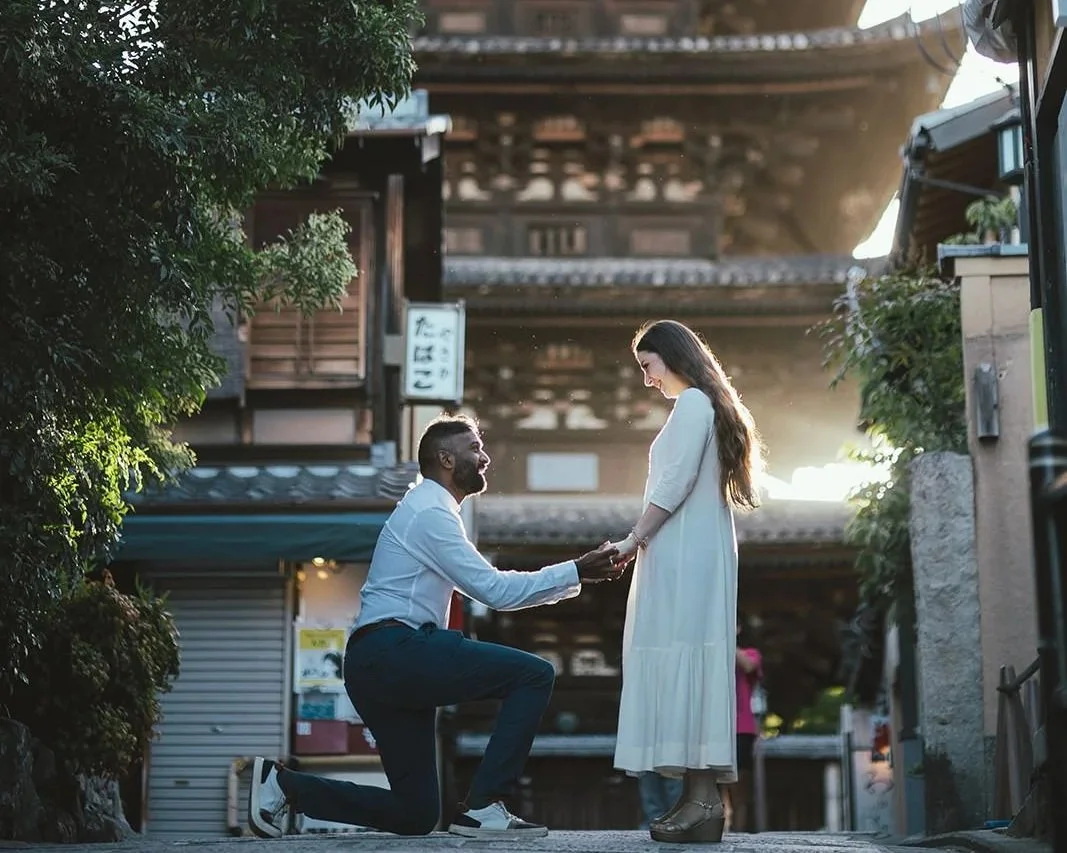
The stone-paved lanes around Ninenzaka and Sannenzaka are Kyoto at its most photogenic, and also some of its most crowded outside peak season. The timing here is strict: before 8am, or after the shops close in the evening. There's not much usable middle ground. The evening window is a genuine option worth considering for a proposal specifically. The lanterns come on at dusk for around forty minutes of good light, and it pairs naturally with a dinner reservation nearby as a cover story.
Nene no Michi, just next door, is quieter for reasons that aren't obvious from a map and stays workable through the afternoon when its neighbors don't. Note that parts of it run through a residential area where photography isn't permitted, so it's worth confirming the exact stretch with your photographer rather than assuming the whole street is open.
One street to avoid entirely: Hanamikoji, Gion's most famous strip. It's heavy with foot traffic and tourists behaving badly around the geisha who live and work there, which makes it a poor choice photographically and, frankly, a poor place to propose. The quieter side streets around it deliver the same traditional architecture without the crowd.
Maruyama Park
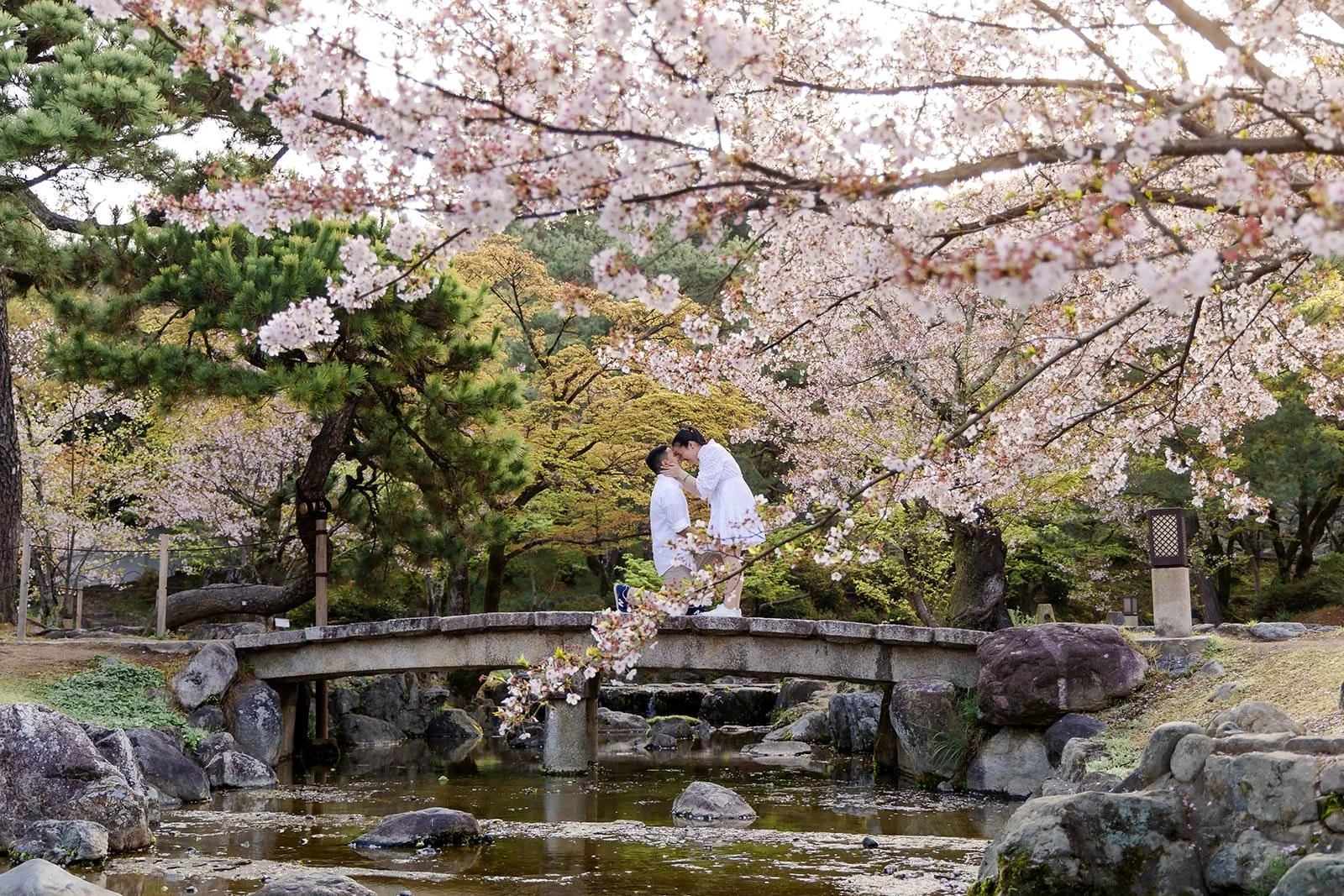
A pleasant, workable park year-round, but it earns its place on this list specifically during cherry blossom and autumn foliage. It's one of the stronger cherry blossom locations in Kyoto and gets genuinely striking in November. It sits close enough to Nene no Michi that the two can be combined in a single hour-long session, giving a proposal shoot two different visual settings without losing much time to travel.
Daigo-ji
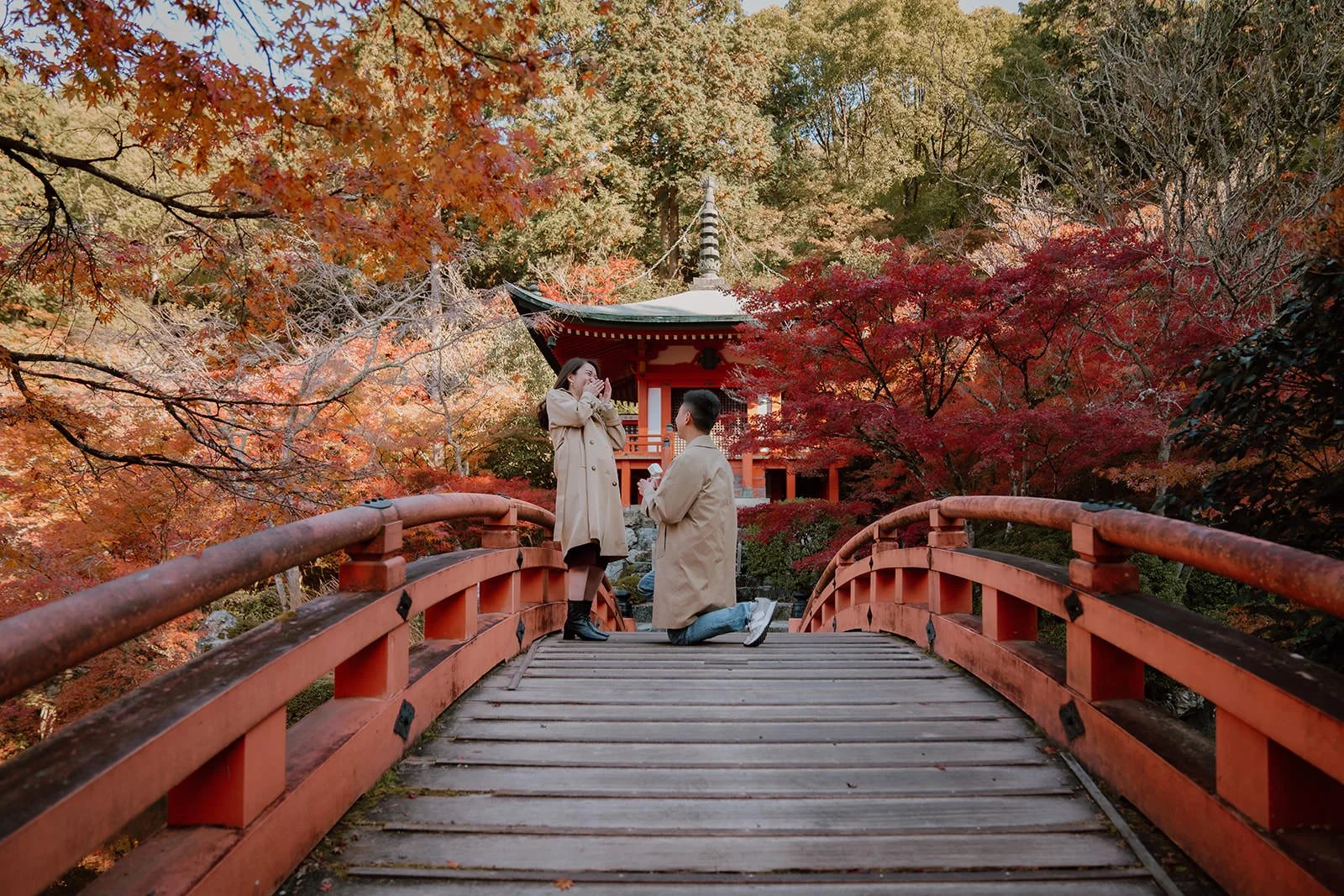
Daigo-ji sits far enough south of central Kyoto to stay off most standard itineraries, without being remote or hard to reach. That relative inconvenience is exactly why it stays quiet on most days, in most seasons. The anchor spot is a red bridge over a pond, at its strongest in autumn when foliage surrounds it, with cherry blossoms giving a spring option and lush green cover through summer.
Unlike Arashiyama or Higashiyama, Daigo-ji doesn't demand strict early-morning timing to get a clean shot. Opening at 9am is still the quietest window, but the temple doesn't turn into an all-or-nothing crowd situation the way the more central spots do. Even during peak autumn foliage, when the bridge is harder to have entirely to yourselves, it's still workable. For a proposal that wants intimacy without the 6am start, this is one of the better options in Kyoto.
Kamogawa Riverside
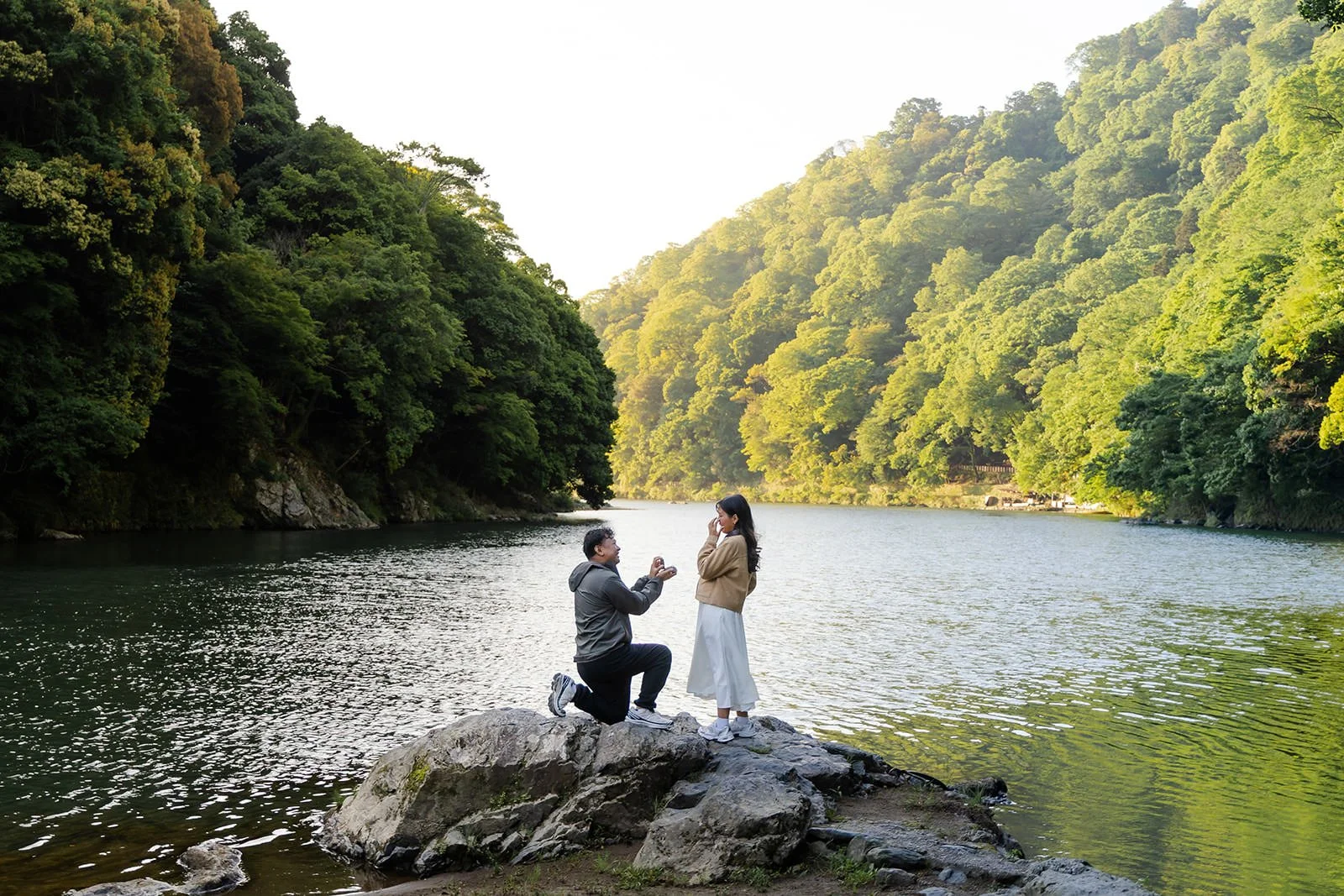
Most people mingle around the Togetsukyo Bridge and its surroundings in Arashiyama, but never venture inside the valley. That means a hidden-in-plain-sight spot, framed by mountains and the reflection of Kamogawa's waters.
The 10- to 15-minute walk is enough to repel the massive tourism the reach Arashiyama, making this a surprisingly quiet and atmospheric spot that is perfect for proposals.
Kitano Tenmangu
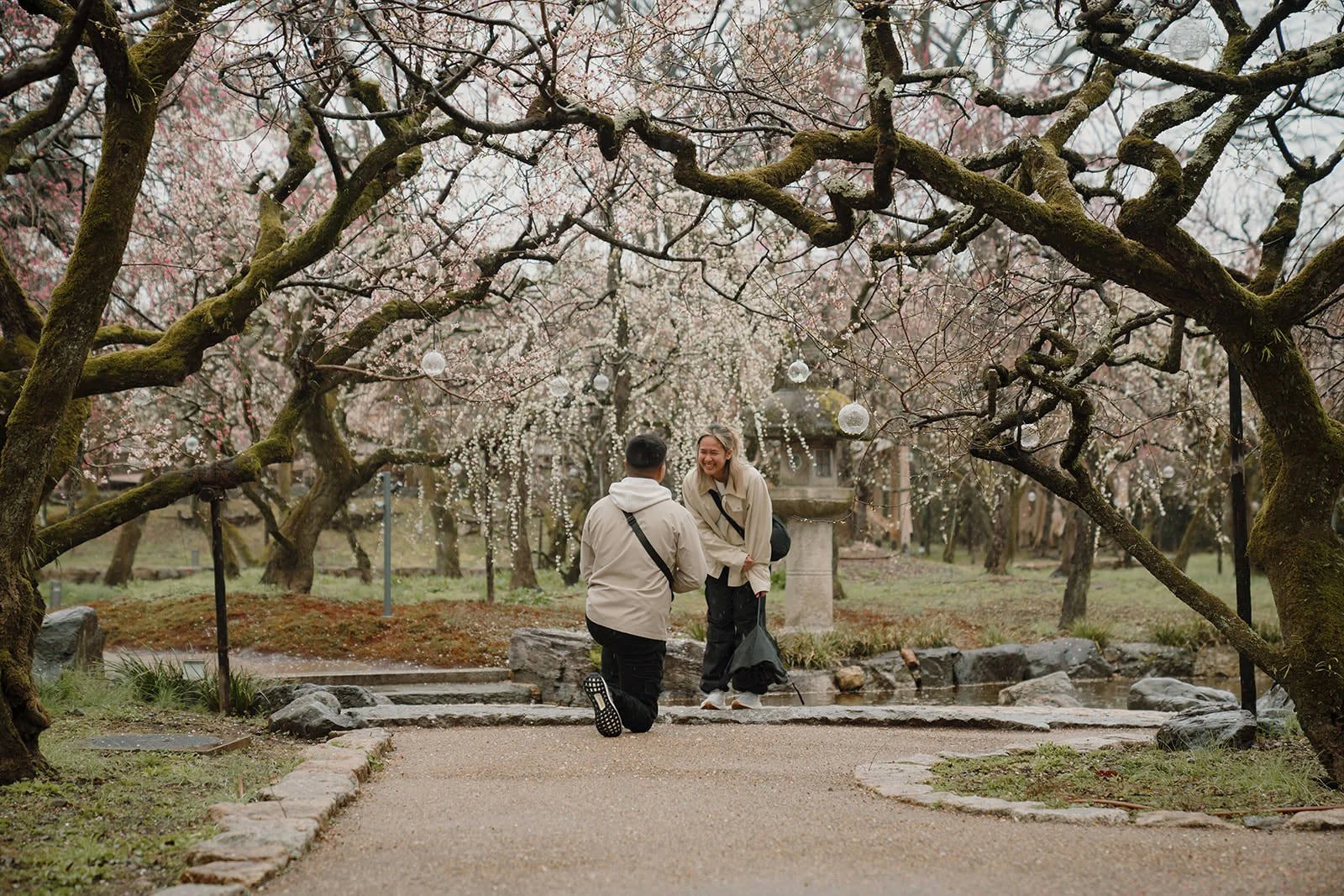
Kitano Tenmangu is best known for its plum blossoms, typically blooming from early February into early March, ahead of Kyoto's cherry blossom season. The temple's garden has a unique concentration of trees, making it one of the best plum blossom viewing spots in the city.
Even though it's located slightly out of the main attractions of Kyoto, the period does attract heavy crowds, so early morning photoshoots are an absolute must in the area.
Kyoto or Tokyo: Is Kyoto the Right Call?
Most visitors land in Tokyo first, spend several days there, and arrive in Kyoto assuming it will behave the same way. It doesn't, in two specific ways worth knowing before you commit to a location here.
Tokyo's crowds spread across a sprawling, multi-hub city with wide streets and open space, so they rarely feel overwhelming even at popular spots. Kyoto's crowds concentrate in narrow traditional streets and specific landmark areas, so the same number of people feels like a lot more of them. Visitors who found Tokyo's crowds manageable are often surprised by how differently the same crowd size lands in Kyoto's tighter geography.
Transportation is the other adjustment. Tokyo's train network covers almost everything seamlessly. Kyoto's is more of a patchwork, strong on some routes and weak on others, and most guides default to buses that are slower and less flexible than a taxi or bike in practice.
None of this is a reason to skip Kyoto for a proposal. Traditional Japanese scenery is more concentrated here than anywhere else in the country, which is exactly what most couples are picturing when they imagine a Japan proposal. It's just a different city to plan around than Tokyo, and worth knowing that going in. For couples still deciding between the two, our Japan-wide proposal planning guide covers the broader decision.
Keeping It a Surprise: Cover Stories and Positioning
A Kyoto proposal usually involves two people in very different emotional states arriving at the same location: one who has planned everything, and one who has no idea what's about to happen. Getting the second person to the right spot, at the right time, without giving anything away, is most of the actual logistics work.
The cover story matters as much as the location. A dinner reservation near Gion, a "quick walk" through Nene no Michi before it, a suggestion to see the bamboo grove "since we're already in Arashiyama": the story needs to feel like a normal part of the day, not an engineered detour. Coordinate the exact spot, timing, and route with your photographer in advance so they can position themselves before the moment happens, rather than scrambling to catch up once it does.
Whatever happens once you're there, don't stall waiting for perfect conditions. A partner who's kept waiting while you look for better light or a clearer view tends to lose the moment before it arrives. Commit to the location and the timing you've planned, and let the proposal happen.
Weather and Season
Spring cherry blossom is Kyoto's highest-demand season for proposals, and also its most crowded. If you're set on cherry blossoms specifically, expect to plan around serious crowds at the well-known spots and build in early timing.
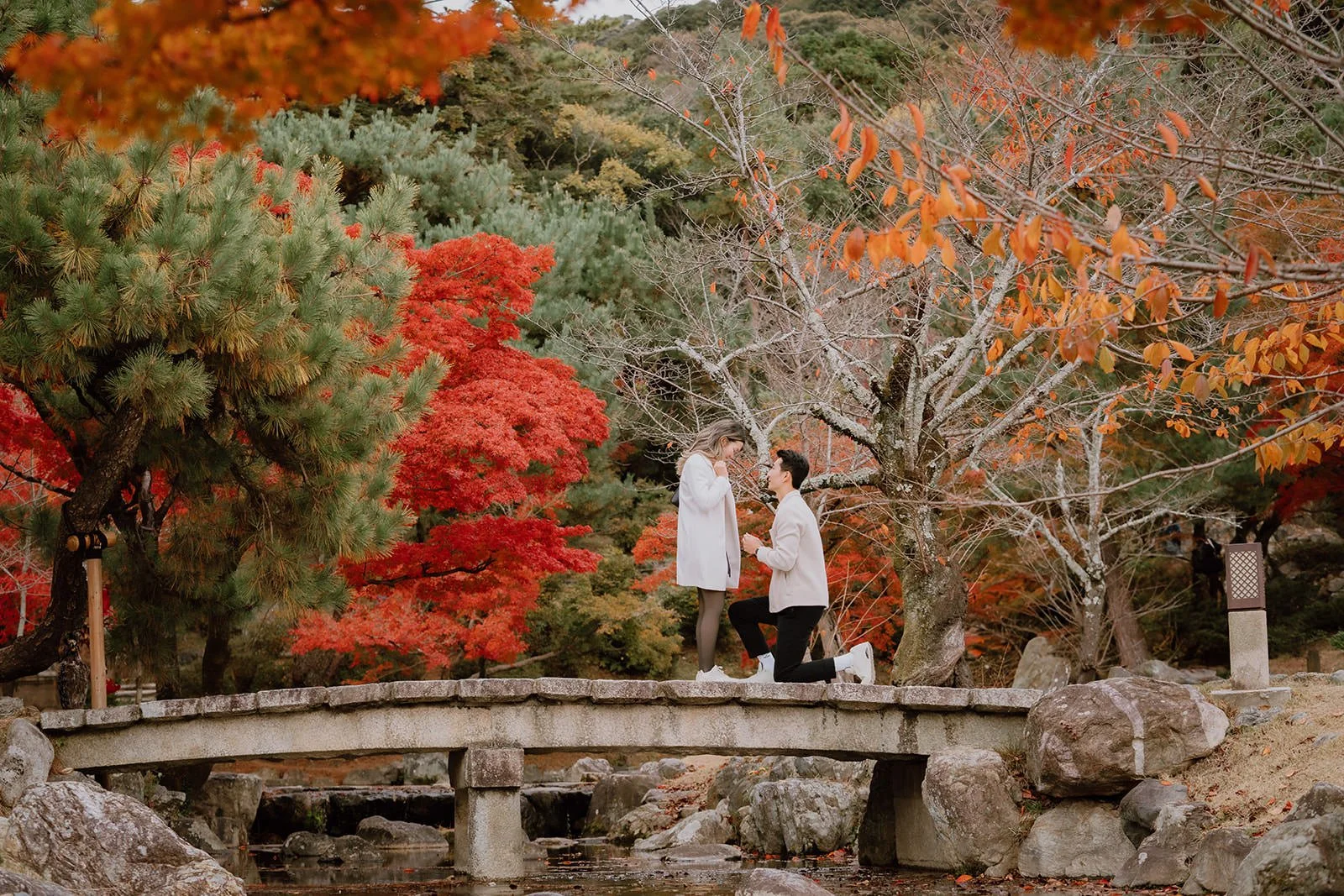
Autumn, particularly November, is Kyoto's most celebrated season and genuinely different from Tokyo's. Kyoto delivers yellows, oranges, and reds all at once, where Tokyo's colors arrive in stages from October through December. Autumn crowds are large, but because the color is citywide rather than concentrated at a handful of spots, locations that wouldn't normally make a shortlist, including Daigo-ji, become genuinely strong options precisely because everyone else is queuing at Arashiyama and Fushimi Inari instead.
Summer in Kyoto is more oppressive than Tokyo's. The city sits in a basin surrounded by mountains, which traps heat and humidity more effectively than Tokyo's more open geography. The same early-morning rule applies, before 9am is the manageable window, and midday is close to a non-negotiable avoid. If summer is your only option, Kurama, a mountainous area just outside central Kyoto, runs several degrees cooler due to elevation and offers a genuinely different experience if you want to build a full day trip around the proposal rather than a single stop.
Winter is Kyoto's most underrated season for a proposal. Visitors from North America and Europe tend to expect the grey, bare winters of home and are surprised by clear skies and thin crowds instead. Snow is slightly more likely here than in Tokyo, thanks to the same mountain-basin geography, and a dusting on temple roofs and bamboo is one of the more striking things Kyoto can offer, though it's a bonus to hope for rather than something to plan around. For a broader read on how Kyoto's seasons compare across the year, see our guide to Japan's four seasons.
What to Look for in a Photographer
A Kyoto proposal has a narrow margin for error: one attempt, one partner who doesn't know it's coming, and often a location with a strict crowd window. A few questions worth asking before you book: Has this photographer worked proposals specifically, not just couples' portraits? Do they know the timing and crowd patterns at the location you have in mind, or will you be the ones providing that knowledge? What's the backup plan if the weather or crowds don't cooperate on the day?
Kyoto shoots at PMT are handled by a team with deep, ongoing location knowledge across the city, which matters more here than it might in a place with fewer crowd-timing traps to navigate.
Booking Timeline
Book with as much lead time as you can manage, particularly if you're set on a specific season or a specific location with a tight timing window, like Ninenzaka or the bamboo grove. Lead time also gives you room to hold a backup date, which matters more in Kyoto than it might elsewhere given how much certain spots depend on getting the timing right.
FAQ
Where is the best place to propose in Kyoto?
There isn't a single best spot, it depends on what you want. The bamboo grove and Fushimi Inari give you the most iconic imagery but the most crowd management. Daigo-ji and the Katsura River Valley near Arashiyama offer more privacy without needing a pre-dawn start. Gion and Higashiyama work well in the evening if a dinner-and-walk cover story fits your plans.
Is cherry blossom season a good time to propose in Kyoto?
It can be, but go in with clear expectations. Cherry blossom is Kyoto's busiest season for proposals, and the well-known viewing spots get genuinely crowded. If the season matters more to you than avoiding crowds, plan for early timing and consider less mainstream locations.
Do you need permission to propose at a Kyoto temple or shrine?
Most temple and shrine grounds allow photography with basic discretion, since these are active places of worship, not just tourist sites. Some areas, including parts of Nene no Michi near Gion, run through residential sections where photography isn't permitted at all. Confirm the specific spot with your photographer rather than assuming the whole grounds are open.
What's the best time of day to propose in Kyoto?
For most of the locations on this list, early morning, before 8 am, is the reliable window for avoiding crowds. Gion and Higashiyama are the exception: the evening window after shops close, once the lanterns come on, works just as well and pairs naturally with a dinner reservation as a cover story. Daigo-ji is the most forgiving on timing and doesn't demand a pre-dawn start the way Arashiyama does.
Is Fushimi Inari worth it for a proposal despite the crowds?
It depends on what matters more to you: the image or the privacy. Fushimi Inari's gates are genuinely unmatched for a proposal photo, and PMT works the lower section of the trail specifically because that's where the most recognizable imagery is, without needing to hike further for solitude that isn't really the point. If a quiet, private moment matters more than the iconic backdrop, Daigo-ji or the Katsura River Valley will serve you better.
Is Autumn/Fall a good season to photograph in Kyoto?
Yes, it definitely is. The city shows yellows, oranges, and reds all around town. Tourism increases, but lesser-known parks and temples transform with the seasonal colors and expand the photoshoot location options drastically. Check with us for tips on temples mostly frequented by locals.
What happens if it rains on the day of the proposal?
Rain doesn't have to mean rescheduling. Crowds thin out significantly, the light goes soft and even, and wet stone surfaces add reflections you don't get on a clear day. The harder part is usually the decision to go ahead rather than the shoot itself. If keeping a fixed date matters more than ideal weather, a rainy Kyoto proposal can still produce a strong, memorable result.
Ready to plan the details? Our Kyoto proposal photography page covers pricing, booking, and what to expect from the day itself.