
Tokyo in Autumn: When the Color Actually Arrives
If you're planning a Tokyo trip around "peak autumn," the honest answer is that Tokyo doesn't really have one. It has several, spread across two months, arriving in a sequence rather than all at once. Ginkgo turns before maple. Some parks are done by the time others have barely started. Understanding that sequence, rather than chasing a single date, is what actually determines whether your trip lands during good colour or misses it.
This guide breaks down when Tokyo's autumn colour actually shows up, location by location, using PMT's own dated shoot photos rather than a general calendar. It also covers where the city genuinely can't match Kyoto, and where to plan around that honestly instead of pretending otherwise.
In this guide:
Why Tokyo Never Looks Like Kyoto in November
Most guides describe Tokyo's autumn as simply later than Kyoto's, as if you could shift the whole calendar back a few weeks and get the same result. That's not quite right, and it's worth being direct about the actual difference.
Kyoto's autumn colour arrives together. By mid-to-late November, reds, oranges, and yellows show up at the same time, across large areas of the city. That simultaneous density is what makes Kyoto's autumn photographs look the way they do.
Tokyo's colour arrives in sequence instead. Yellows and oranges come first, through November. The deep reds most visitors picture when they imagine Japanese autumn don't peak until mid-to-late December, sometimes six to eight weeks after Kyoto's simultaneous peak has already happened. By the time Tokyo's reds are at their best, a meaningful amount of the yellow foliage that would have completed a Kyoto-style scene has already dried and dropped to the ground.
This isn't a case for Tokyo autumn being lesser. It's real, and worth photographing on its own terms. But it's a genuinely different experience: sequential rather than simultaneous, spread across two months rather than concentrated into two or three weeks. A visitor who understands that going in plans a better trip than one expecting a Kyoto-style peak inside city limits.
Ginkgo First, Maple Last
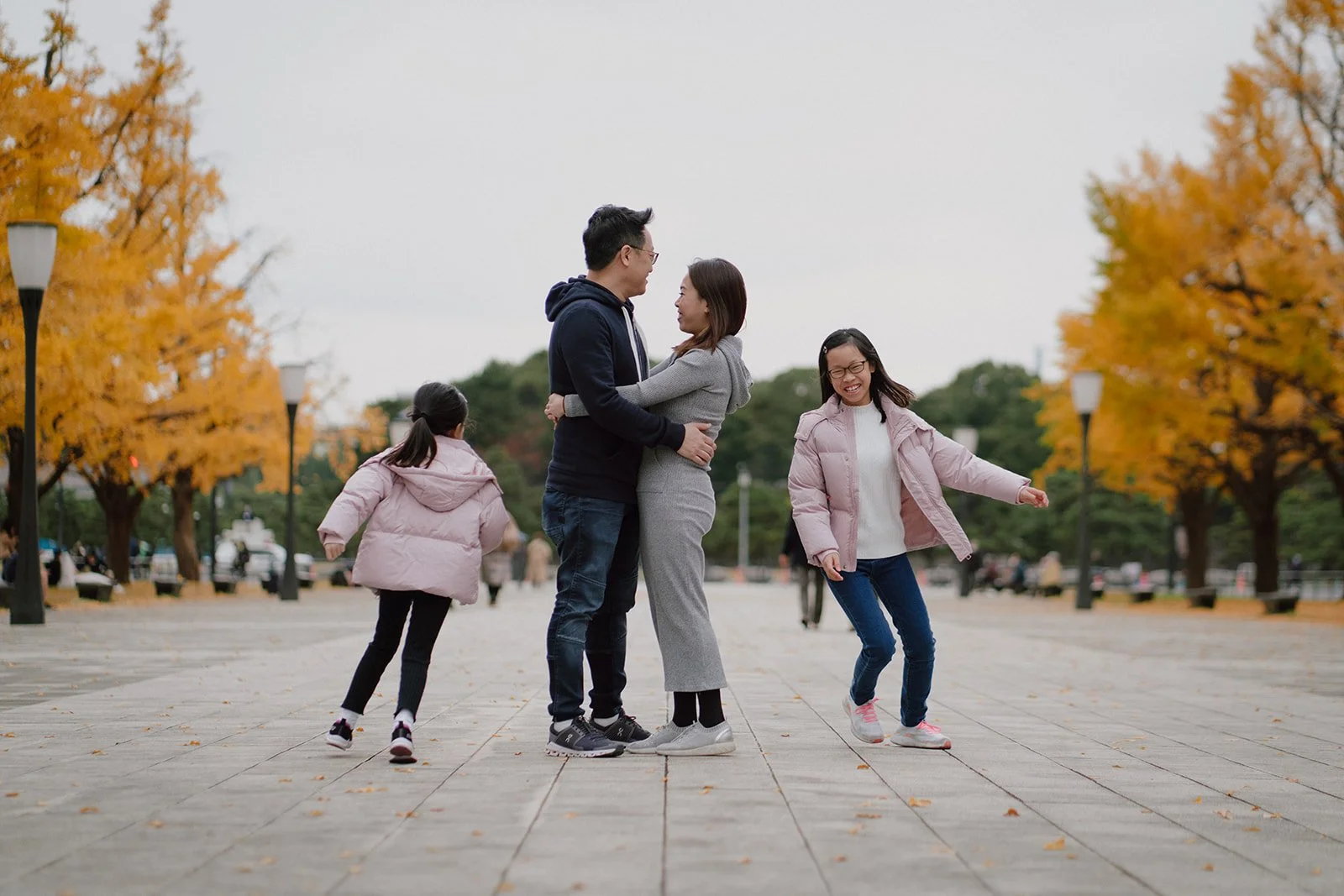
The single most useful fact for timing a Tokyo autumn trip is that ginkgo and maple do not turn together, and most visitors don't realise there's a gap.
Ginkgo (yellow): peaks in early December.
Maple (red): peaks mid-to-late December, often two to three weeks after the ginkgo.
Visitors who plan a Tokyo autumn trip for late November, assuming that's peak season the way it is in Kyoto, often catch the tail end of the yellow and miss the reds entirely. Visitors chasing the classic deep-red maple shot need to look at the back half of December, not the fourth week of November.
Where to See It, Location by Location
The timing below comes from reviewing years of PMT's own dated shoot photos against their capture dates, location by location, rather than relying on memory or a general seasonal calendar. It's more precise than a citywide estimate, and it shows real variation even between parks that share the same tree species.
| Location | Late Oct | Early Nov | Late Nov | Early Dec | Late Dec |
|---|---|---|---|---|---|
| Shinjuku Gyoen |
 Pale, barely turning
|
 Sycamore yellow/orange; ginkgo still green
|
 Yellow/orange/green mixed
|
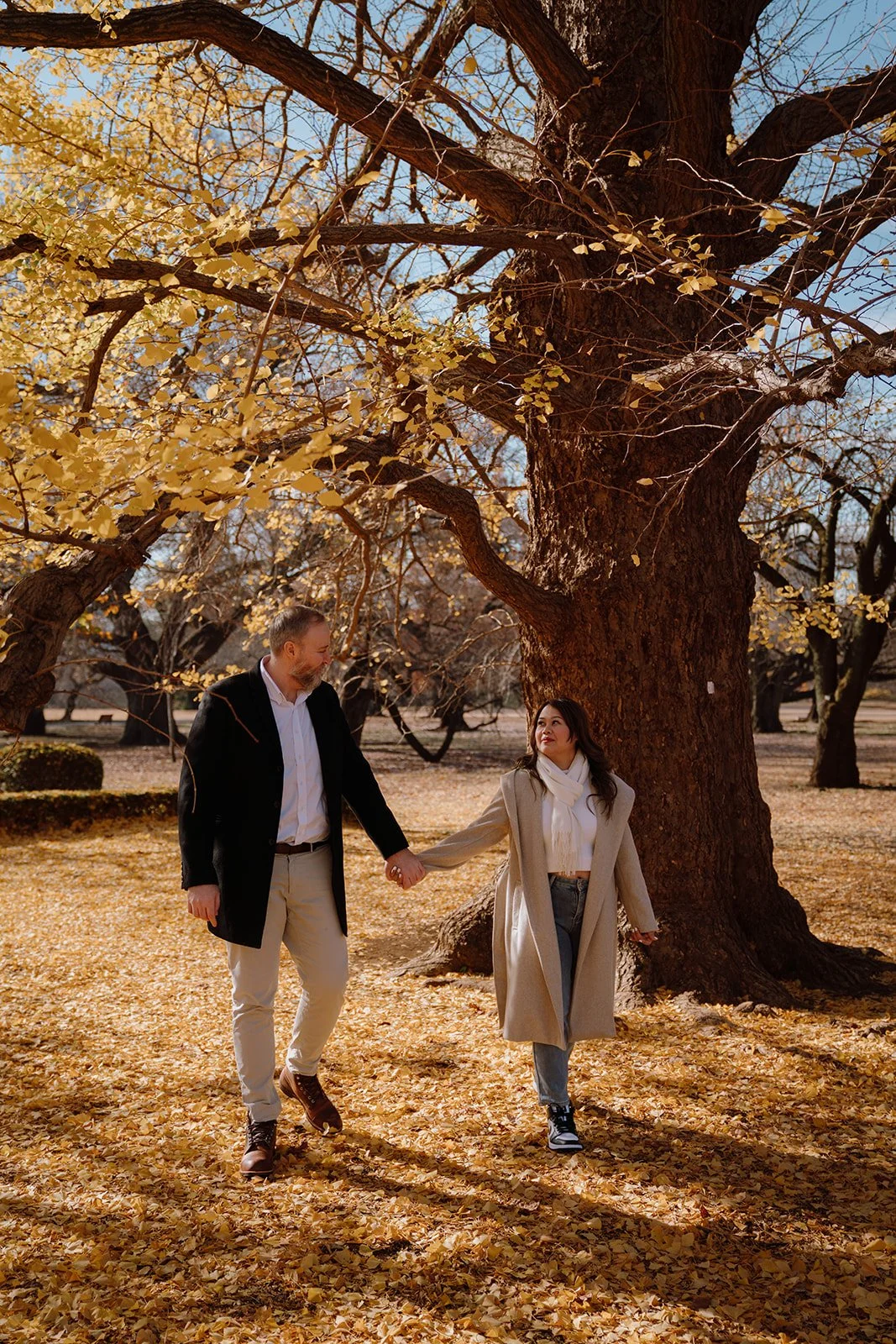 Ginkgo peak yellow; redwoods peak orange
|
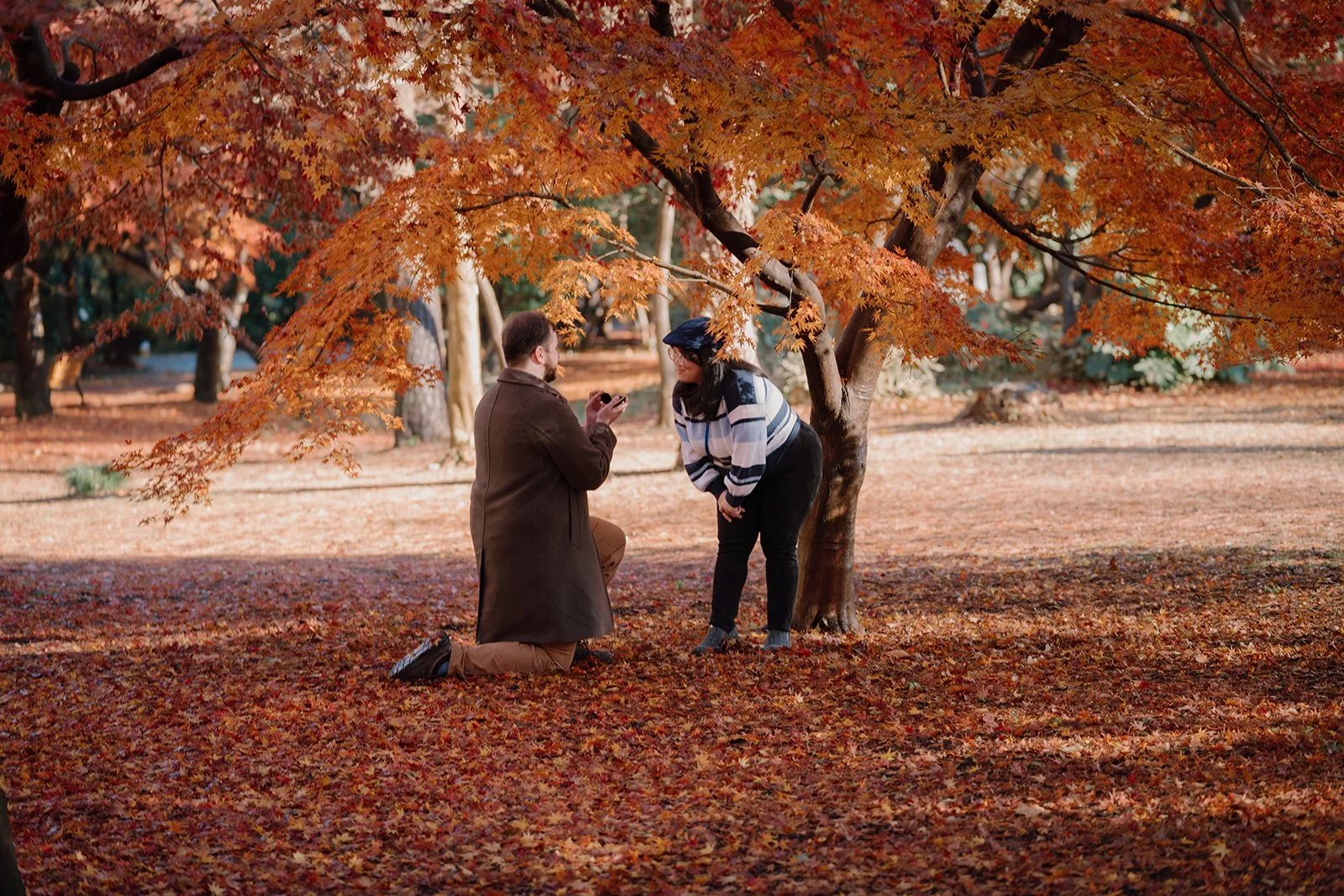 Maple red sustained
|
| Rikugien Gardens |
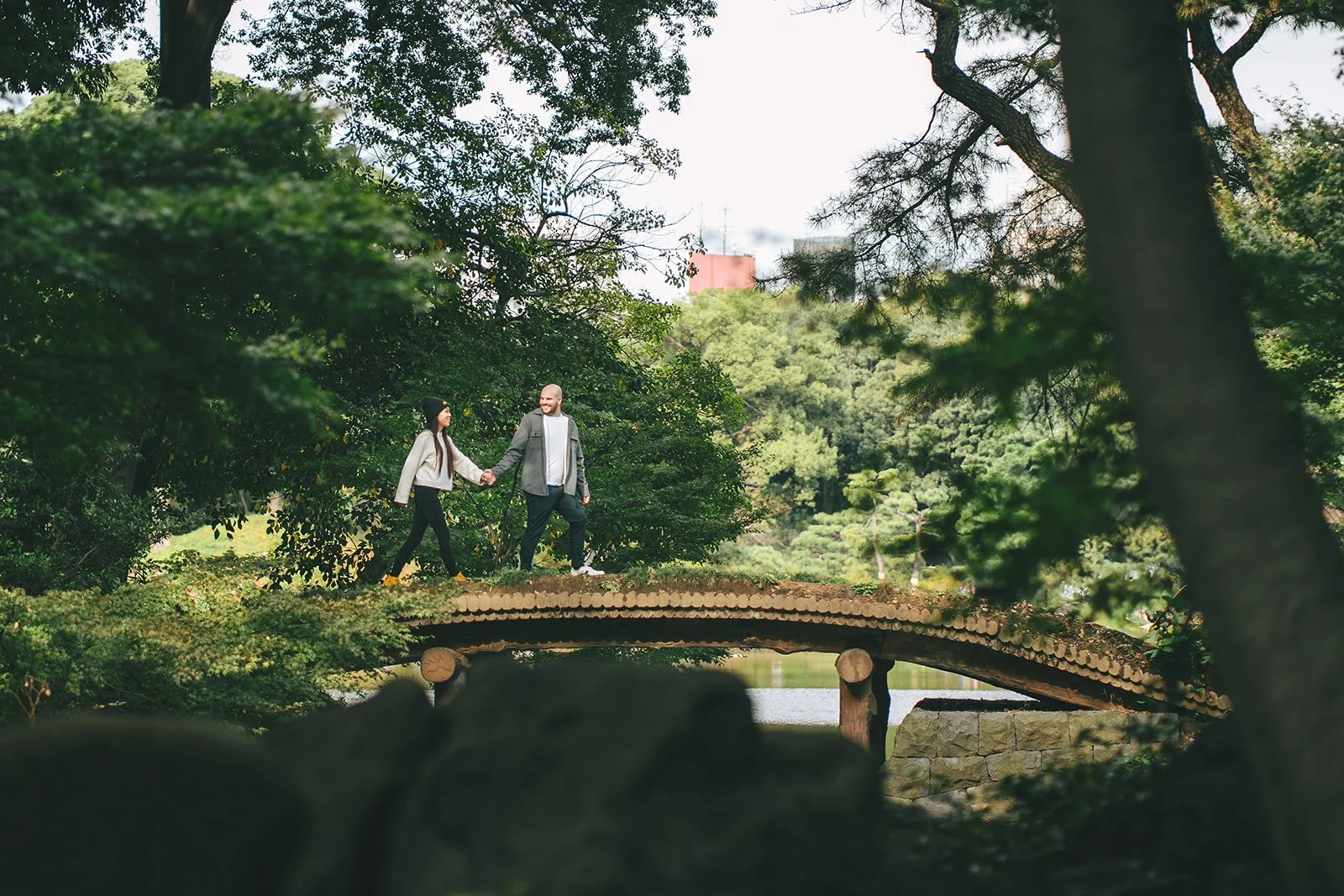 Fully green
|
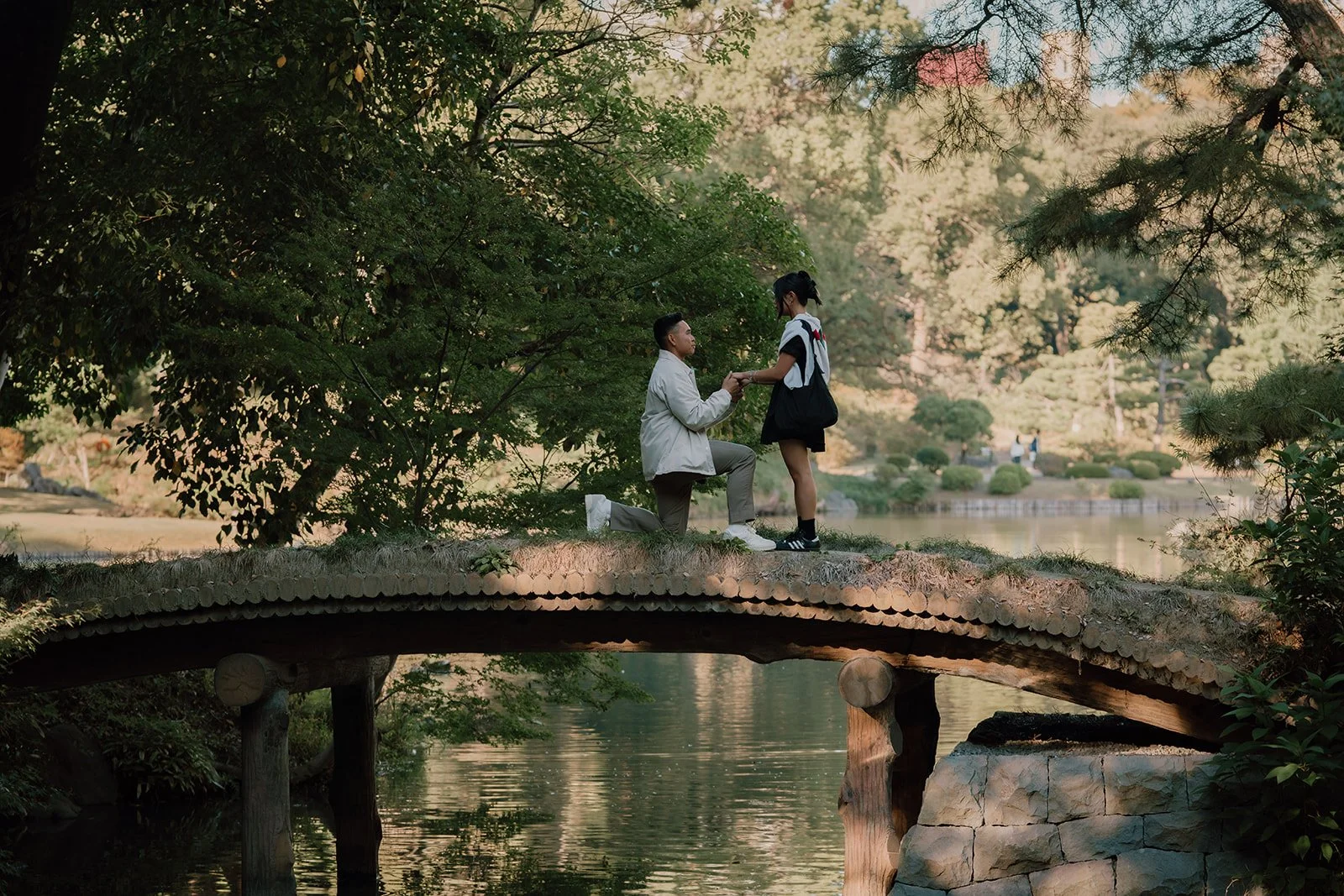 Fully green
|
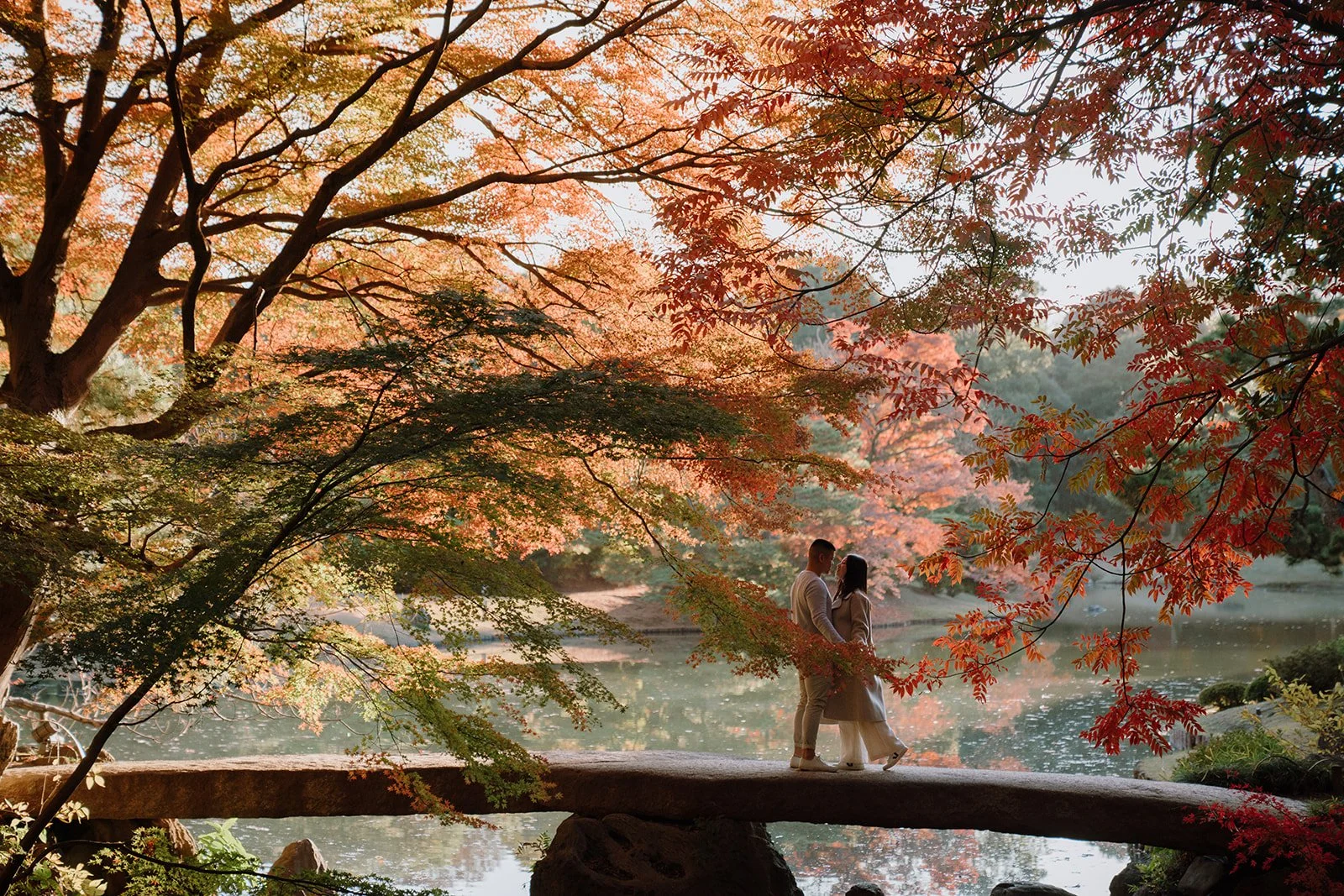 Just starting to turn
|
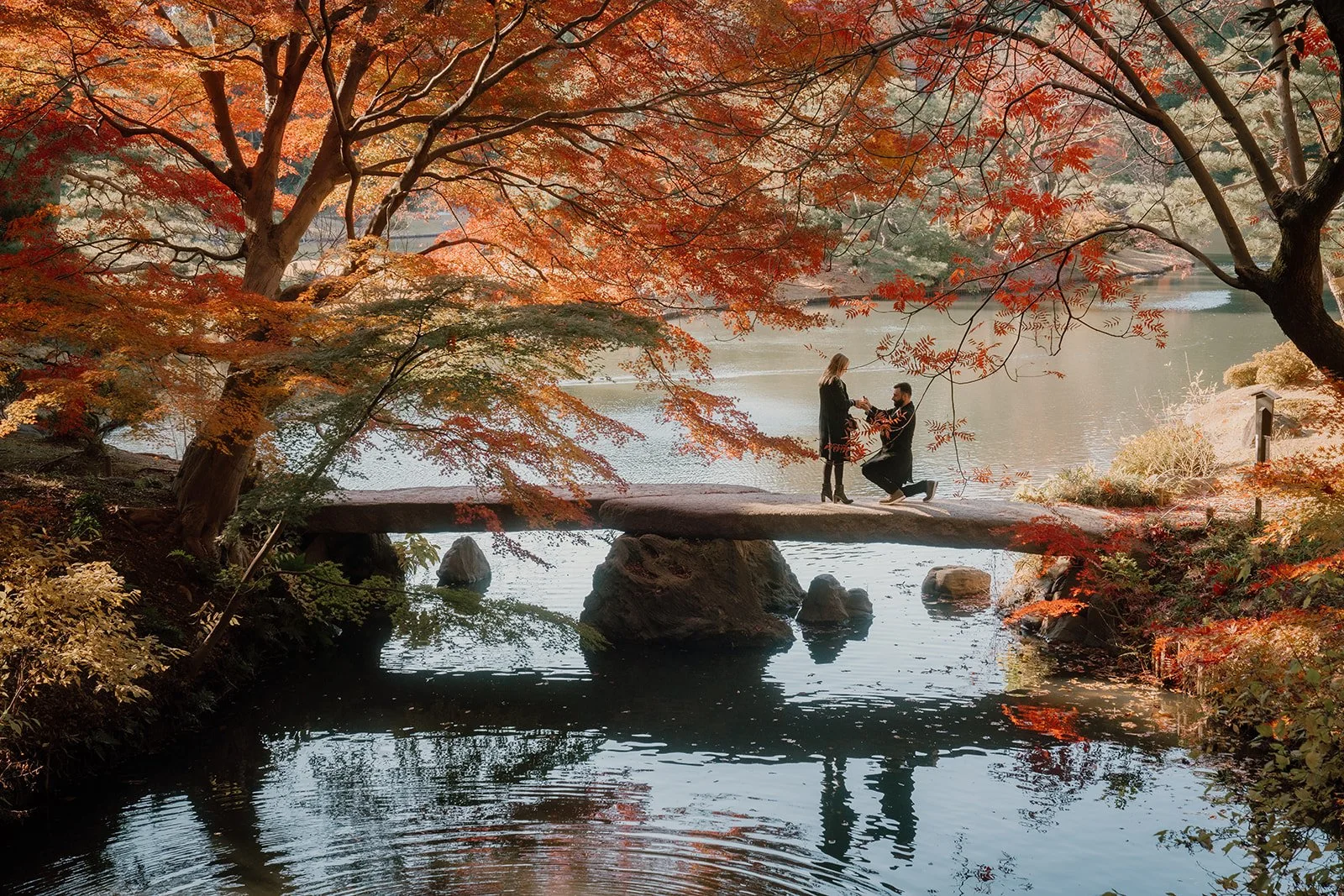 Full peak (red, orange/gold in canopy)
|
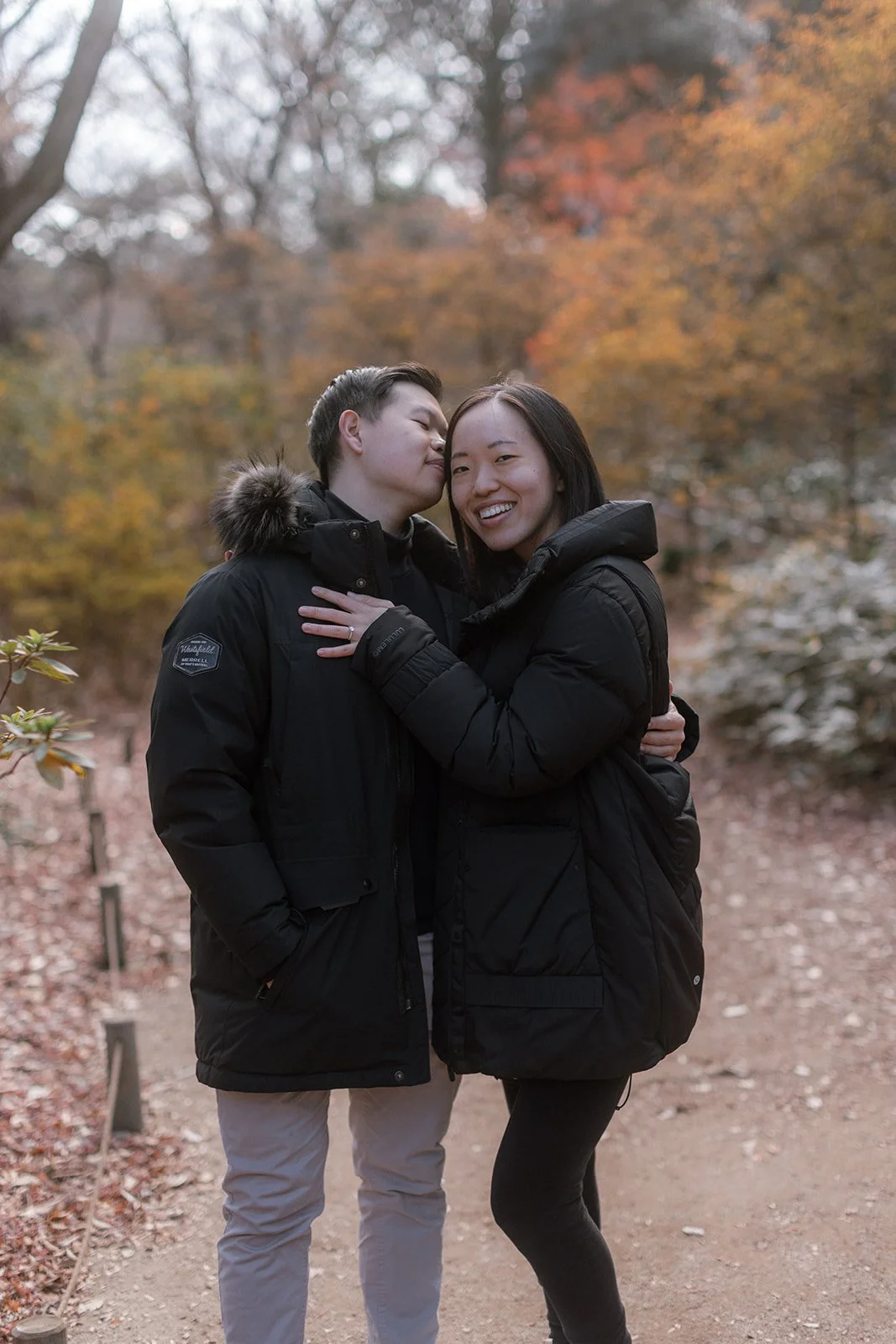 Red lingering, canopy thinning
|
| Hibiya Park |
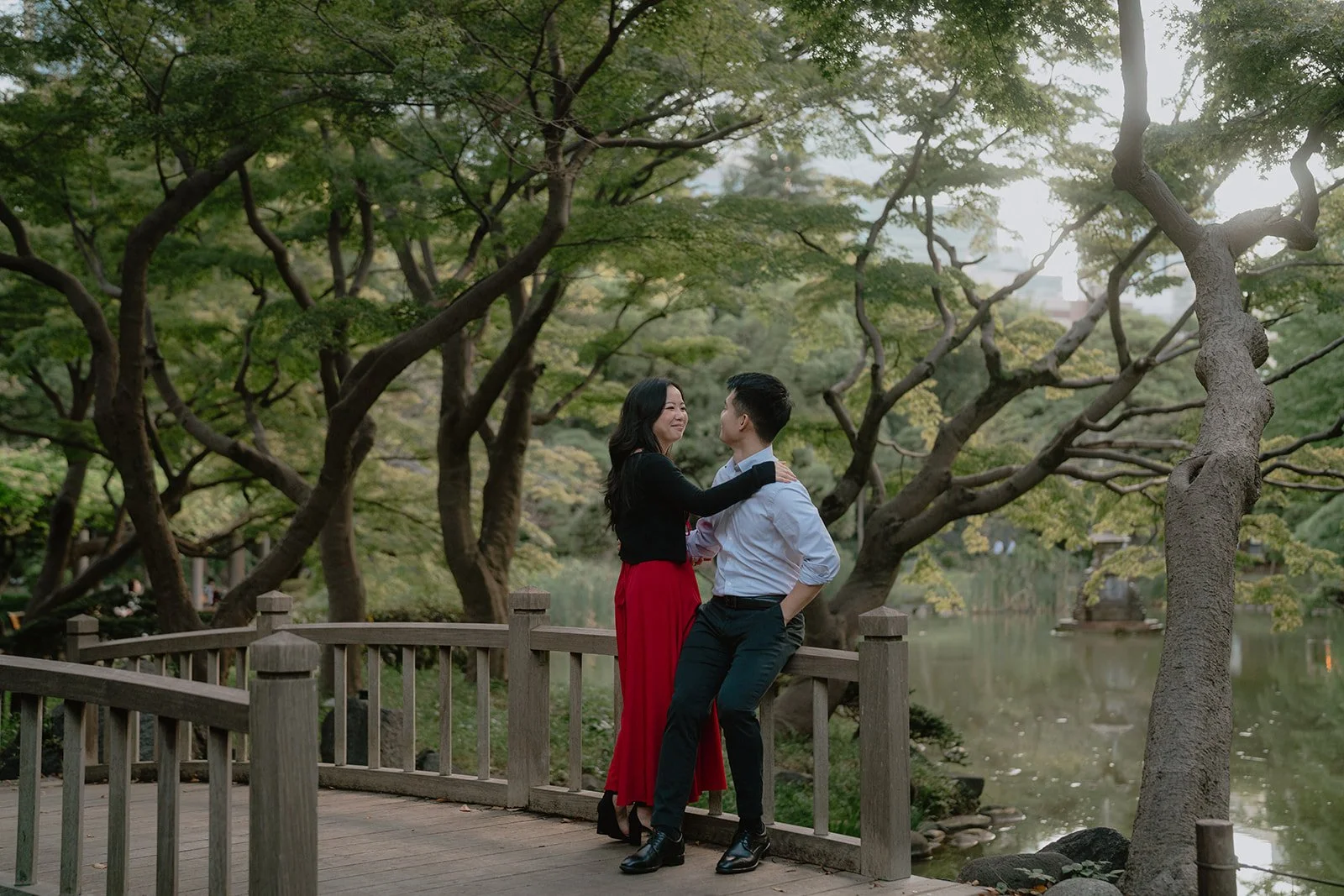 Mostly green
|
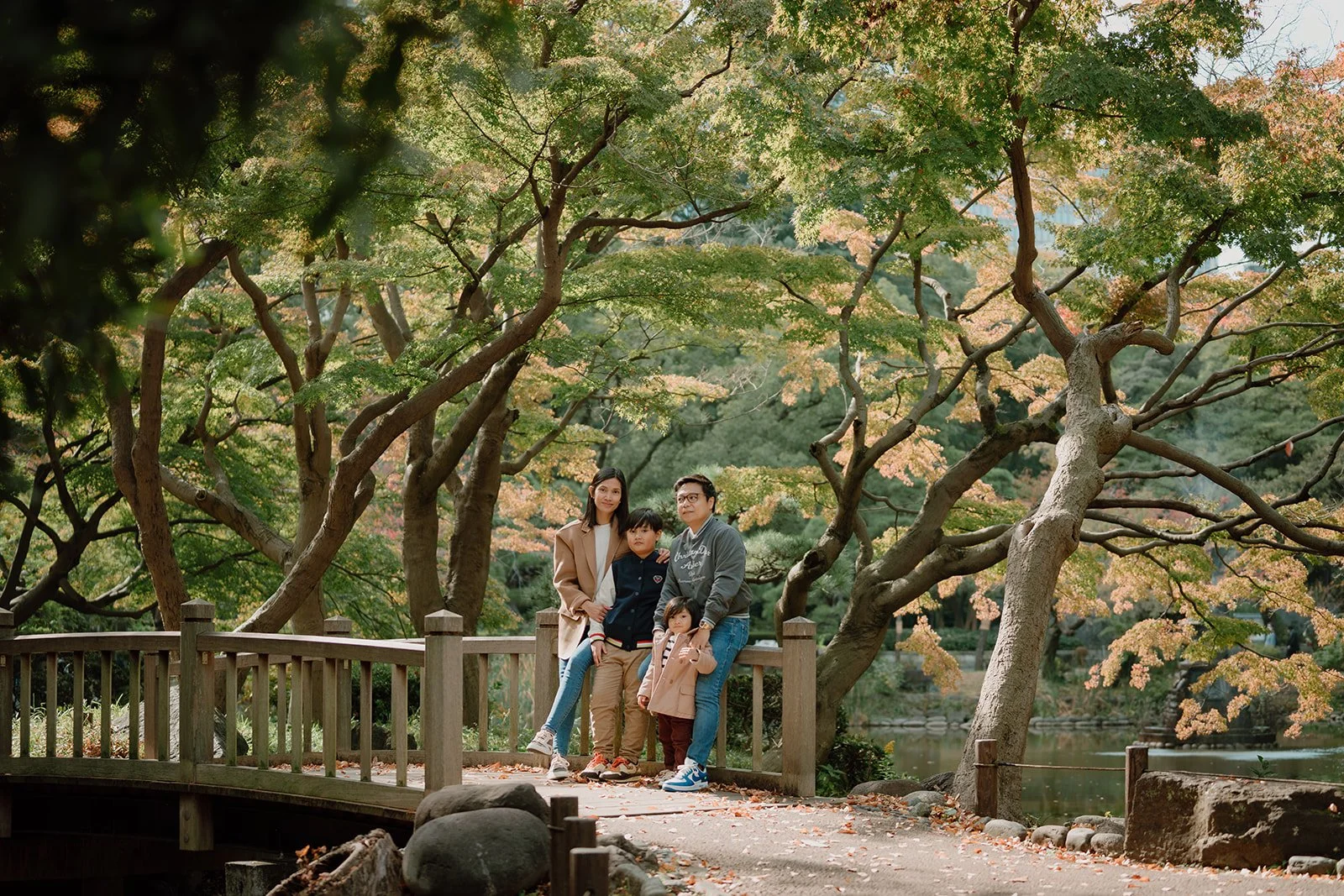 Mostly green, just starting
|
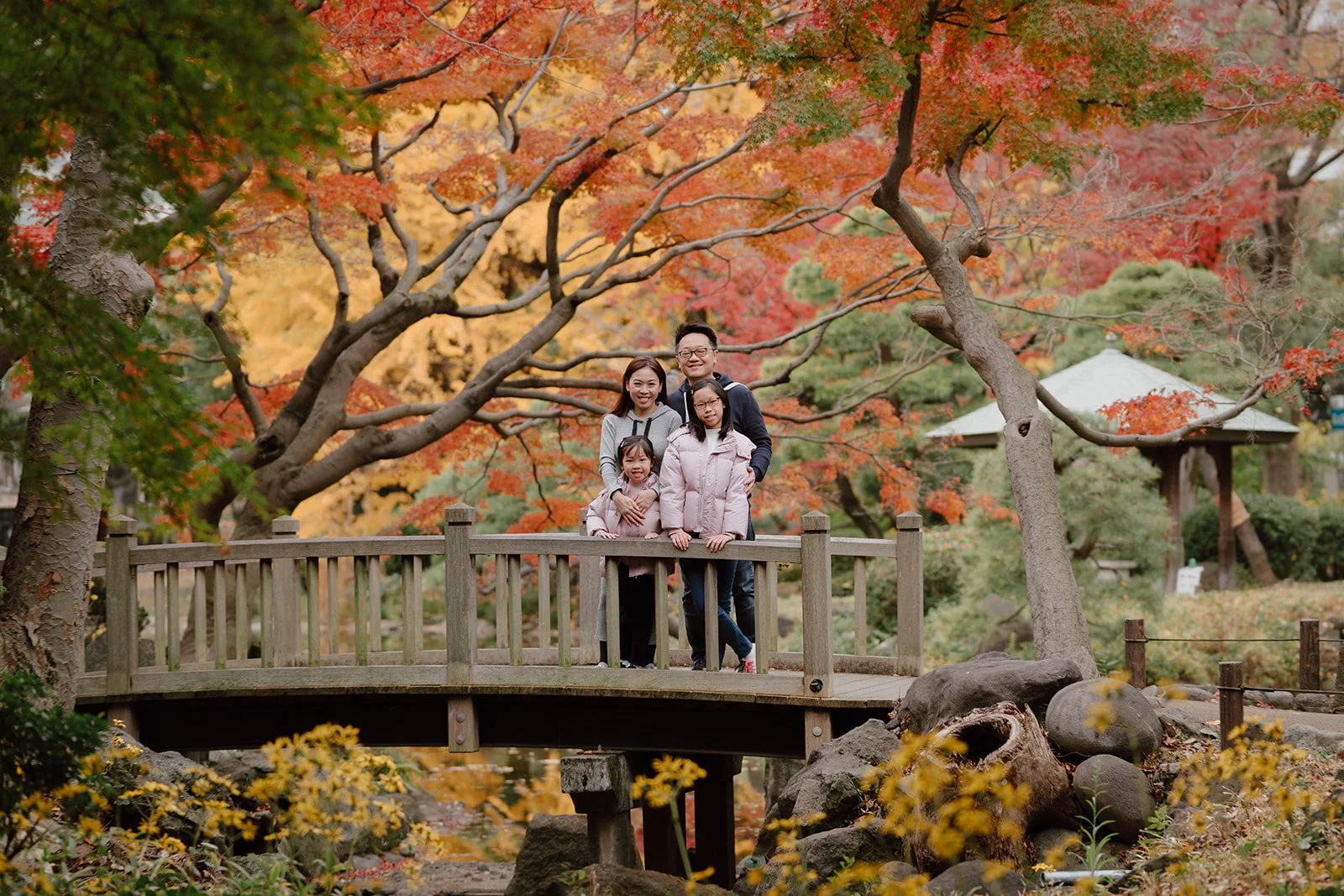 Rare small pocket, red/orange/yellow together
|
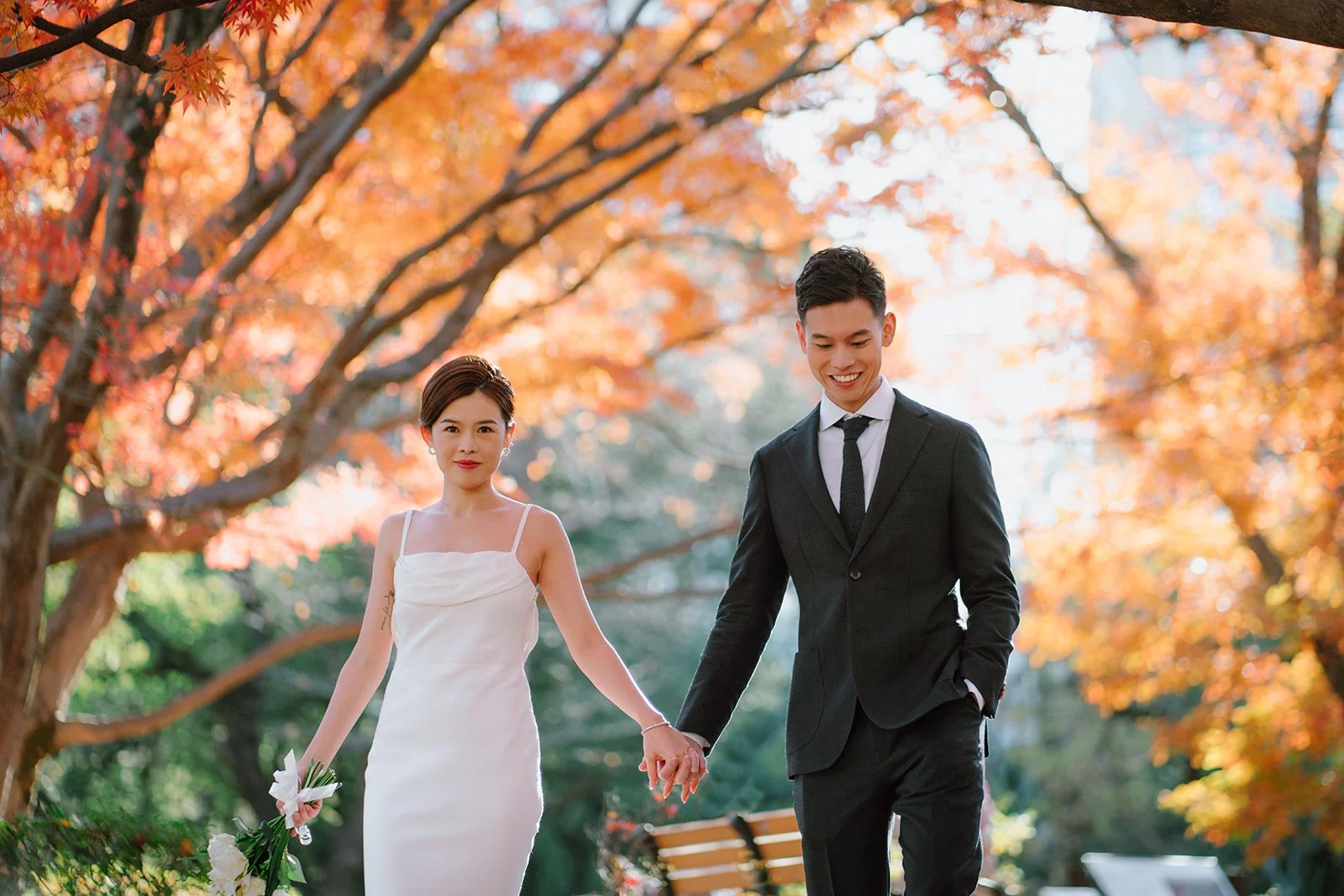 Sustained colour
|
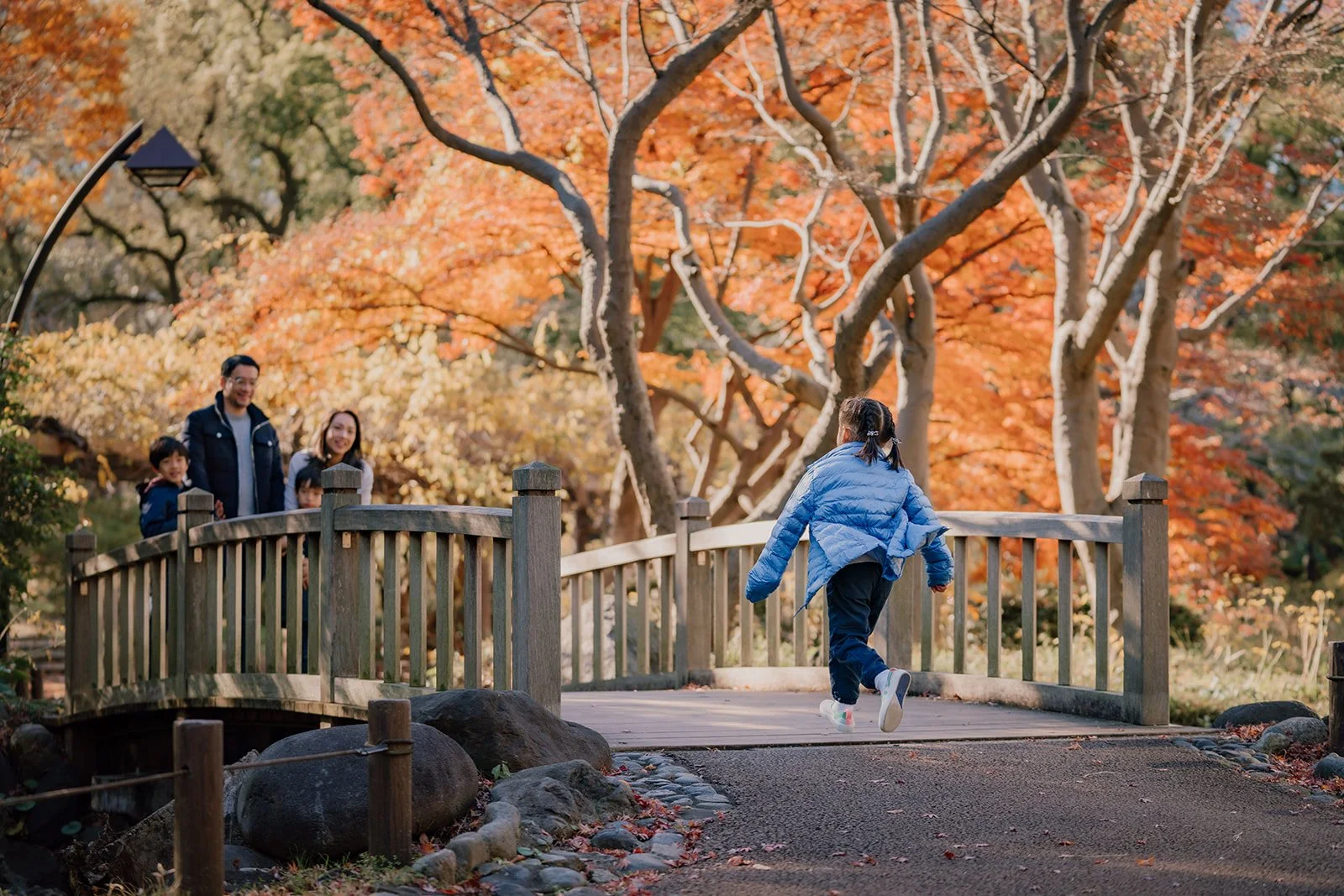 Late-season colour
|
Shinjuku Gyoen
The most fully documented location in this guide, and a good illustration of how staggered Tokyo's season really is within a single park.
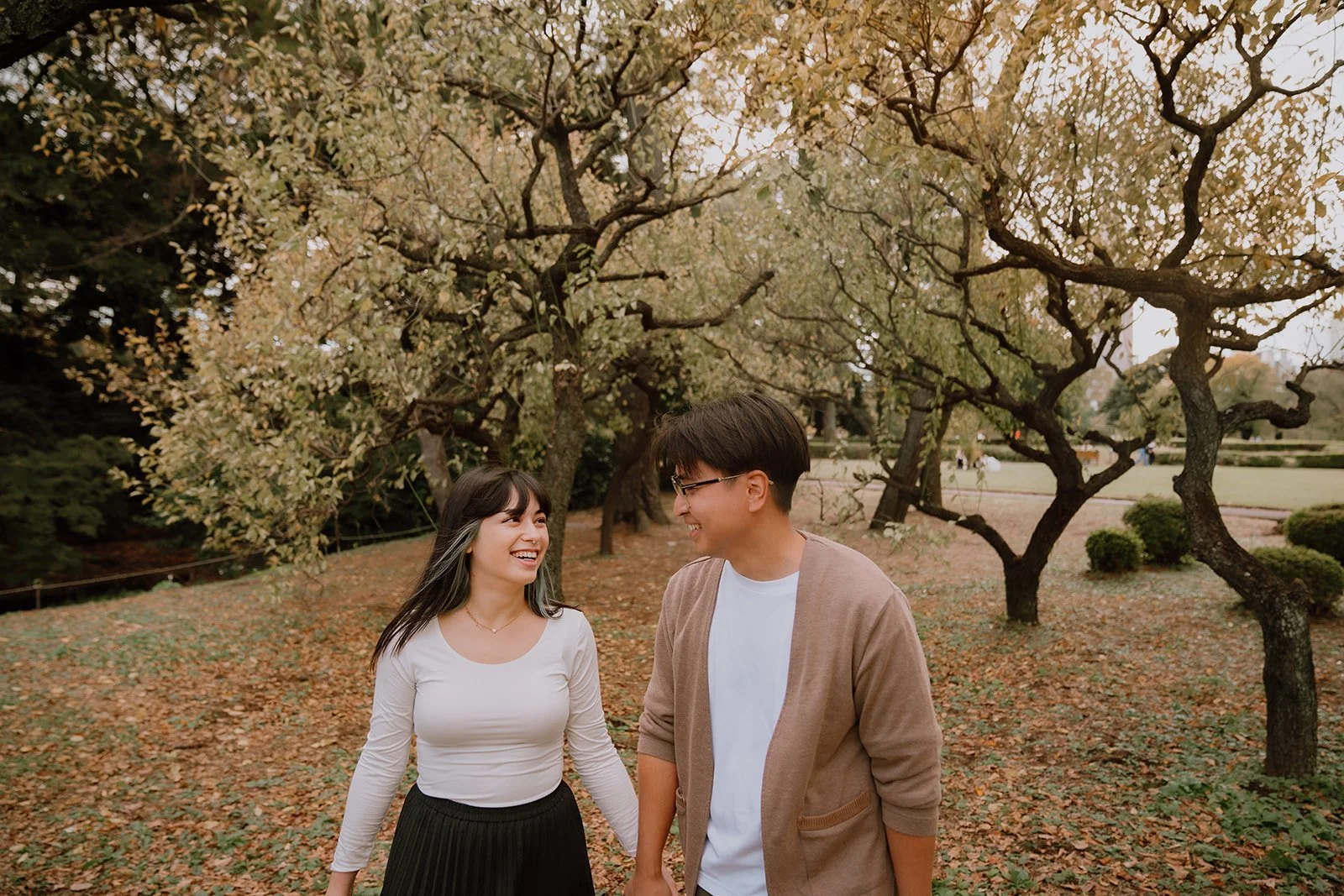
Late October: still pale and muted, barely turning.
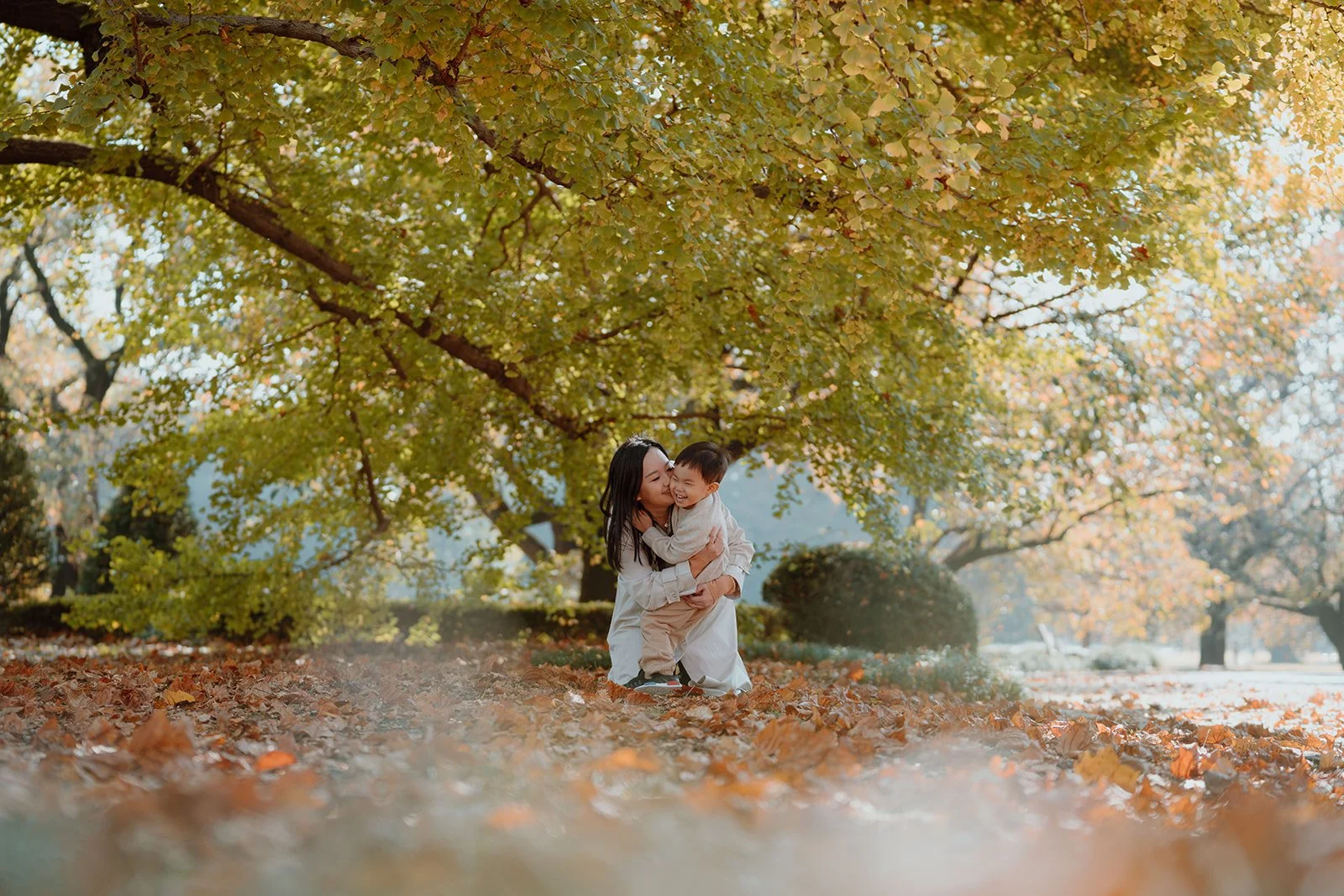
Early November: real internal variation between species in the same week. Sycamore is already well into yellow and orange, while the ginkgo is still mostly green with just a slight yellow tinge and early leaf-drop starting underneath.
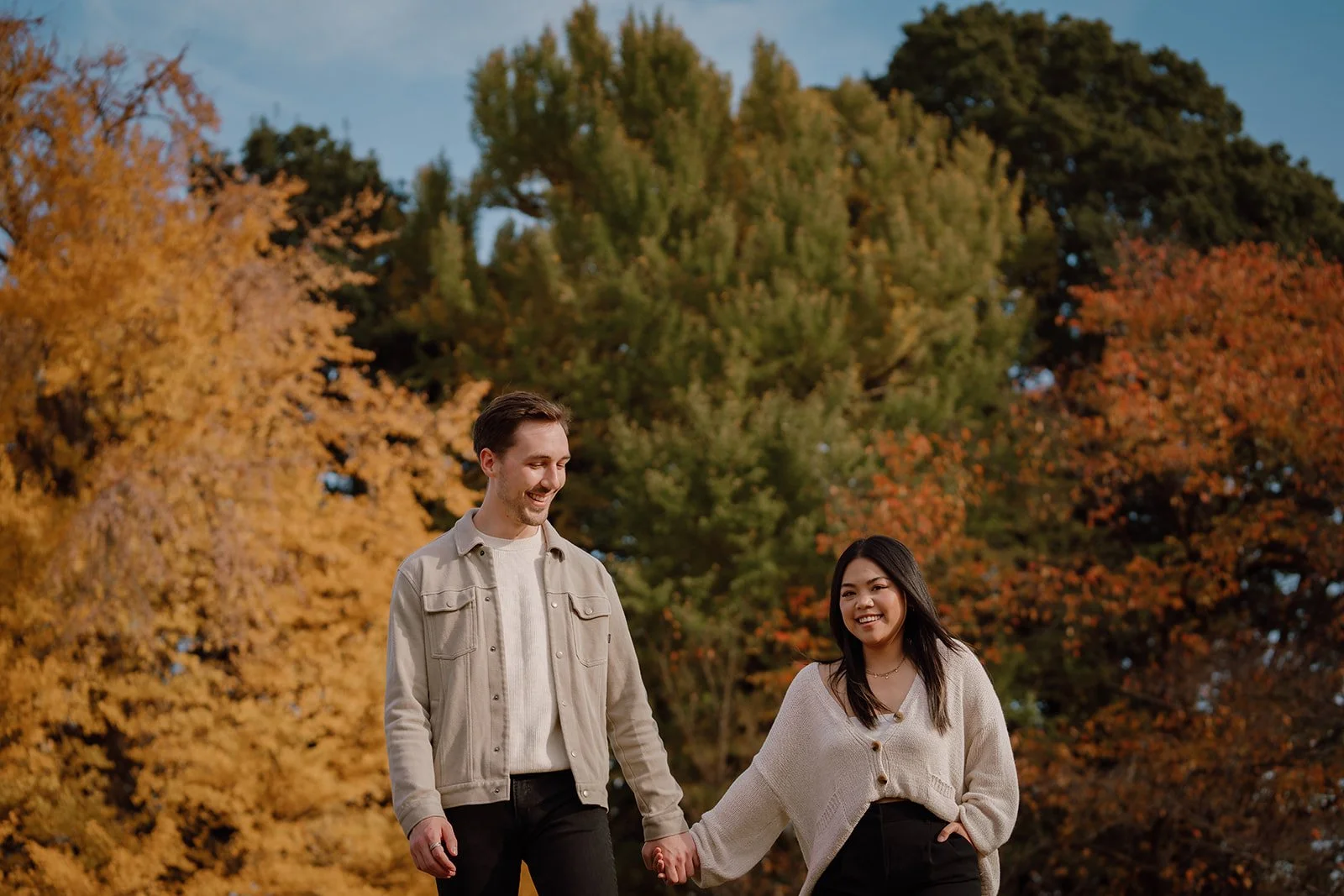
Late November: yellow, orange, and green mixed together, transitional rather than peak.
Early December: ginkgo at full peak yellow, in the canopy and carpeting the ground. Dawn redwoods separately hit peak orange around the same time.
Mid-to-late December: maple reds at peak, deep and sustained through the end of the month.
Rikugien Gardens
Rikugien runs later than Shinjuku Gyoen and rewards patience.
Late October and early November: fully green.
Late November: only just beginning to turn, subtle rather than colourful.
Mid-December: full peak. Deep red maple with orange and gold still present in the canopy. This is Rikugien's window.
Late December: colour lingers but starts thinning. Red is still visible through the canopy, mixed with more bare branches than at the mid-December peak.
Rikugien also runs an autumn illumination event in November, well before its actual colour peak. See the note below before planning around it.
Hamarikyu Gardens
Hamarikyu hasn't been independently photo-verified the way the other three locations here have, but its pattern is expected to track closely with Rikugien: a late, red-dominant peak landing around mid-December rather than Tokyo's earlier-turning spots. If you're choosing between Rikugien and Hamarikyu for a mid-December shoot, either should work on similar timing.
Marunouchi / Tokyo Station
Marunouchi peaks noticeably earlier than Rikugien or Hamarikyu.
Early November: canopy still largely green, but fallen red leaves already visible on the ground, an early-shedding pattern worth knowing about.
Late November: full mixed peak. Pine green, yellow ginkgo, and red maple together in the same frame. This is Marunouchi's window.
Marunouchi's timing is also the most weather-sensitive on this list. Strong wind events can accelerate the season and knock leaves down earlier than usual, which is consistent with the early ground-shedding seen in late October and early November some years. Treat the range above as typical, not fixed.
Hibiya Park: a small exception worth knowing about
Hibiya Park is mostly green through early November, but by late November a specific, small pocket of the park can show red, orange, and yellow together in the same frame, closer to Kyoto's simultaneous look than anywhere else in Tokyo documented here. It's a single, rare spot rather than a park-wide display, so it's not something to plan a whole shoot around. But it's a good example of how much hyperlocal variation exists even within one city. Sunlight exposure differs park to park, and sometimes spot to spot within the same park, depending entirely on the buildings and trees around it. It's part of why PMT scouts continuously rather than working from a fixed seasonal calendar.
Locations We Skip, and Why
Two well-known Tokyo autumn spots don't appear in the location breakdown above because PMT doesn't shoot there.
Meiji Jingu Gaien's ginkgo avenue is a real, visually striking location and shows up constantly in Tokyo autumn content for good reason. It's also consistently overcrowded during its peak window, more so than almost anywhere else on this list, which makes it a poor fit for a private shoot even though it photographs beautifully for a visitor without a photographer in tow.
Koishikawa Korakuen carries the same issue for the same underlying reason: strong visual appeal, but a level of crowding at peak that works against a shoot.
Both are worth visiting if you're in Tokyo for the season generally. Neither is where PMT recommends booking a session.
A couple of other locations that come up in general Tokyo autumn searches, including Nakameguro and Ueno, aren't covered in this guide either. PMT doesn't yet have confirmed autumn field data for either, and rather than fill that gap with general research dressed up as field experience, they're left out here until that changes.
Illuminations: A Word of Caution
Tokyo's parks run seasonal illumination events through autumn, and they're worth knowing about if only to plan around them. Rikugien's illumination runs roughly 20 to 25 days in November, well before the park's actual colour peak in mid-December, and the park gets too crowded during that window to shoot effectively. If you're planning a Rikugien session, avoid the illumination dates entirely and aim for mid-December instead.
Beyond Rikugien, this is an area PMT doesn't have full field authority on yet across other Tokyo parks. Rather than offer a confident recommendation without the experience to back it, that broader picture is being researched further this year.
Weather, Light, and What Changes From Summer
Autumn in Tokyo isn't cherry blossom season, and it doesn't behave like one. There's no real equivalent to hanami, no single weekend everyone rushes toward, and the crowds that do show up are spread out rather than concentrated. In practice, most autumn locations rarely feel genuinely crowded the way peak sakura spots do. Some sections get busier than others, but "crowds" in the sakura sense is rare.
Mornings are still the better window, consistent with the rest of the year, mainly because they're quieter rather than because autumn light demands it. What does shift with the season is sunset time. As the days get shorter through October and November, golden hour arrives earlier in the afternoon, which makes it a genuinely workable option for park sessions in a way that's harder to schedule around in summer.
Early October can still catch the tail end of typhoon season, which means the occasional wet or windy stretch is a real possibility that early in autumn. It rarely derails a trip outright, but building a flexible day or two into an early-October visit is worth doing rather than locking every day to a fixed plan. For a broader look at how Japan's seasons actually break down month by month, this guide to Japan's micro-seasons covers the windows that matter beyond autumn foliage alone.
What to Wear
Tokyo autumn temperatures shift meaningfully across the season, from mild in early October to genuinely cold by late December, so layering matters more here than in most other seasons PMT shoots in. For the full breakdown of colours, fabrics, and what to avoid for a Japan photoshoot, see PMT's outfit guide.
Planning a Shoot Around a Staggered Season
Because Tokyo's colour arrives in stages rather than all at once, the single biggest planning mistake is treating autumn as one window instead of several. A trip built around "late November" works well for Marunouchi and the early edge of Shinjuku Gyoen's colour, but it's too early for Rikugien and well before Tokyo's reds have shown up anywhere.
The more useful approach is to decide first what you actually want, ginkgo yellow, mixed transitional colour, or deep maple red, and then match the location and dates to that, rather than picking a location first and hoping the calendar cooperates. If your trip spans multiple weeks, it's genuinely possible to catch more than one stage of the season across different parks, which a single-peak city like Kyoto doesn't offer in the same way.
Tokyo works for every session type across this staggered window, including families wanting a leaf-scattered afternoon shoot and proposals looking for a quieter garden bridge, which Rikugien in particular is well suited to once its December peak arrives. If you're planning for early- or late-December specifically, booking ahead matters more than usual. Photographer availability during Tokyo's actual red-maple peak tightens up as more people learn the real timing.
FAQ
When is the best time to see autumn colours in Tokyo?
There isn't one single best time. Ginkgo yellow peaks in early December, and maple red peaks mid-to-late December. Late November shows transitional mixed colour at most locations, with Marunouchi as the notable exception where late November is closer to its actual peak.
Is Tokyo's autumn later than Kyoto's?
Yes, and it's structured differently too. Kyoto's colour arrives together across the city by mid-to-late November. Tokyo's arrives in stages, with the deep reds not peaking until mid-to-late December, often six to eight weeks after Kyoto's simultaneous peak.
Where are the best autumn photo spots in Tokyo?
Shinjuku Gyoen for the widest single-park variety and the clearest staggered timeline. Rikugien and Hamarikyu for a later, red-dominant December peak. Marunouchi for an earlier, late-November mixed-colour scene with an architectural backdrop.
When do the ginkgo trees peak in Tokyo?
Early December, generally two to three weeks ahead of the maple reds.
Are the autumn illuminations worth visiting?
As a visitor experience, yes. For a shoot, be cautious. Rikugien's illumination runs in November, well before its actual colour peak, and the crowds during that window make it a poor time to book a session there.
What should I wear for an autumn photoshoot in Tokyo?
Layering matters more in autumn than most seasons, given how much the temperature shifts from early October to late December. See PMT's full what to wear guide, linked above, for specifics by season.
Planning Around the Real Timeline
Tokyo's autumn rewards visitors who plan around its actual shape rather than the one-peak version most guides describe. Know which colour you're chasing, match it to the right location and week, and build in enough flexibility to adjust if an early typhoon or a windy week shifts things. That's a more reliable path to a strong autumn trip, and a strong autumn shoot, than picking a date off a generic calendar.
If you're ready to plan a session around this timeline, PMT's pricing is the same across Tokyo regardless of season, and booking ahead is worth doing early for December dates specifically, since that's when demand for the red-maple peak tends to catch up with availability.