
Kyoto in Autumn: When to Go and Where the Crowds Aren't
Most visitors arrive in Kyoto after several days in Tokyo, and that order shapes expectations more than people realize. Tokyo's crowds spread across a massive, multi-hub city with wide streets and open space, so visitors who managed them comfortably often assume Kyoto will behave the same way.
It doesn't, and autumn is when that gap shows up most clearly.
In this guide:
The Tokyo Reference Point Problem
Kyoto's crowds concentrate differently than Tokyo's. Where Tokyo spreads visitors across dozens of neighborhoods and wide avenues, Kyoto's traditional character means the crowds funnel into narrow streets and a handful of landmark areas. Visitors often find Kyoto harder to move through than Tokyo, not because there are more people in absolute terms, but because the geography amplifies the impact. A narrow street that's charming when quiet becomes genuinely difficult to enjoy when packed.
Transportation follows the same pattern. Tokyo's train network covers almost everything seamlessly, so visitors arrive in Kyoto expecting the same and find a patchwork system instead, one that works well for some routes and poorly for others.
Kyoto's main touristic attractions have the kind of infrastructure absent in most areas of Tokyo: big parking lots that accommodate hundreds of daily tour buses. That facilitates the concentration of people in one single space.
Autumn is where both of these differences matter most, because it's Kyoto's busiest season and its most visually rewarding one at the same time.
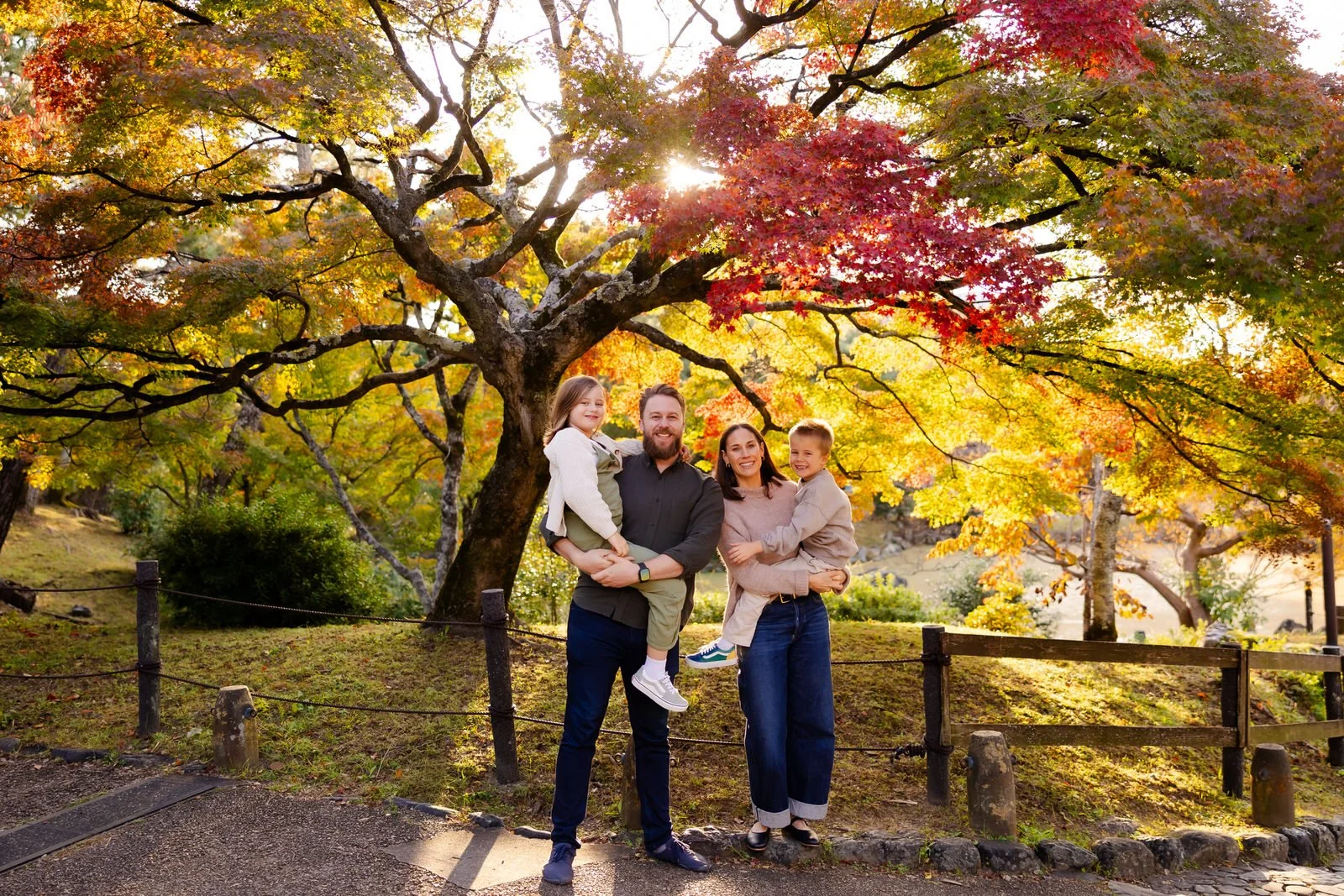
Kyoto's Mainstream Autumn Spots: Arashiyama and Kiyomizu-dera
Two places anchor most people's mental image of Kyoto in autumn, and both earn the reputation.
Arashiyama, on the western edge of the city, is best known for its bamboo grove, though the wider area includes riverside paths and hillside temples as well. The grove is best before 8am. By mid-morning the paths get dense enough that a clean background requires specific timing and positioning, even for someone who shoots there regularly. What counts as "early" also shifts by season: summer sun rises before 5am, so the light is already changing fast by 7am, while winter offers a longer window of soft morning light. The grove has been photographed millions of times from the same handful of spots, which is part of why working different angles matters, both for more distinctive results and for avoiding the areas where people naturally congregate.
Kiyomizu-dera sits on a hillside in eastern Kyoto and is one of the country's most recognizable temples, largely because of its wooden veranda, built out over the slope using traditional joinery without nails. The view from the veranda takes in a wide sweep of the city and, in autumn, a hillside of maples below. The temple runs a special evening illumination during the autumn season, which is striking but draws a different crowd than the daytime visit, so expect the area to be busy well into the evening rather than thinning out after dark the way some locations do.
Both are worth seeing. Both are also exactly where the citywide nature of Kyoto's autumn color creates the crowd problem described below.
Why Kyoto's November Is Different From Tokyo's
Kyoto's autumn foliage is widely considered the country's most celebrated, and November is the peak. The specific reason it's different from Tokyo is worth understanding before planning around it.
In Tokyo, the color progression is staggered across three months. October still looks a bit like summer. Yellows arrive in November, mostly from ginkgo trees. Reds don't show up until December, once winter has technically begun. A visitor expecting a Kyoto-style November in Tokyo will be disappointed by the timing.
Kyoto works differently. November delivers yellows, oranges, and reds almost simultaneously, across the whole city rather than in a slow rotation. That single-month intensity is part of why Kyoto's autumn has the reputation it does, and it's also why the season draws crowds on the scale it does.
The Crowd Reality Behind Kyoto's Citywide Color
Autumn crowds in Kyoto are large in absolute terms, and visitors are usually aware of that going in. What tends to surprise people is how concentrated the crowds actually are, even relative to how citywide the foliage is.
Because autumn color appears across nearly all of Kyoto rather than being confined to specific spots, locations that wouldn't normally be worth a special trip become genuinely striking during this window. Secondary temples, quieter gardens, and areas outside the main tourist circuit all get real foliage in November. Most visitors never see this, because they're spending their time at Arashiyama, Kiyomizu-dera and all the other staples instead.
The practical result is that autumn actually expands the list of workable photo locations in Kyoto rather than shrinking it. The mainstream spots get harder to shoot in November. Nearly everywhere else gets more interesting.
Where PMT Shoots Once the Mainstream Spots Are Unworkable
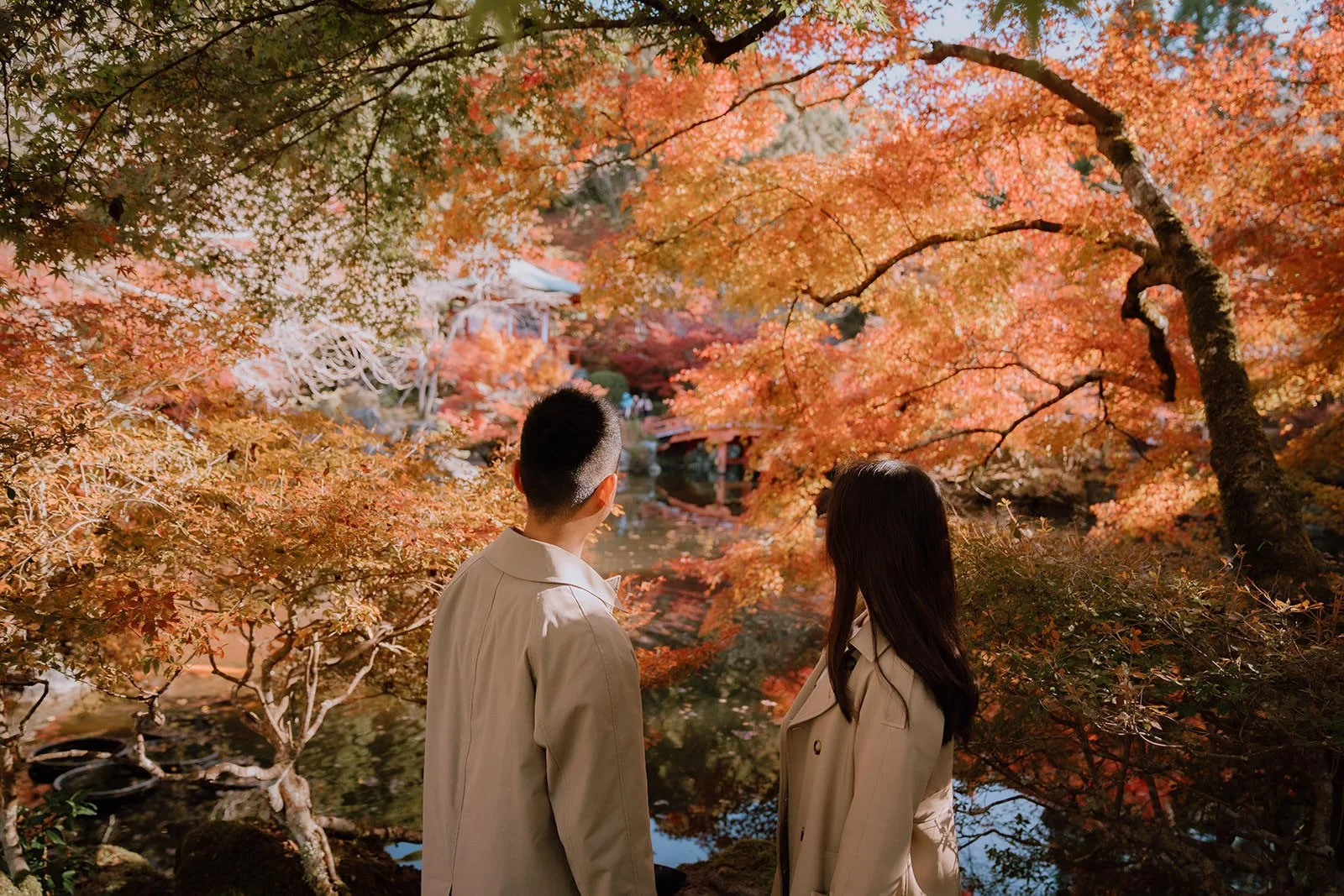
PMT's autumn rotation once Arashiyama and Kiyomizu-dera become too crowded to work: Toji, Daigo-ji, Enko-ji, Shinsen-en, and Sanjusangendo. All five sit slightly outside Kyoto's most-visited areas, and the thread connecting them is a consistent balance of temple architecture, real autumn foliage, and low attendance for most of the year.
There are literally hundreds of temples in Kyoto. These five aren't the only options, but they're the ones PMT returns to consistently.
On shooting at temples specifically: temples are more solemn locations than a park or riverside, so working freely with anyone present isn't quite the same as at a more open location. In practice this rarely becomes a real limitation. Most of these grounds are large enough to photograph in without disturbing other visitors or ongoing temple activity.
Timing is more forgiving here than at the mainstream spots. The peak window is consistent year to year, mid to late November, in line with Kyoto's citywide November peak generally. Unlike Arashiyama, these locations don't require the same strict before-8am arrival to get a clean shot. The lower baseline attendance means more flexibility on timing, even during the peak of the season.
Toji
Toji sits just south of Kyoto Station, close enough to reach on foot with light luggage. Its five-story pagoda, at roughly 55 meters, is the tallest wooden structure in Japan, and it's visible from many points around the city, including from the window of a passing shinkansen. The grounds include a pond near the pagoda base, which gives a reflection shot in still conditions, along with open space around the main halls that makes the pagoda's scale easier to work with than a cramped courtyard would allow. Toji also runs a special evening illumination in autumn, which changes the character of the grounds considerably from its daytime feel.
Daigo-ji
Daigo-ji sits slightly south of central Kyoto, off most standard tourist itineraries without being remote. That relative inconvenience compared to Kyoto's more central, transit-easy spots works in its favor: quiet on most days, in most seasons, without being deserted.
Its anchor spot is a red bridge over a pond, the most distinctive and photogenic feature on the grounds, strongest in autumn when foliage color surrounds it. Cherry blossoms in the area add a spring option, and the grounds turn lush green in summer, making it workable across three seasons with a different visual character each time. Timing here is less crowd-dependent than most Kyoto temples. Opening at 9am is still the quietest window, but Daigo-ji doesn't require the strict early-morning timing that Arashiyama demands. Even during peak autumn foliage, the bridge is harder to have alone but still workable, not the all-or-nothing crowd situation some Kyoto landmarks present. Beyond the bridge, the grounds offer temple architecture, open space, and natural surroundings that give a session some visual variety within a single location. Best suited to proposals, given the bridge's intimacy, and workable for couples generally given the variety across the grounds.
Enko-ji
Enko-ji sits in the hills of northern Kyoto, well outside the main tourist circuit. Its best-known feature is the view from the main hall, where the garden is framed by the building's pillars and eaves like a living painting, a composition locally referred to as a "framed garden." The grounds also include a small pond that reflects the maples above it, a section of bamboo, and a climb up the hillside behind the garden for a wider view over the city.
Enko-ji is more compact than the other locations in this rotation, which makes it harder to work through its best areas with kids along. It suits couples and proposals better than family sessions.
Shinsen-en
A very small, beautiful temple immediately adjacent to Nijo Castle. Features a striking red bridge that works exceptionally well for proposals. Quiet and largely unknown to most visitors, which keeps it usable even during the citywide autumn peak. Part of the same secondary rotation as the temples above, and close enough to the castle's outer walls to combine with that area within a single session if a client wants two distinct visual registers close together.
Sanjusangendo
Sanjusangendo is best known internationally for its main hall, a 120-meter wooden building housing 1,001 statues of Kannon, but photography is prohibited inside that hall. The part relevant for a shoot is the separate exterior garden: a pond, moss, stone lanterns, and maple trees that color in autumn, all accessible with regular admission and open to photography.
Because most visitors come specifically for the statues rather than the grounds, Sanjusangendo doesn't draw the same foliage-driven crowds that a dedicated momiji spot does, which is part of why it stays workable even during the citywide November peak. The garden has larger, more open sections than Enko-ji, which makes it workable for families as well as couples.
Deciding How to Spend Your Kyoto Autumn Days
None of this means avoiding Arashiyama or Kiyomizu-dera entirely. Both are worth seeing, and the color at the mainstream spots is real. The decision is really about what matters more to your specific trip.
If you want the famous view and you're willing to work around it, go early, before 8am for Arashiyama especially, and accept that even early timing may mean sharing the space with other visitors. If a quieter, more deliberate shoot matters more than checking off the most photographed spot in the city, Kyoto's secondary temples in November offer a genuinely different experience, with real foliage and none of the crowd management required at the mainstream locations.
Either choice works. What doesn't work is expecting the mainstream spots to feel uncrowded in peak season, or assuming the quieter alternatives don't exist. Kyoto in November rewards visitors who decide which experience they actually want, rather than trying to force both into the same day.
Frequently Asked Questions
When should I visit Kyoto to see the best autumn colors?
Mid to late November is the reliable peak most years, when Kyoto's maples typically show yellow, orange, and red at the same time. Exact timing can shift by a week or so year to year depending on temperature patterns that autumn.
Is Kyoto too crowded to visit during autumn foliage season?
The crowds are real, but they concentrate heavily at a small number of famous spots. Plenty of the city gets genuine autumn color with far fewer people, since the foliage itself isn't confined to the well-known locations.
How is Kyoto's autumn different from Tokyo's?
Kyoto's colors arrive together in November. Tokyo's arrive in stages, with yellows in November and reds not showing up until December.
Do I need to arrive early to photograph Arashiyama or Kiyomizu-dera in autumn?
For Arashiyama, yes, ideally before 8am. Kiyomizu-dera stays busy across the day and into the evening during its autumn illumination, so there isn't a single quiet window the way there is at the bamboo grove.
Are Kyoto's quieter temples suitable for family or proposal photos in autumn?
Generally yes. Larger grounds like Toji and Sanjusangendo work well for families, while more compact spots like Enko-ji and Shinsen-en suit couples and proposals better given their scale and atmosphere.