Tokyo, Kyoto, or Mount Fuji: Where Should You Do Your Japan Photoshoot?
Tokyo, Kyoto, and Mount Fuji all show up on a first-trip Japan itinerary, and most couples and families planning a photoshoot assume they need to pick a favorite. That's the wrong question. Each destination photographs differently, and the version of Japan that reads best on camera depends on how much time you have, what look you want, and how much weather risk you're willing to accept. This guide breaks down what each destination is actually good for, what combining them costs in time and logistics, and how to decide based on your specific trip.
In this guide:
What's Actually the Right Question
The real question isn't which city is the most photogenic. It's which one matches what you're trying to get out of the session, and whether your itinerary can actually support it.
Tokyo, Kyoto, and Kawaguchiko each produce a distinct set of photos. Tokyo gives you range and city energy in one place. Kyoto gives you a concentrated dose of traditional Japan. Kawaguchiko gives you one specific, high-impact backdrop: Mount Fuji, if the weather cooperates that day.
None of these is objectively better than the others. The right fit depends on your trip length, how much you want to build the shoot around one particular look, and how comfortable you are with a bit of uncertainty.
Tokyo for Your Photoshoot
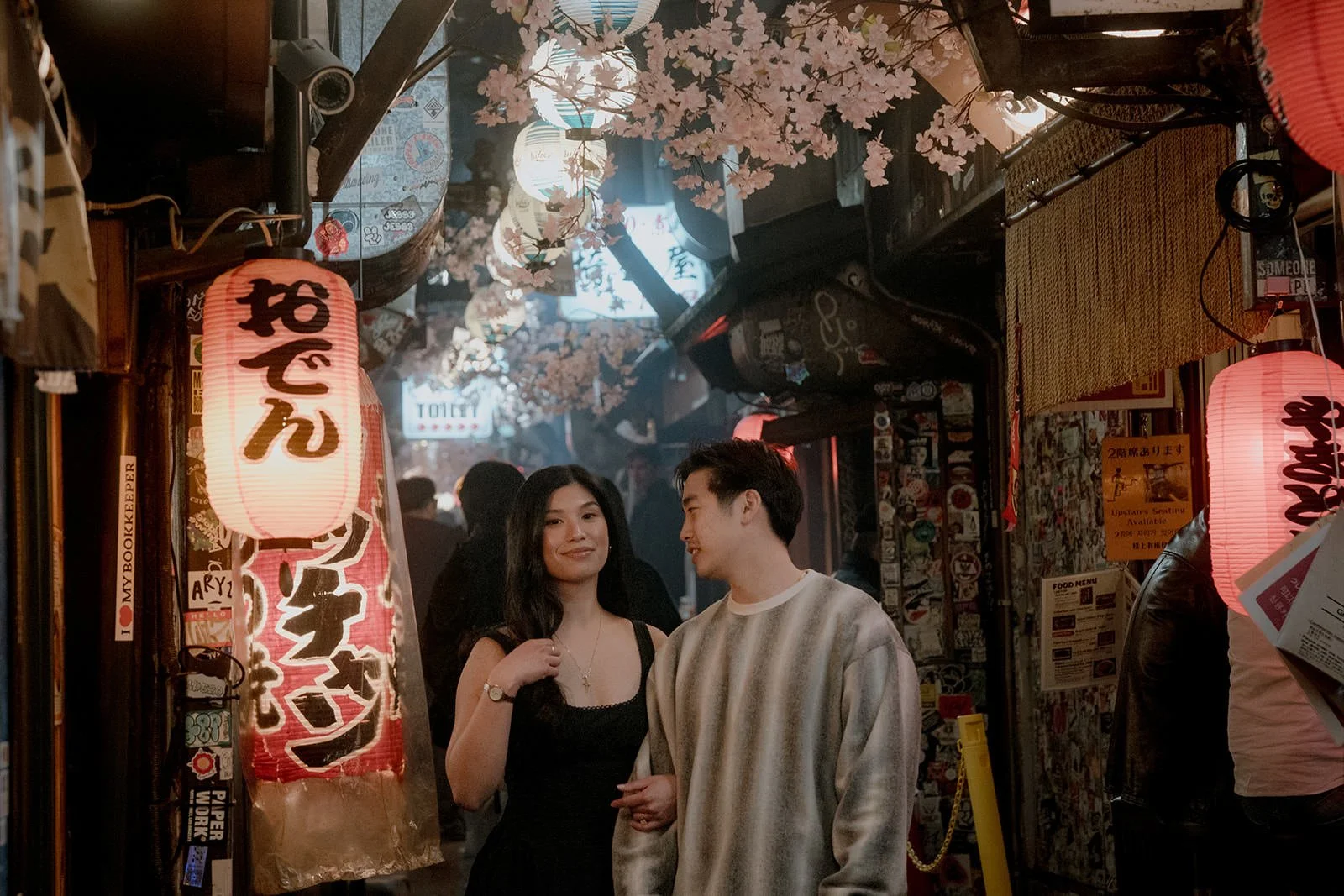
Tokyo is the destination most people picture first for a Japan photoshoot, and the association isn't wrong, it's just incomplete. Neon signage and dense crossings are part of the city, but within a few minutes' walk of almost any busy hub sits a quiet residential street or a green space most visitors never find. That contrast is what makes Tokyo work for photography: a single session can move between traditional shrine grounds, modern architecture, and genuine city energy without leaving the city.
Tokyo is also PMT's most flexible destination by shoot type. Couples, families, proposals, and pre-wedding sessions all work here, which matters if your group has mixed priorities or you haven't settled on the kind of session you want yet.
The tradeoff: Tokyo's traditional side is present but not concentrated. If a bamboo grove or a temple approach is specifically the look you're after, Kyoto delivers more of that in less time.
Kyoto for Your Photoshoot
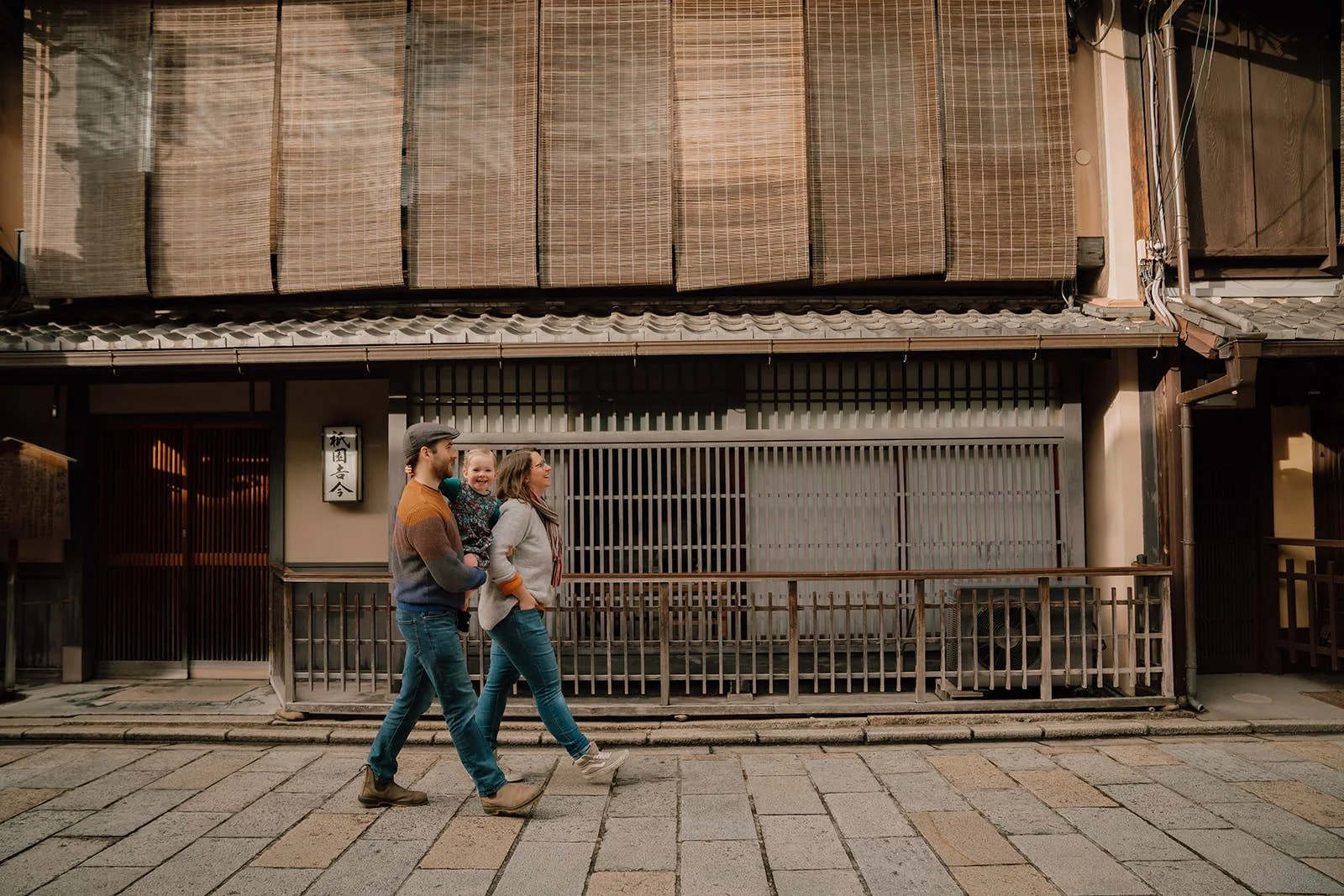
Kyoto concentrates traditional Japan more than anywhere else PMT shoots. Wooden townhouses, stone lantern paths, temple gates, and bamboo groves show up around nearly every corner, which is why most couples choosing between Tokyo and Kyoto for a traditional-look shoot land on Kyoto.
The honest tradeoff is timing and crowds. Kyoto's most photogenic streets are narrow, and narrow streets amplify crowd impact in a way Tokyo's wider layout doesn't. Arashiyama's bamboo grove and Higashiyama's stone lanes work well before 8am or, in Higashiyama's case, again after shops close in the evening. Outside those windows, the same streets that look calm in photos can be genuinely difficult to move through.
Visitors who spend several days in Tokyo first also tend to arrive in Kyoto expecting the same level of train coverage. Kyoto's network handles some routes well and others poorly, so PMT generally points clients toward taxis or bikes rather than relying on buses to get between locations.
Mount Fuji and Kawaguchiko for Your Photoshoot
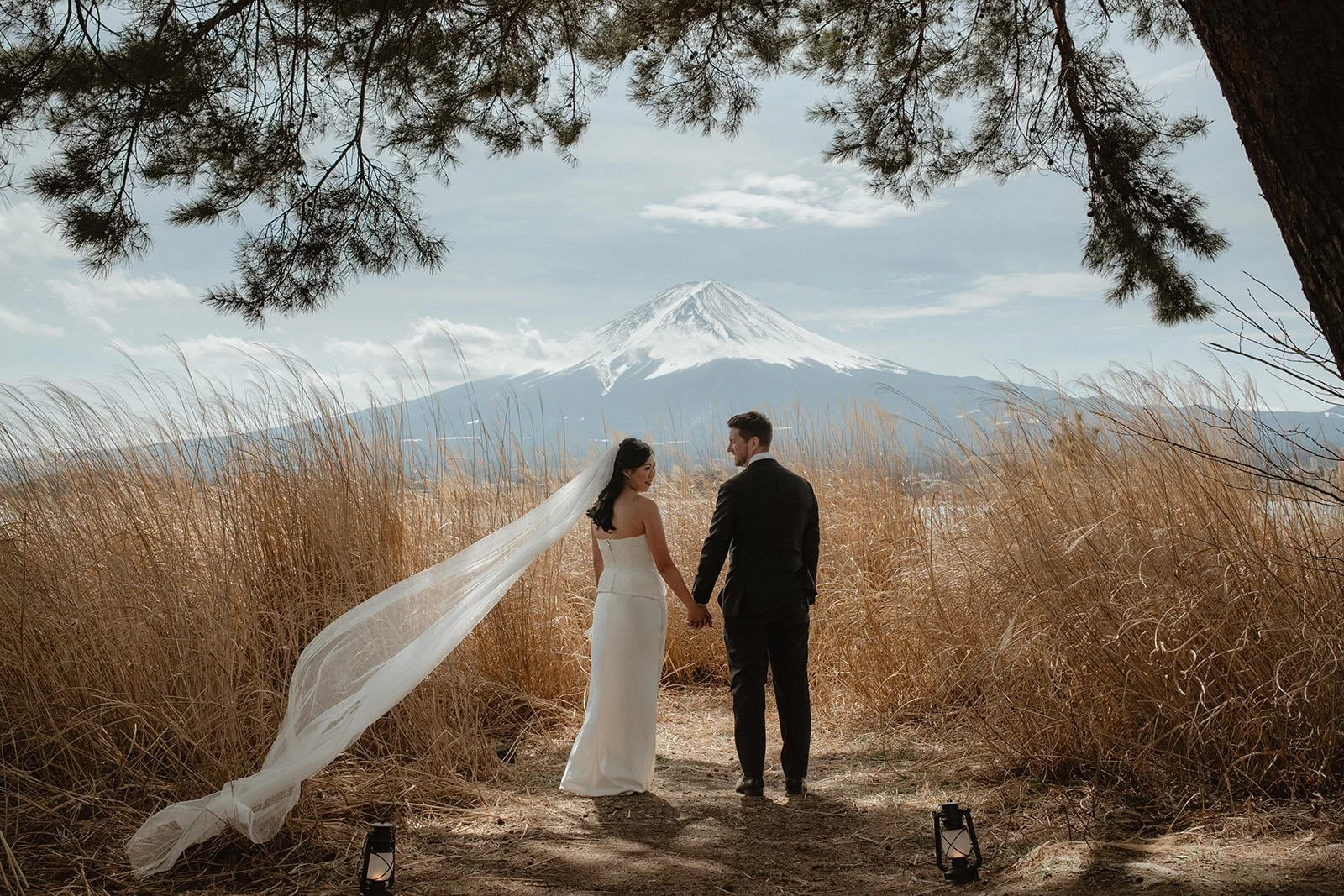
Kawaguchiko offers something the other two don't: one unmistakable backdrop, the lake and Mount Fuji together, strongest from the north shore.
It's also the destination with the most built-in uncertainty. Fuji visibility is never guaranteed. The mountain sits in a basin surrounded by other peaks, and conditions can shift in well under an hour, in either direction. Sunrise gives the best odds of a clear view and almost no crowds, since few visitors wake early enough to catch it, but even a clear morning can cloud over by mid-morning.
There's no way around the travel cost either. No photographer is based in Kawaguchiko full time; every shoot means traveling in, usually from Tokyo, which consumes a meaningful part of the day in each direction and shows up in the price. Clients with a flexible itinerary generally do better overnighting near the lake, which puts them on site for sunrise without a brutal pre-dawn trip. Clients on a fixed schedule usually do a day trip with an early departure instead.
Because of the cost and the weather gamble, Kawaguchiko tends to attract couples marking a specific occasion, proposals especially, more than a general "let's see Fuji" booking. That's not a reason to rule it out for a family trip. It's a reason to go in with realistic expectations about the day and build in flexibility where you can.
Combining More Than One Destination
Combining destinations in one trip works, and it's common. Two pairings come up most often: Tokyo's city energy paired with Kyoto's traditional streets or kimono styling, and Tokyo's city energy paired with Kawaguchiko's quieter, Fuji-facing setting. Both give a noticeably different set of photos from a single-city session, which is part of the appeal.
What makes or breaks a multi-destination shoot is the itinerary around it, not the photography itself. A short bullet train ride, under about three hours, means the day after travel is usually fine for a session. Kawaguchiko is a different case. Trains leave from Shinjuku Station, which is overwhelming in its own way simply because of how many local lines converge there. On top of that, getting to Kawaguchiko means choosing between a direct train, a limited express that requires a change partway through, or a slower local train, and it isn't always obvious which one applies to a given booking. That combination of a confusing departure point and a confusing route carries more built-in fatigue than a Tokyo-Kyoto Shinkansen hop. Building a rest day or at least a slow morning around a Kawaguchiko session, rather than stacking it against another travel day, tends to produce a better day and a better shoot.
For couples planning a pre-wedding shoot specifically, PMT's Premium package is built around this kind of multi-location, multi-city planning. It's the only tier that includes Kawaguchiko or destinations outside the five main cities, and it covers route and timing planning around light and crowds rather than leaving that logistics work to you. The Essential package covers Tokyo, Kyoto, Osaka, Nara, and Sapporo individually but doesn't extend to Kawaguchiko. Other session types don't currently have an equivalent multi-city package, so combining destinations for a proposal, couples, or family session means booking each city separately and working out the itinerary logic yourself, ideally with input from whoever you're booking with.
A Quick Way to Decide
There's no single best answer here, only a better fit for the trip you're actually taking. Use trip length and priority as your starting point.
Trip LengthMain PriorityRecommended Approach3-4 days, one city onlyUrban energy, first trip to JapanTokyo alone5-6 daysTraditional look matters more than convenienceTokyo + Kyoto, timed around the Shinkansen5-6 daysFuji is the priority and dates are flexibleTokyo + Kawaguchiko, overnighting near the lake7+ daysWant both traditional Japan and FujiTokyo + Kyoto + Kawaguchiko, with a buffer day around KawaguchikoFixed, non-negotiable itineraryAny of the aboveStill workable, but avoid scheduling a shoot immediately after a travel day, especially for Kawaguchiko
Questions, Answered
Can I do Tokyo and Kyoto in one trip?
Yes, and it's one of the most common combinations PMT shoots. The Shinkansen between the two cities runs well under three hours, which keeps the day after travel workable for a session rather than a write-off.
Is Mount Fuji worth a full day just for photos?
That depends on how much you want Fuji specifically versus a Japan photoshoot in general. Fuji is never guaranteed to be visible, so a day built entirely around it carries real weather risk. Clients who go in with a backup plan, whether that's flexibility to shift the shoot time or simply being willing to use the lake and the view as the backdrop if Fuji stays hidden, tend to come away satisfied either way.
What's the minimum trip length to fit two destinations?
Five to six days is a realistic minimum for Tokyo plus one other destination, once you account for the travel day itself and at least a partial rest day around it. Trying to fit two destinations into a trip shorter than that usually means the itinerary, not the photography, ends up compromised.
Can I fit two photoshoots into one day, like a morning session and an evening session at a different location?
PMT doesn't recommend it. The session clock doesn't stop during transit, so moving between two locations in a single day eats into the time and energy meant for shooting rather than adding to it, and that's before accounting for how tired everyone already is by the second session. Two well-timed sessions on two separate days consistently produce better results than the same two sessions squeezed into one.
Should I schedule a photoshoot on a travel day?
No. Travel days already carry their own fatigue, even on Japan's efficient train network, and adding a session on top of that rarely goes well for anyone involved. The day after a short train ride is usually fine. The travel day itself isn't.
Choosing between Tokyo, Kyoto, and Kawaguchiko isn't about picking a favorite, it's about matching the destination to the trip you're actually taking. Tokyo covers the widest range of looks and works for every shoot type. Kyoto delivers a concentrated traditional aesthetic if you're willing to work around narrow, crowd-sensitive streets. Kawaguchiko delivers one striking backdrop if you can accept that Fuji might not show up and plan the day around that possibility rather than against it. Book each destination based on the trip in front of you, and if you're combining more than one, talk to us about the itinerary before you lock in dates.