Photography Etiquette in Japan: What to Know Before You Book a Shoot
If you're planning a professional photoshoot in Japan, whether it's a proposal, a family session, or a simple couple's shoot, the difference between a good experience and an awkward one usually comes down to etiquette. A shoot in a temple courtyard, a quiet garden, or a busy street is happening inside someone else's day: local prayer, someone's workday, someone's neighborhood. How a photographer handles that, rather than treating it as a backdrop, tells you a lot about who you're hiring and what your session will actually feel like on the ground.
In this guide:
The golden rule: a photoshoot doesn't buy you priority over the space
The starting principle behind every decision in this guide is simple: booking a photoshoot doesn't give you, or your photographer, priority over the space you're shooting in. A temple is still a place of worship during your session. A quiet street is still someone's daily route to work. A garden is still shared with everyone else who paid to walk through it that morning.
That sounds obvious in the abstract, but it's easy to lose sight of once a camera is out and a session is underway. Clients are focused on the moment; a good photographer is watching the space around it, adjusting angles, timing, and positioning so the shoot fits into what's already happening rather than displacing it.
A great photographer is able to shoot a great session while still respecting other people and working with limitations.
Tourist photography vs. commercial photoshoots
Most etiquette guidance written for Japan, official tourism sites included, is aimed at casual visitors taking their own photos. That's useful, but it covers a different situation than a directed, private photoshoot.
A tourist snapshot is quick: point, shoot, move on. A professional session is slower and more deliberate. It involves posing, an outfit, a planned route through a location, and a photographer coordinating with clients over several minutes rather than seconds. That difference is exactly why such shoots need to hold themselves to a higher standard, not a lower one. The margin for becoming a nuisance is bigger when a shoot is directed, which is part of why the judgment calls below matter more than a simple rules list would suggest.
Temples and shrines: religious spaces first
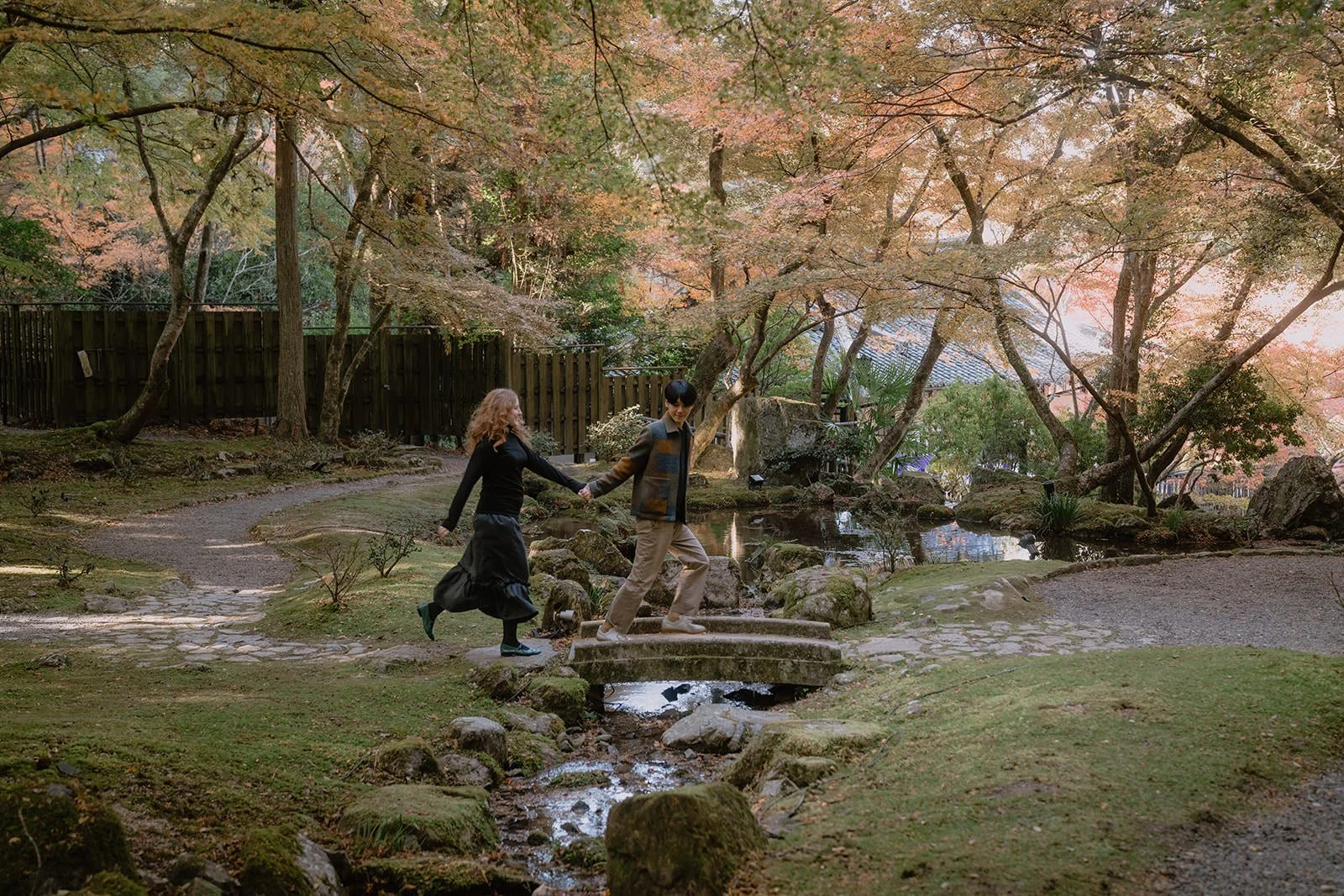
Not every photogenic temple is the right one to shoot at. Some of the most visually striking temples and shrines in Japan see almost no tourist traffic, just a handful of local visitors quietly praying or spending time on the grounds. PMT does not run photoshoots at locations like this, regardless of how strong the photos would be.
This isn't only a licensing question. Even where a license to shoot at a small, local neighborhood temple could be obtained, that alone doesn't make it the right call. A professional shoot needs a certain amount of energy and movement to give clients a good experience, and that energy is a poor fit for a quiet, prayer-focused space with only a handful of people present. Introducing that dynamic changes the space for everyone else there, license or not.
The practical result is a preference for well-known, tourist-friendly temples and shrines, timed around their quieter windows, over obscure local ones shot at random times. Asakusa, Meiji Jingu, and Zojoji, all in Tokyo, are three examples PMT works with regularly. All three carry active religious activity on their grounds, which means shoots are kept to areas away from where people are actively praying, rather than photographed at the exact spots worship is happening.
Some smaller, neighborhood-centric temples can be used for photoshoots, but make sure your photographer is both mindful and experienced on these locations.
Permission rules for parks and gardens are also less uniform than most visitors assume. Some allow photography freely. Others require a license, and even with a license won't permit certain shoot types, pre-wedding sessions being one specific example at certain parks. This information isn't always published or easy to find in advance. It's why PMT checks the actual rules for each location individually rather than assuming, and keeps its own internal reference built from that research, information used for planning and advising clients accurately rather than published as a resource itself.
Photographing a crowd vs. photographing a person
There's a meaningful difference between a photo where strangers happen to be visible in the background of a public street, and a photo deliberately pointed at one specific person going about their day. The first is a normal, unavoidable part of shooting in busy places. The second calls for more restraint, particularly when that person is working, not posing.
That distinction becomes most relevant in one specific, recurring situation in Japan: geisha and maiko.
Geisha and maiko: people at work, not photo ops
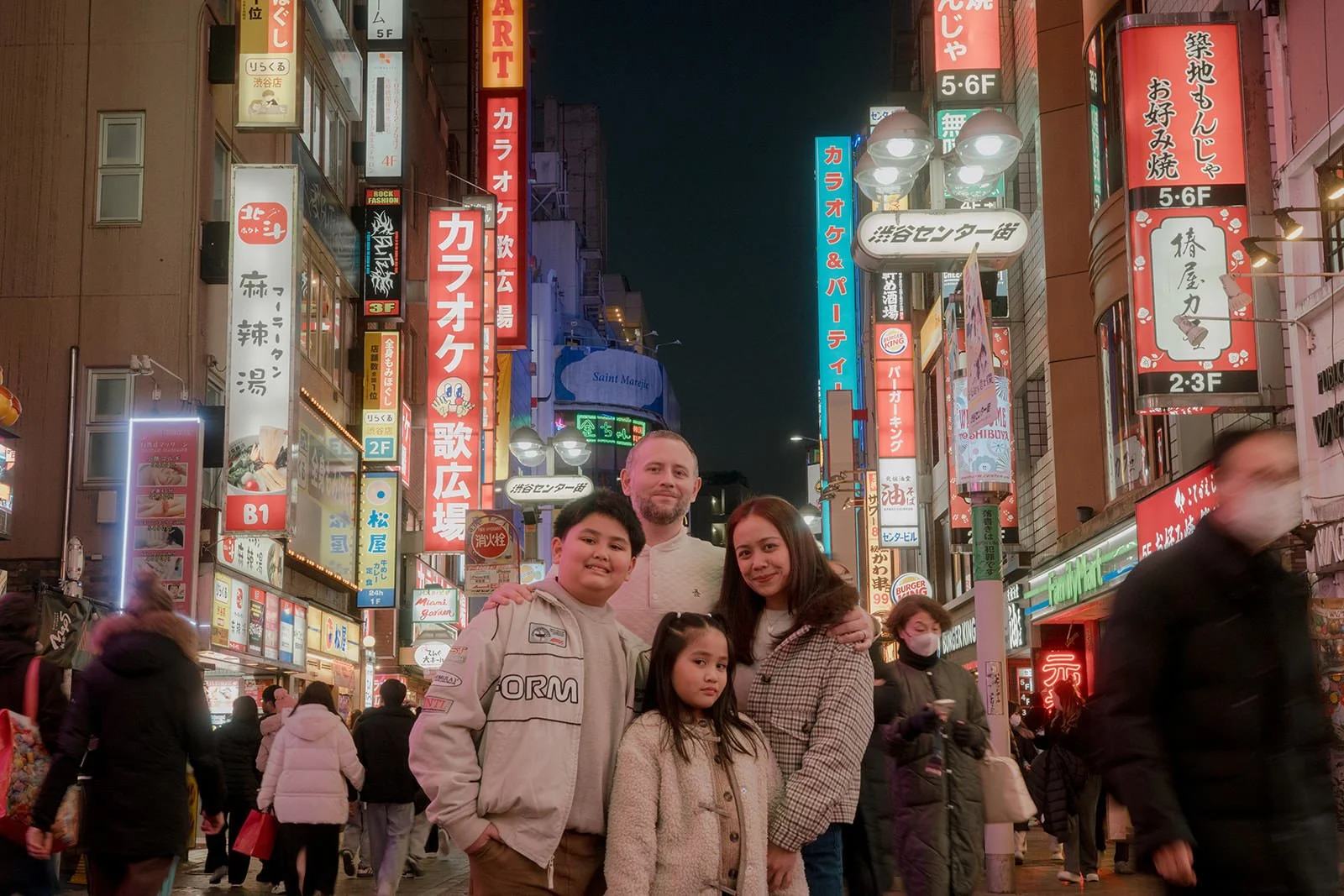
PMT treats geisha and maiko with more caution than most other subjects, for two reasons. The first is straightforward respect; they're working people, not costumed performers for tourist photos. The second is a shift that's become increasingly visible in Kyoto in recent years: real tension caused by poorly behaved tourists crowding them, blocking their path, or shoving cameras toward them for a photo.
The practical rule PMT follows is simple: camera down. Even in situations where a quick, discreet, non-intrusive photo would technically be possible, the default is to turn the camera off entirely rather than attempt the shot.
Clients are advised the same way. It's absolutely fine, encouraged even, to pause and take in the traditional dress and the small moment of daily life passing by. The idea is to let that be a memory rather than a photograph.
Private property that doesn't look private
Kyoto has visible signage in certain residential districts warning against photography and entry, and that signage matters. But the same standard applies everywhere, signposted or not, including an appealing shop or restaurant facade that catches a photographer's eye mid-shoot.
The line is zero intrusion. A facade only gets photographed if it's possible to do so without getting in the way of that business's work, or its customers, in any way. A few specific behaviors are worth naming because they're common enough to see regularly from other photographers and tourists, and PMT won't do them: pretending to walk into a shop or building just to turn around and get the photo from just outside, or sitting down at someone's entrance to stage a shot.
The responsibility sits with the photographer to arrive with enough location knowledge and enough variety of spots that a shoot never needs to lean on private property or someone else's business to fill a gap.
Gear footprint and how long is too long
PMT shoots with a camera and nothing else. No tripods, no light stands, no reflectors. All of that creates physical obstruction in spaces where other people are also trying to move through, work, or simply enjoy their visit.
There isn't a fixed rule for how long a photographer can occupy a good spot, no stated one-minute or five-minute limit. That's left to judgment. In practice, PMT moves quickly, both to bring more variety into the shoot and to avoid holding a location longer than necessary.
It's easy to see what the alternative looks like. Other Tokyo photographers have been observed holding a single popular spot for fifteen to thirty minutes at a stretch. In one particularly striking case, in a small, heavily requested corner of Shinjuku Gyoen, a photographer held the same spot for roughly forty minutes, effectively closing it off to every other visitor who wanted to use it. That's the version of a heavy gear footprint PMT works to avoid, not through a stopwatch rule, but by treating a good spot as something to enjoy and then hand back.
Cherry blossom season: hands off the branches
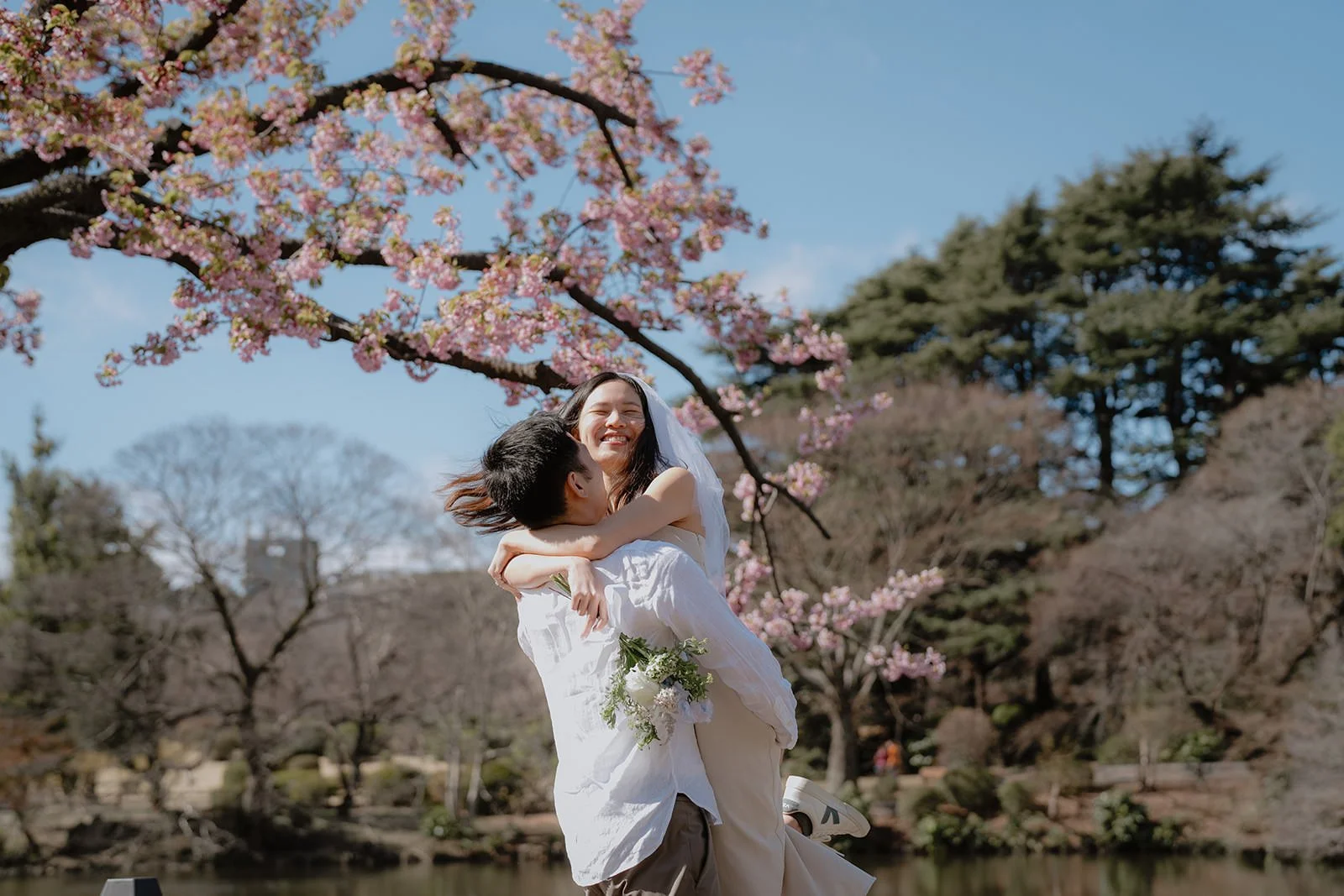
Cherry blossom season brings its own, more specific version of the "leave no footprint" problem. It's common to see visitors pulling petals off branches, or twisting and bending a branch into a better position, chasing a stronger shot without much thought for the tree itself. It's a small act in the moment, and it adds up to real, visible damage across a season with millions of visitors doing the same thing.
PMT's rule is not to touch the tree at all, not even a light, careful touch meant to hold a branch gently out of the way. It's not a matter of degree. Part of the reasoning is the tree itself, but part of it is how a touch looks to everyone else nearby: even a genuinely harmless adjustment can read as careless from a few feet away, and that's worth avoiding on its own.
If petals are part of the shot, the ones already on the ground work just as well as the ones still on the branch, and they don't require touching the tree at all.
Noise, energy, and staying out of everyone's way
This one isn't tied to a season or a specific location; it's a general operating principle for shooting in Japan. Public spaces here run quieter than in most of the world, and a shoot should calibrate to that norm rather than import a louder, more directive style from somewhere else.
The real challenge is that some shoots genuinely need energy to work. Family sessions with young kids are the clearest example; they often need a livelier approach to get natural, unposed results. PMT's answer isn't to lower that energy. It's to change how it's delivered: close, quiet communication with clients rather than loud, distant direction.
What that rules out is easy to picture: a photographer standing far back for a wide shot, waving clients into position and calling out posing instructions across a park. PMT photographer never raises its voice during a shoot, regardless of the photoshoot type or how much energy the moment calls for. High energy in the finished photo doesn't require high volume on set, and arguably works better without it, since it doesn't pull everyone nearby into the shoot along with the client.
Why this is the photographer's job to know, not yours
None of this is something a client should be expected to arrive already knowing. It's the photographer's job to carry that judgment into every session so the client doesn't have to think about it.
In practice, that trust holds up. Our clients occasionally ask whether a certain shot or approach is possible, and when the answer is no, because it isn't appropriate or isn't allowed, that's been enough. Clients consistently defer to the photographer's read on these calls rather than pushing back, which says more about how much this matters to getting a session right than any rule could.
If you're comparing photographers for a session in Japan, this is one of the more useful things to ask about directly, not just what a portfolio looks like, but how a photographer actually behaves in the space while getting it. It's a fair question to bring to any initial conversation before booking.
FAQ
Do you need permission to take professional photos in Japan?
It depends entirely on the location, and the rules aren't always published anywhere a visitor could easily find them. Some parks and gardens allow commercial photography freely, others require a license, and some restrict specific shoot types, like pre-wedding sessions, even with a license in place. The honest answer is that this needs to be checked location by location rather than assumed.
Can you photograph inside temples and shrines?
At tourist-friendly temples and shrines with active religious life, generally yes, but only in areas away from where people are actively worshipping. At small, local temples with little to no tourist traffic, PMT avoids shooting there at all. It isn't only about whether it's technically permitted; a quiet, prayer-focused space usually isn't the right environment for a photoshoot regardless.
Is it okay to photograph geisha or maiko?
PMT's practice is to turn the camera off entirely rather than photograph geisha or maiko encountered on the street, even when a discreet shot would be technically possible. They're working, not posing for tourists, and treating that moment as something to observe rather than photograph is the more respectful approach.
Do photography rules change by season or location?
Location matters far more than season. Permission and licensing requirements are set by each individual location and don't shift with the calendar the way crowd levels or foliage do. What does change seasonally is how crowded a given spot is, which affects timing decisions more than what's actually allowed there.
What happens if a location doesn't allow commercial photography?
The best approach is avoiding the situation entirely by researching a location's actual rules before booking a session there, rather than finding out on the day. It's part of why PMT checks each location individually in advance rather than relying on general assumptions about what's allowed.