
Family Photos in Tokyo: Where to Go and How Long to Stay
Family photoshoots in Tokyo come with a different set of variables than couples' sessions. The location matters, but so does the time of day, a child's energy pattern, and how much walking is actually involved in getting from one spot to the next. Most Tokyo photography content is written with couples in mind. This one isn't.
If you're planning a family session in Tokyo, here's what actually affects the decision: which neighborhoods work for families and which don't, how long a session should realistically run, and the timing tradeoffs that come up once a child's nap schedule enters the equation.
In this guide:
Best Tokyo Locations for Family Photos
Not every Tokyo location that photographs well for couples works for families. Narrow pathways, strict early-morning-only timing, or backgrounds that require a lot of standing still tend to fall apart once kids are in the frame. But a handful of areas consistently hold up.
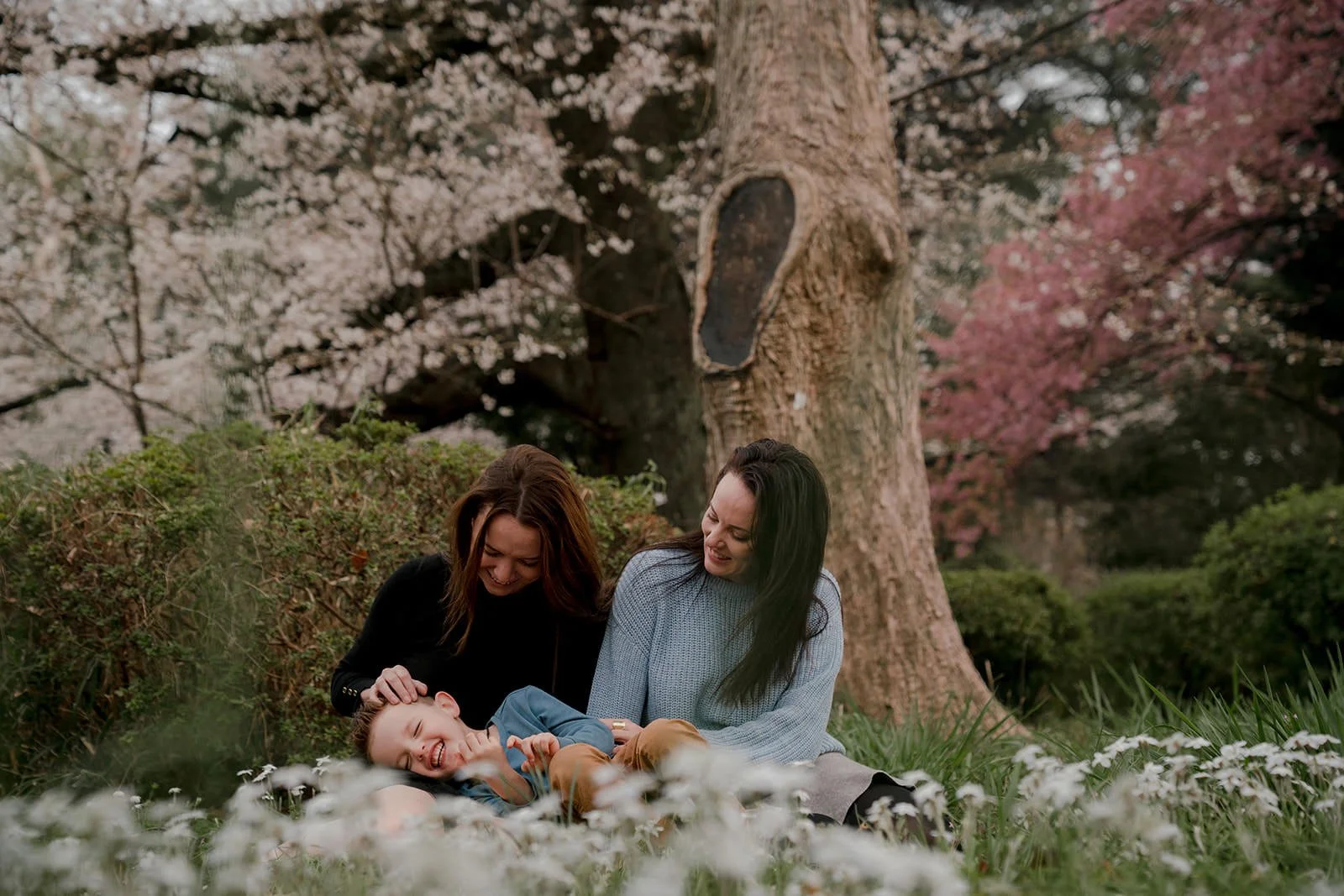
Shinjuku Gyoen. The most versatile park in Tokyo for photoshoots, and it stays workable across all four seasons, including winter. The space is large enough that kids have room to move rather than being posed against a backdrop, which produces more natural results than a tighter location would. The size is also a planning consideration on its own, more on that below.
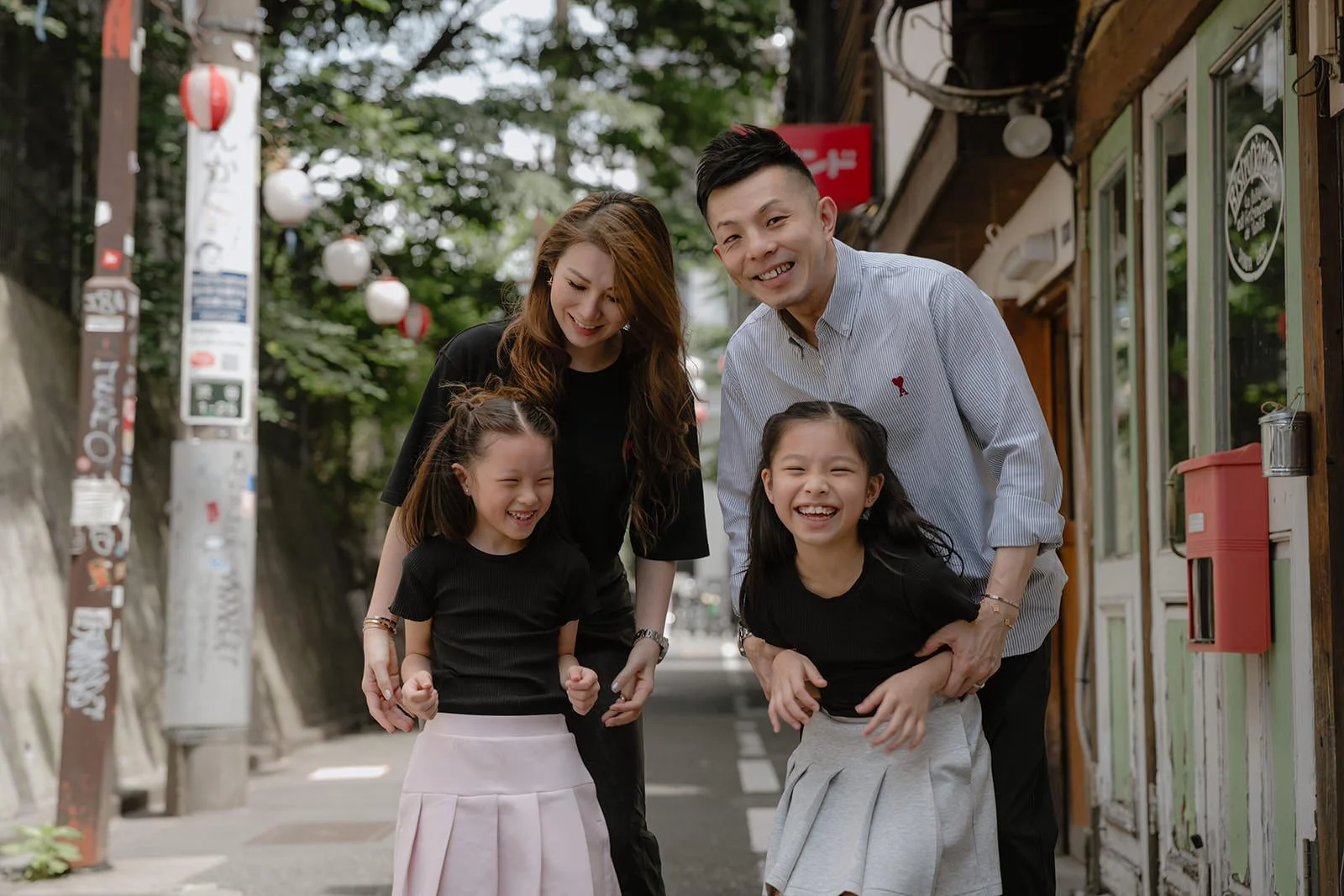
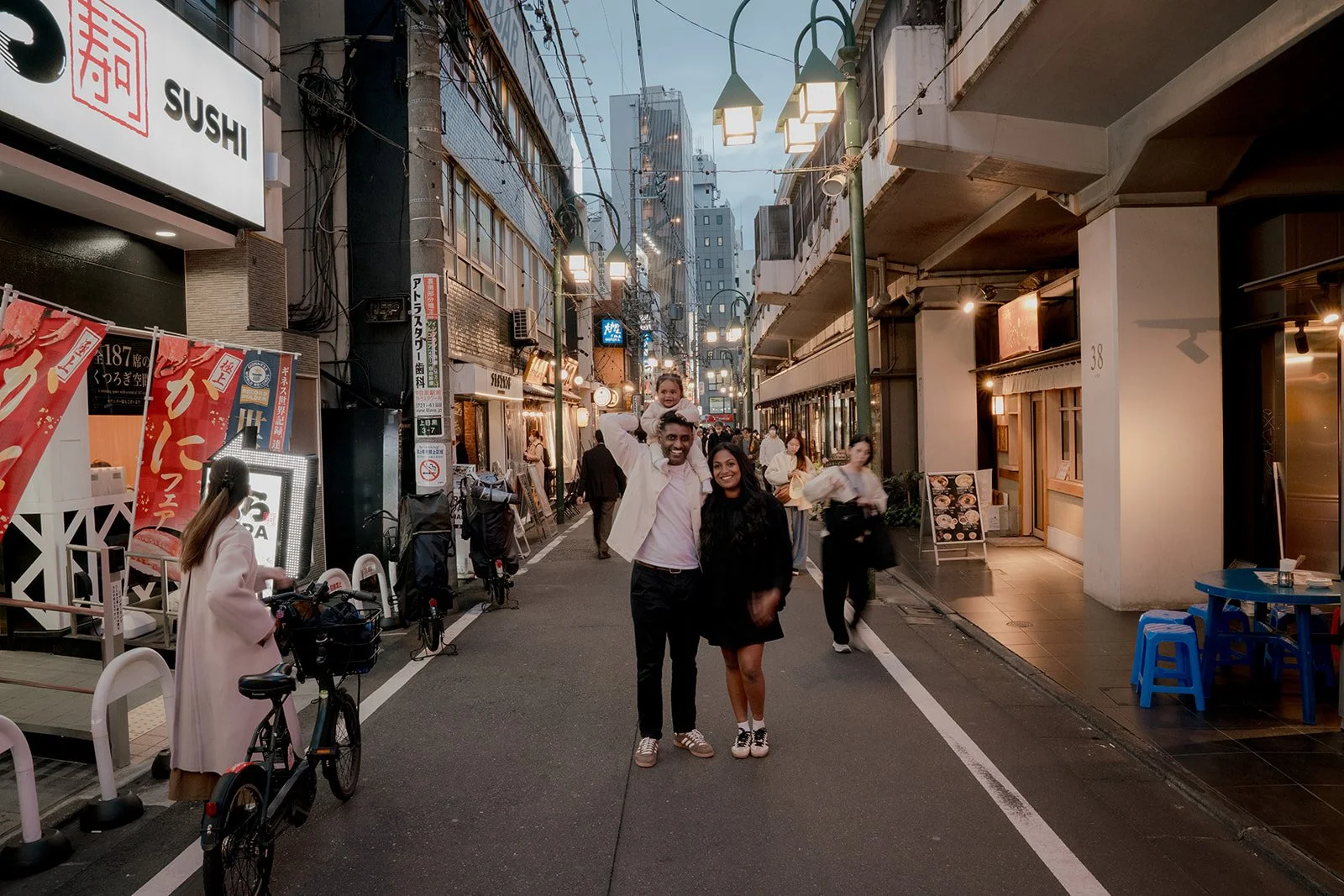
Shibuya. Beyond the crossing, side streets give a family session variety without needing to travel far. The neighborhood surprises most visitors: less about towering buildings and more a mix of modern and traditional influences that photograph well against a family group.
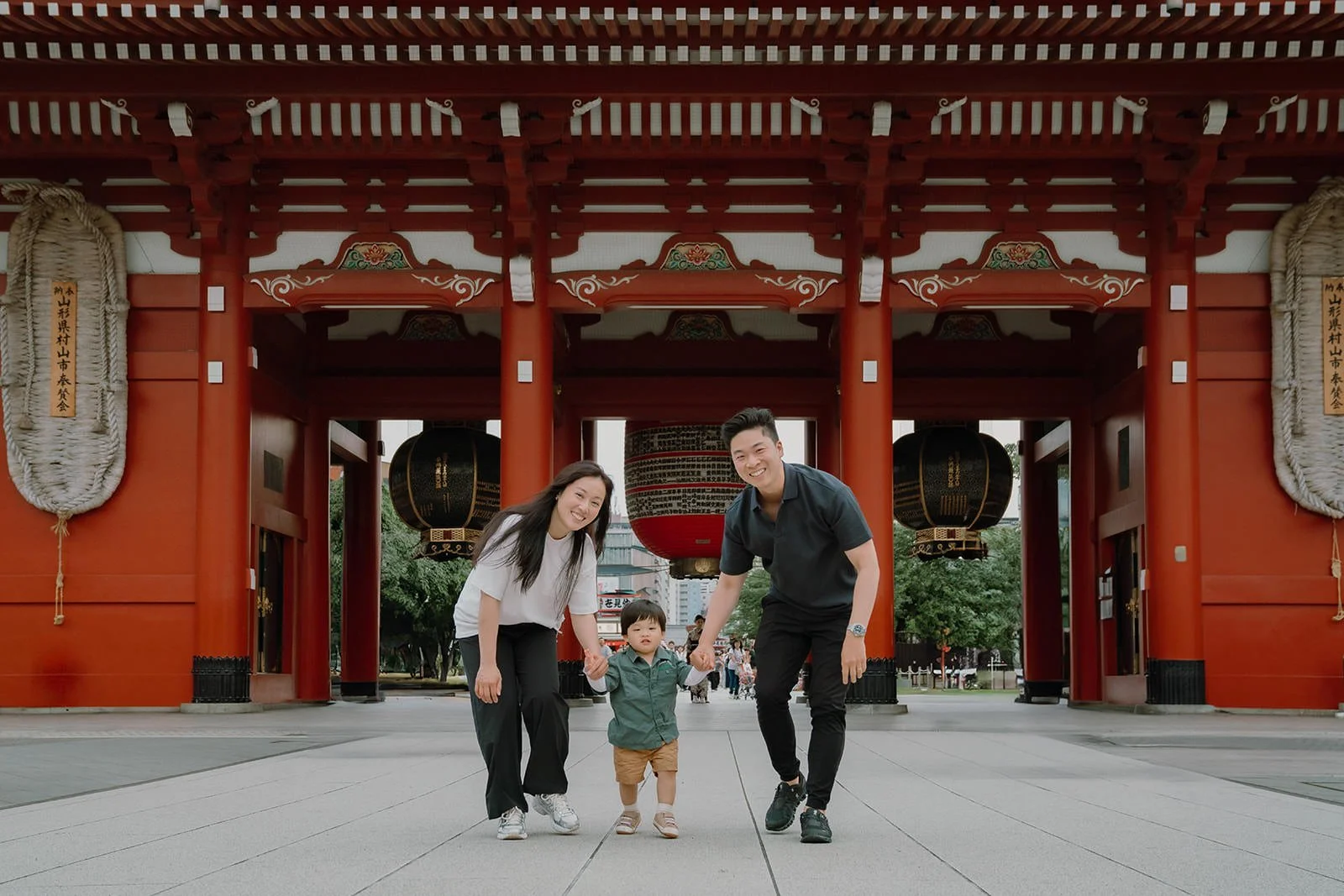
Asakusa. Traditional streets and Senso-ji give the session a distinct backdrop, and early mornings before shop shutters open bring a quieter, more visually interesting version of the area than most visitors ever see.
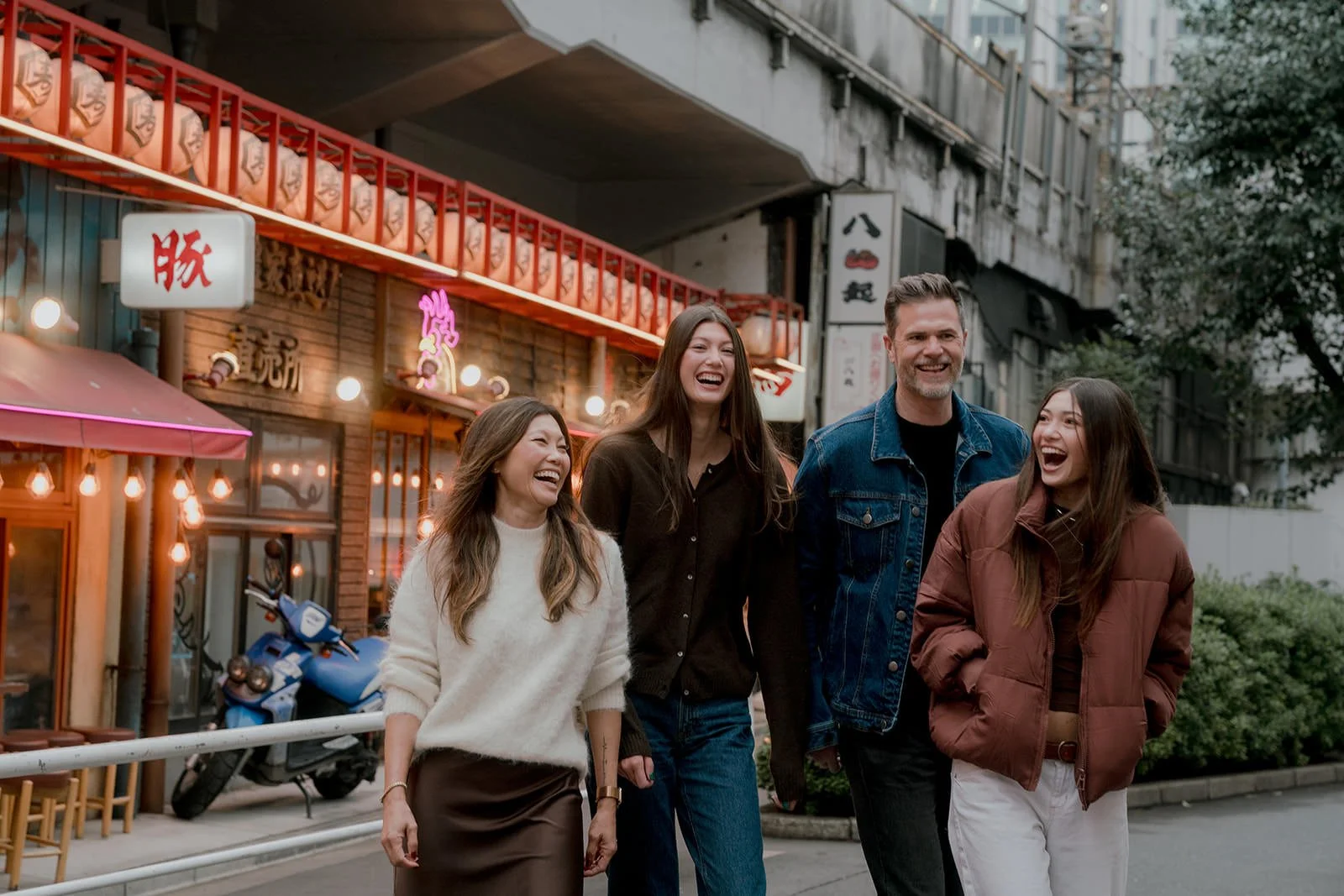
Yurakucho. Compact and lively without being a tourist draw, since it's mostly frequented by locals rather than visitors. That makes for a calmer session and photos that look distinctly different from the usual Tokyo shots.
Nakameguro. Increasingly requested for family sessions. Nakameguro is famous for its cherry blossoms, but during the rest of the year, it's a dynamic neighborhood that mixes traditional businesses with modern takes.
Where PMT steers families away from: Compact, traditional gardens like Rikugien and Hamarikyu. The narrow pathways that make it strong for couples and proposals work against young children, who need room to move freely for the energy that makes a family photo feel natural. If a location has one path in and one path out, it's usually not the right choice for a family with kids - but it's fine with babies.
Why Shorter Sessions Work Better
It's tempting to assume a longer family session means more value, especially on a trip where time in Japan is limited. In practice, the opposite tends to be true.
PMT caps family sessions with young children at 40 to 60 minutes, and that's a ceiling, not a starting point. There's no group size or itinerary that changes that upward. Past that window, the experience deteriorates regardless of how good the location or the light is, and kids tend to get impatient.
If summer heat is a concern, the recommendation goes shorter still: a 30-minute session by default. That's not about rushing through it. A short session can always be extended in the moment if the kids are doing well, and starting small with room to grow produces a far better outcome than starting long and having to cut a struggling session short.
The Most Common Planning Mistake
The single most common mistake in family bookings is requesting more than one hour. The reasoning usually makes sense on paper: more locations, or a bigger group wanting every combination covered, each kid solo, each parent-child pairing, the whole family together, so everyone comes away with their own set of photos.
The math looks fine until you account for what actually eats the time: not the shooting, but the walking and waiting between spots. Kids lose patience with transit far faster than adults do, even over short distances.
Shinjuku Gyoen is the clearest example. It's large enough that two spots a client wants can be genuinely far apart within the same park, and covering both means walking kids across that distance. Whether it's worth pushing on to the next spot or staying put and working the current one harder becomes a real-time call for the photographer, based on how the kids are actually behaving that day, not on what was planned the night before.
Matching the Session to Your Kid, Not the Light
Booking a session in Tokyo is already a balancing act between itinerary convenience, crowd levels, and ideal light, and it's rare that a location, a time slot, and a season line up to satisfy all three at once.
Family sessions add a fourth variable that can outweigh the other three entirely: a child's own energy pattern and nap schedule. An 11 am booking might mean harsh, difficult light by most photography standards, but if that's when a particular child is genuinely at their best, PMT will take the booking anyway and put the burden of working around the light on the photographer rather than asking the family to work around a schedule that doesn't fit their kid.
The priority order that follows from this: the child's real energy window comes first, and the technical difficulty is something the photographer solves, not something the family should have to plan their trip around.
What Tokyo With Kids Actually Feels Like
None of the above matters much if the trip itself is exhausting by the time the shoot happens. Tokyo in summer runs 30 to 35°C with 70 to 80% humidity, and it feels worse than the numbers suggest. Tokyo is also one of the most walkable cities in the world, which is part of its appeal, but the accumulated walking between air-conditioned stops adds up faster for families than for a couple moving at their own pace.
None of this means avoiding summer or cutting the trip short. It means building in more white space than an itinerary usually assumes: fewer stops per day, more buffer between them, and a photoshoot slot that doesn't compete with a full day of sightseeing on both sides of it. Families who build that flexibility in tend to get more out of both the trip and the session than those who try to fit everything in. That is the same for all seasons.
Planning the Session
The decision points that actually matter for a Tokyo family photoshoot come down to a short list: pick a location that gives kids room to move, keep the session shorter than feels necessary, let your kid's schedule drive the timing rather than the light, and leave enough space in the itinerary that the session isn't competing with an already packed day. Get those right, and the location becomes almost a secondary decision. Get them wrong, and even the best location won't save the session.
Frequently Asked Questions
How long should a family photoshoot in Tokyo be?
For young kids, 40 to 60 minutes is the practical ceiling, not a starting point. If summer heat is a factor, a 30-minute session with the option to extend on the day works better than committing to a longer block upfront.
What's the best time of day for a family photoshoot with kids?
It depends more on your child's energy pattern than on ideal light. A slot when your kid is naturally at their best, even if it means harsher midday light, tends to produce better results than a golden-hour slot timed around a tired or cranky child.
Which Tokyo locations work best for family photos?
Shinjuku Gyoen, Shibuya, Asakusa, Yurakucho, and increasingly Nakameguro. Locations with narrow pathways, like Hamarikyu Gardens, tend to work against young kids who need room to move.