
Best Pre-Wedding Photoshoot Locations in Tokyo
Tokyo doesn't have one signature pre-wedding backdrop the way Kyoto has its temples or Kawaguchiko has Fuji. What it has instead is range: formal Western-style architecture a few minutes from a working shrine, a retro side street a few minutes from a canal-side neighborhood. That range is the real advantage of shooting a pre-wedding session in Tokyo, but it also means the location decision matters more here than it would somewhere with one obvious answer.
In this guide:
Why Location Choice Matters for a Pre-Wedding Shoot
A pre-wedding shoot is trying to do something a normal couples session isn't. It aims for a specific formality and mood, often meant to double as a keepsake or a piece to display. That raises the stakes on three things a casual location doesn't have to get right. The light needs to support a more polished look, the crowd level needs to allow for careful posing rather than quick candid shots, and, in at least one case in Tokyo, the location has its own rules about what you can wear on the grounds.
That last point catches people off guard. Not every park in Tokyo allows full traditional wedding attire, and finding that out on the day of the shoot is the kind of mistake worth avoiding. It's covered honestly below, location by location.
Classic and Urban: Two Registers, One City
PMT sorts its Tokyo pre-wedding locations into two registers. Classic locations lean toward gardens, shrines, and formal architecture, the settings most people picture when they imagine a pre-wedding photo. Urban locations lean toward Tokyo's neighborhood character: older buildings mixed with modern storefronts, retro signage, and a lived-in feel rather than a manicured one.
Neither register is the correct choice. Some couples want the whole session in one register. Others want both in the same shoot, which is covered further down.
Marunouchi (Classic)
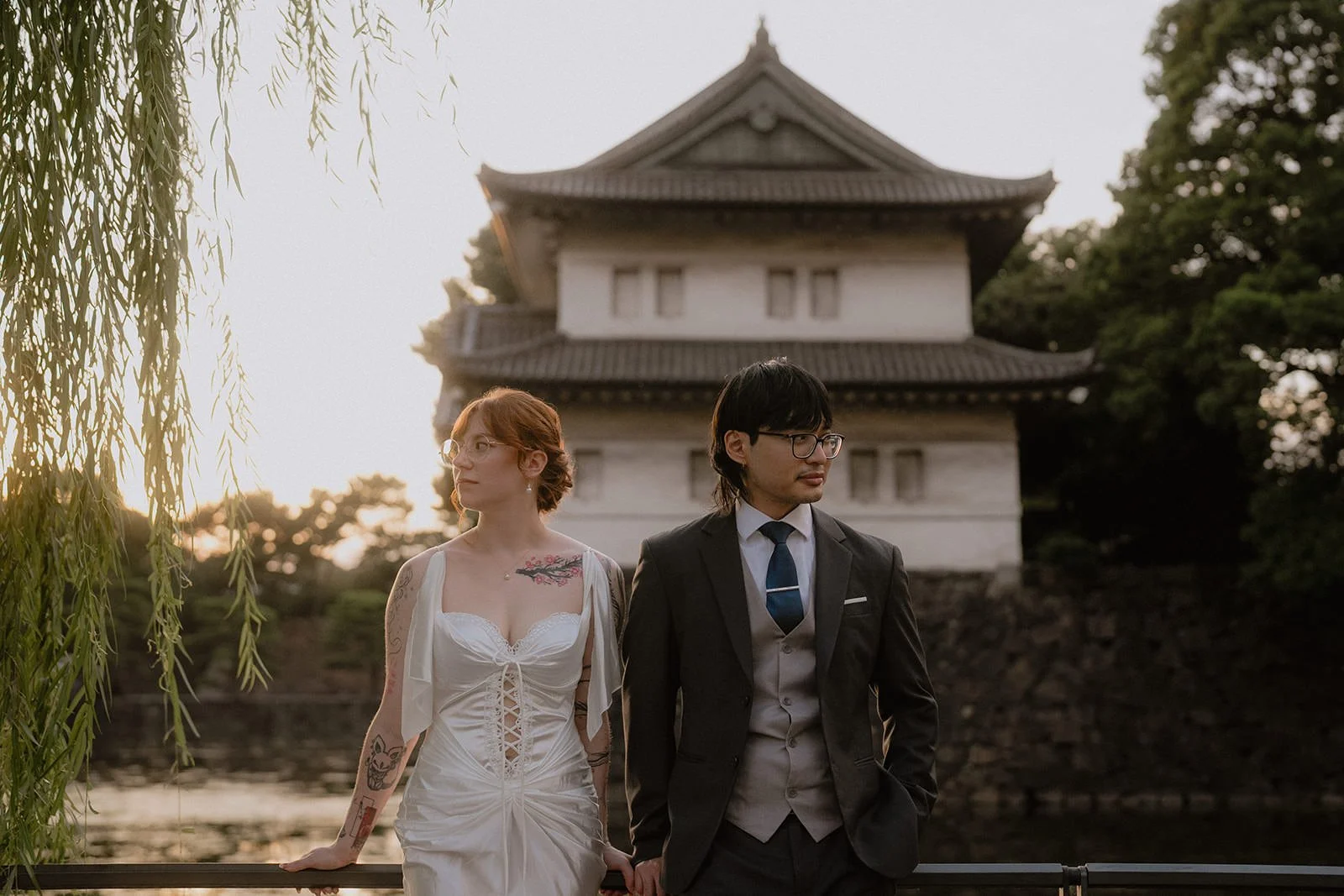
Marunouchi is Tokyo's Tokyo Station district: wide, straight avenues and structured city blocks that look distinctly Western rather than traditionally Japanese. It's an unusual look for Tokyo. That contrast is exactly why it works for pre-wedding, reading as upscale and elegant, and different from every other location on this list.
Golden hour is the strongest window here, not evening. The sun sets in the direction of the Imperial Palace garden, an open green space with no surrounding buildings, which gives cleaner light than most of Tokyo's more enclosed streets. PMT has photographed pre-wedding sessions here specifically for this architectural contrast.
Nakameguro (Urban)
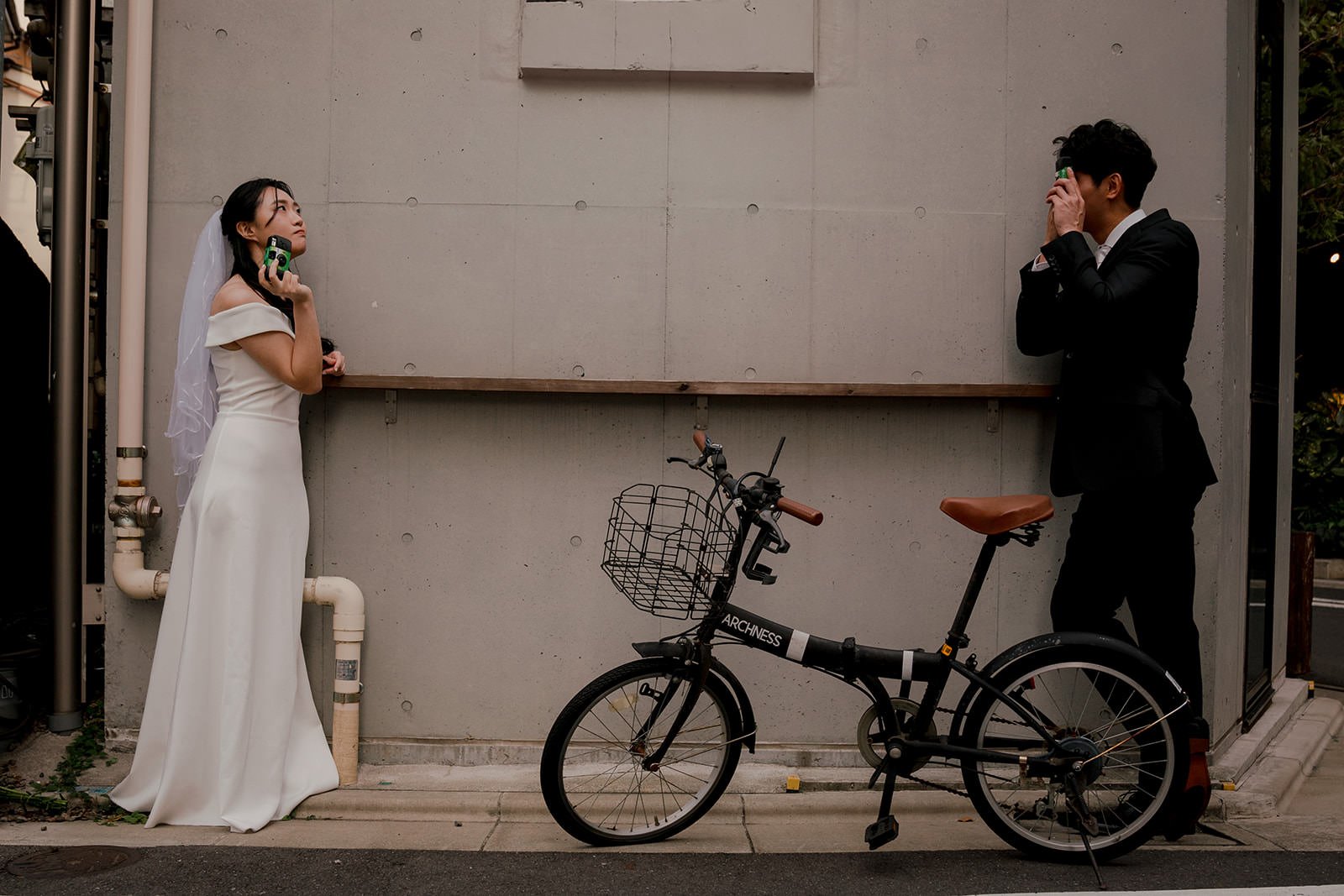
Most visitors know Nakameguro for its canal, lined with cherry trees that draw serious crowds every spring. PMT's pre-wedding use of the neighborhood is different: the side streets around the train tracks, where older Japanese buildings sit next to modern businesses.
Those side streets work year-round, including during cherry blossom season, when the canal itself gets too crowded and too narrow to shoot comfortably. The canal is still an option for a pre-wedding session outside sakura season, but the streets near the tracks are the primary reason PMT uses this location, and that holds whatever time of year a couple books.
Shinjuku Gyoen (Classic)
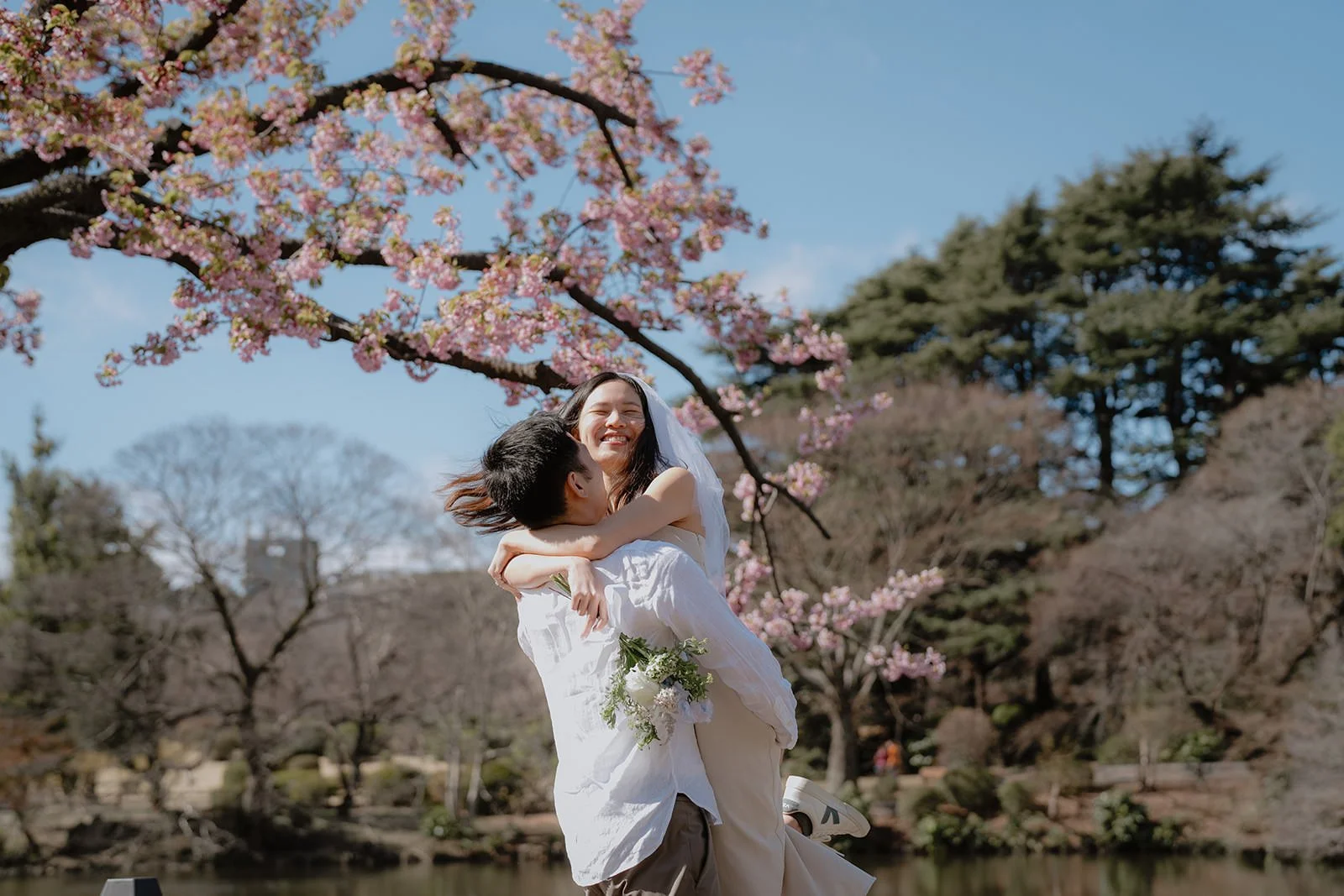
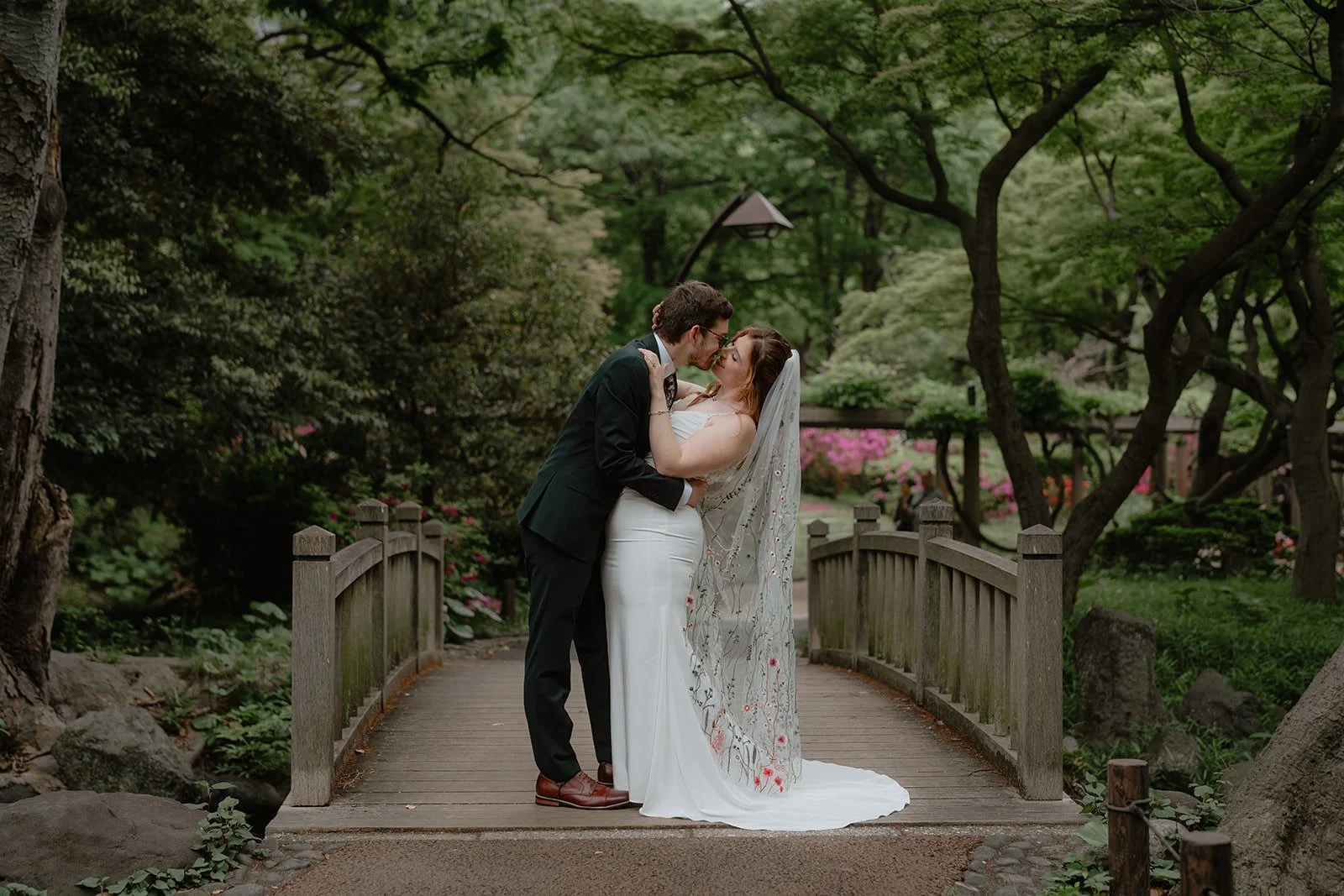
Shinjuku Gyoen is one of the most versatile parks PMT shoots in Tokyo. Bridges, stone lanterns, ponds, and enough plant variety mean something is usually in bloom regardless of season.
Here's the honest part most guides skip. Shinjuku Gyoen restricts full traditional wedding attire on its grounds. A formal wedding dress or tuxedo isn't permitted. That doesn't rule the park out for pre-wedding entirely. It rules out one specific look. Couples who want a dressed-up but not overtly bridal outfit, such as a nice white dress without a veil, or kimono, can shoot here without issue. Couples set on the full wedding-dress look for their whole session should plan that portion somewhere else and treat Shinjuku Gyoen as a complementary location rather than the main one.
Yurakucho (Urban)
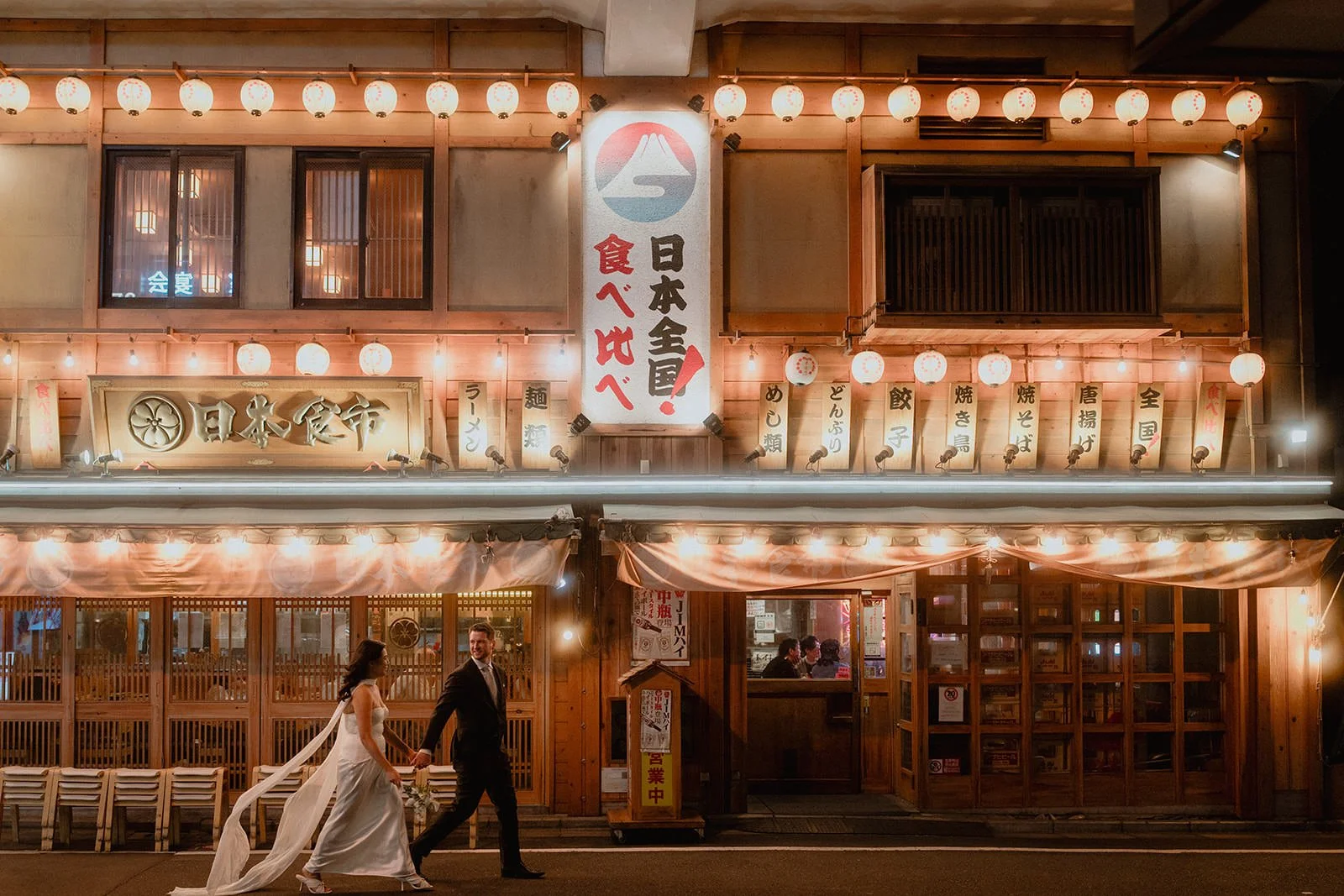
Yurakucho sits between Hibiya, Marunouchi, and Ginza, and it doesn't look like the Tokyo most visitors expect. There's a central pocket of retro facades and paper-lantern-lit restaurants, styled to feel like an older Japan without being a tourist recreation of one. It's a working entertainment and business district, so it's genuinely used by locals rather than photographed by every visitor with a phone.
PMT shoots pre-wedding sessions here the same way it shoots any other session type at this location. There's no separate approach needed. The quiet, non-touristy character is the draw either way.
Hibiya Park (Classic)
Hibiya Park isn't a dedicated traditional garden, but it has enough of the right elements (a pond, a fountain, a bridge) to read as one in photos. Autumn is when it's at its most striking, but the water features give it usable character across the rest of the year too.
The park stays quiet on most days, and the best light comes near sunset. PMT has shot pre-wedding sessions here specifically for that combination of Japanese-garden framing and manageable crowds.
Nezu Shrine (Classic)
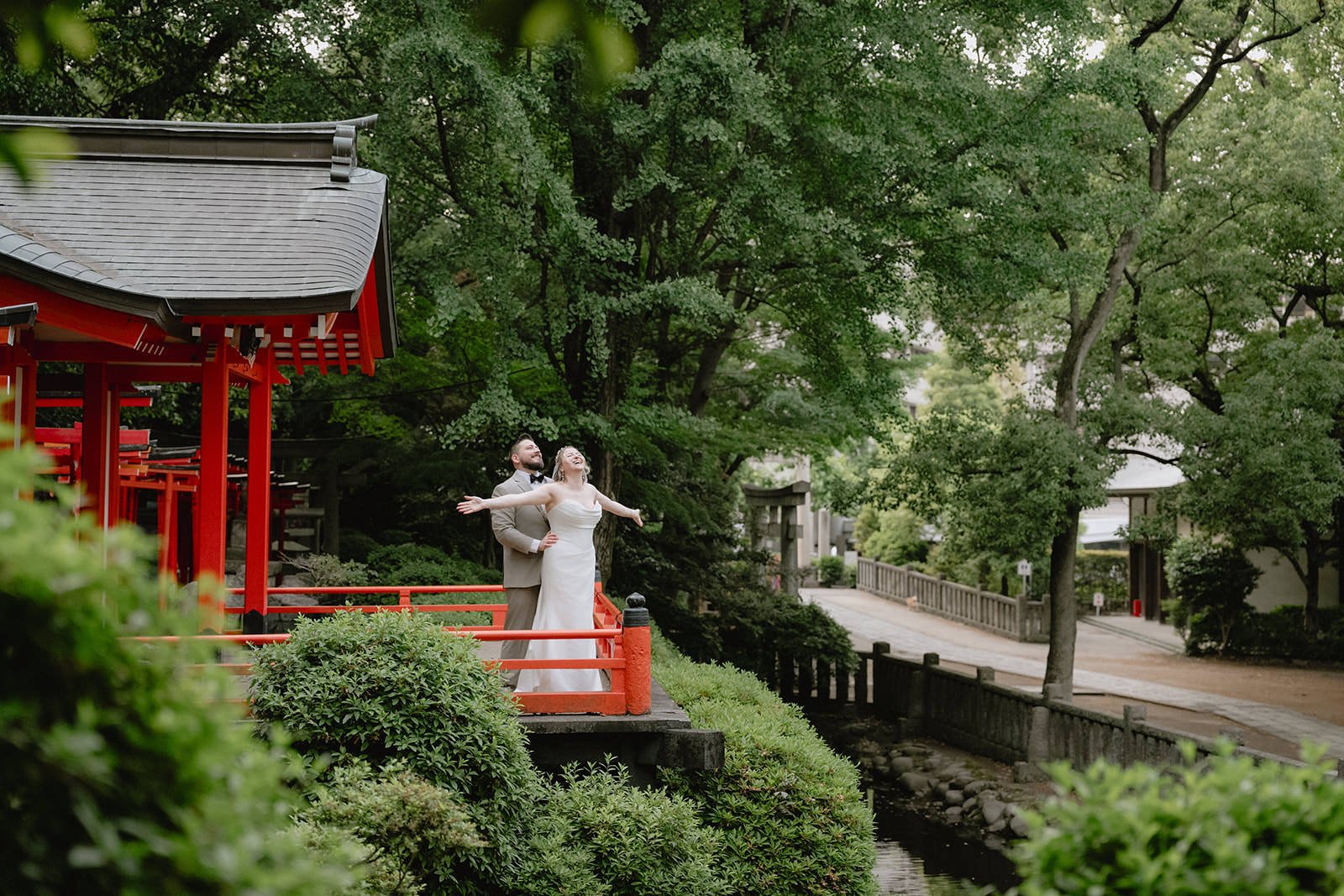
Nezu Shrine has a torii tunnel, a row of closely spaced gates similar in spirit to Fushimi Inari's at a smaller Tokyo scale, along with the kind of shrine architecture that reads as classic and traditional in a single frame.
There's one seasonal exception worth planning around. The shrine's azalea garden draws real crowds when it's in bloom. Outside that window, Nezu Shrine is quiet enough that timing and crowd management aren't a major concern, which isn't true of most of the locations on this list. As a working shrine, PMT shoots with the same discretion used at any active shrine, staying clear of areas where visitors are actively worshipping.
Combining Locations: How a Split Session Works
Some couples want both registers in one shoot: the formal, garden-and-architecture feel of a Classic location and the neighborhood character of an Urban one. PMT calls this a Split session, one Classic location plus one Urban location, back to back.
The pairing works best when the two locations aren't far apart, since the session clock keeps running during transit between them. Marunouchi and Yurakucho sit close enough to combine comfortably, for example. A Split session is worth raising early in planning rather than deciding on the day, since it changes how much time gets allocated to each location.
FAQ
Can we shoot at more than one location in one session?
Yes. This is what PMT calls a Split session: one Classic location and one Urban location in the same shoot. It works best with locations that are reasonably close together, since travel time between them comes out of the session, not on top of it.
Do we need a permit for any of these spots?
It depends on the location, and the rules aren't always publicly listed. PMT checks each location's actual policy in advance as part of planning a session, rather than assuming a park's general photography rules cover a professional pre-wedding shoot. The one confirmed restriction worth knowing ahead of time is Shinjuku Gyoen's limit on full traditional wedding attire, covered above.
What's the best season to shoot at each location?
Hibiya Park is strongest in autumn. Nezu Shrine is best avoided during its azalea bloom if a quiet shoot matters more than the flowers themselves. Nakameguro's side streets work year-round, though the canal portion should be skipped during cherry blossom season. Marunouchi, Shinjuku Gyoen, and Yurakucho don't carry the same seasonal restrictions and are workable across most of the year.
Planning a Pre-Wedding Session
Six locations, two registers, and at least one attire rule worth knowing before booking rather than after. The right choice comes down to what a couple wants the photos to feel like, and whether that's one register or both. From there, it's a matter of picking a season and a time of day that match the location and getting it on the calendar.
Get in touch through PMT's pre-wedding page to talk through which of these fits, or head straight to booking if the direction is already clear.