
What to Expect From a Photoshoot in Japan: A Practical Guide for Visitors
Most people who book a photoshoot in Japan have never done one before. They arrive at the meeting point slightly unsure of what's about to happen. Whether they'll need to pose, how long it will take to feel natural, and whether the whole thing will feel forced. Within the first fifteen minutes, that uncertainty is usually gone. What clients mention most consistently afterward isn't the photos themselves. It's how relaxed the experience turned out to be.
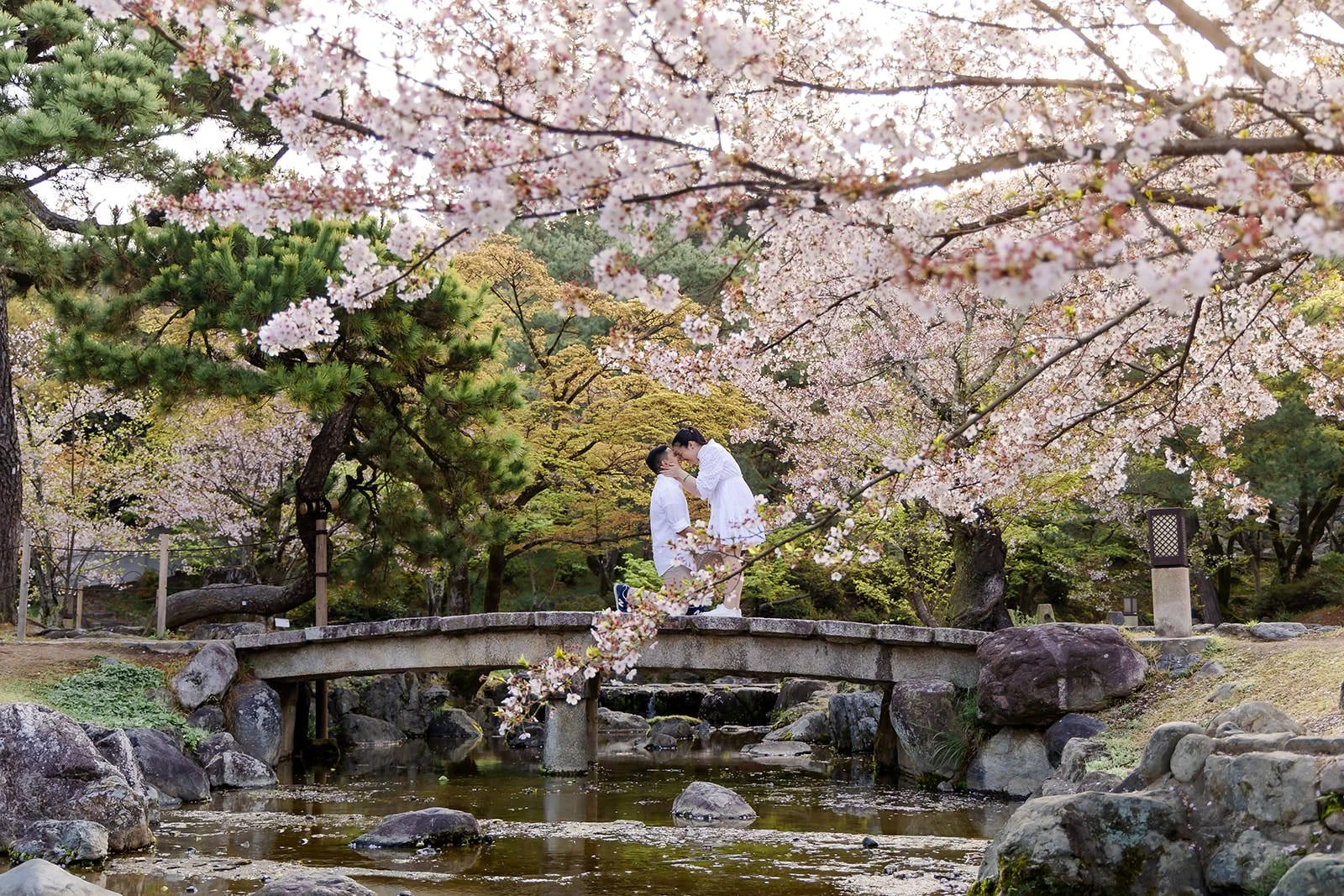
This guide covers what a professional photoshoot in Japan actually involves: how sessions are structured, what affects the results, which locations work for which shoot types, and how to decide whether it fits your trip.
In this guide:
- Who books photoshoots in Japan
- How a session actually works
Who Books Photoshoots in Japan
The range is wider than most people expect. Couples on honeymoon or anniversary trips. Families who want something better than phone photos of their children in front of temples. Solo travelers who want photos of themselves actually in the places they're visiting. People planning proposals. Pre-wedding couples. Friends traveling together.
What most of them have in common: Japan was the destination first, the photoshoot second. They weren't shopping for photography and then choosing a country. They planned a trip to Tokyo, Kyoto, or Kawaguchiko and decided at some point that professional photos were worth adding to it.
That sequence matters. It means the session needs to fit the trip. The locations, the timing, and the energy level, rather than the other way around. A photoshoot that works well is one that slots into the travel experience without disrupting it.
How a Session Actually Works
A standard session runs between one and two hours. Longer options exist for clients who want multiple locations or more time. Sessions are private: one group, one photographer, not shared with other clients.
The majority of people who book have never done a professional photoshoot before. They show up not quite knowing what to expect. A good photographer's job in the first ten to fifteen minutes isn't photography, but creating enough comfort that the session can actually begin properly. The energy a photographer brings, how they read the group and adjust accordingly, and how they introduce the first few movements without making them feel like poses. These set the tone for everything that follows.
The feedback PMT receives most consistently reflects this. Clients who arrived expecting hard work or awkward posing describe something closer to the opposite. That experience isn't accidental. It develops across hundreds of sessions, and it's what separates a comfortable shoot from a technically correct but stiff one.
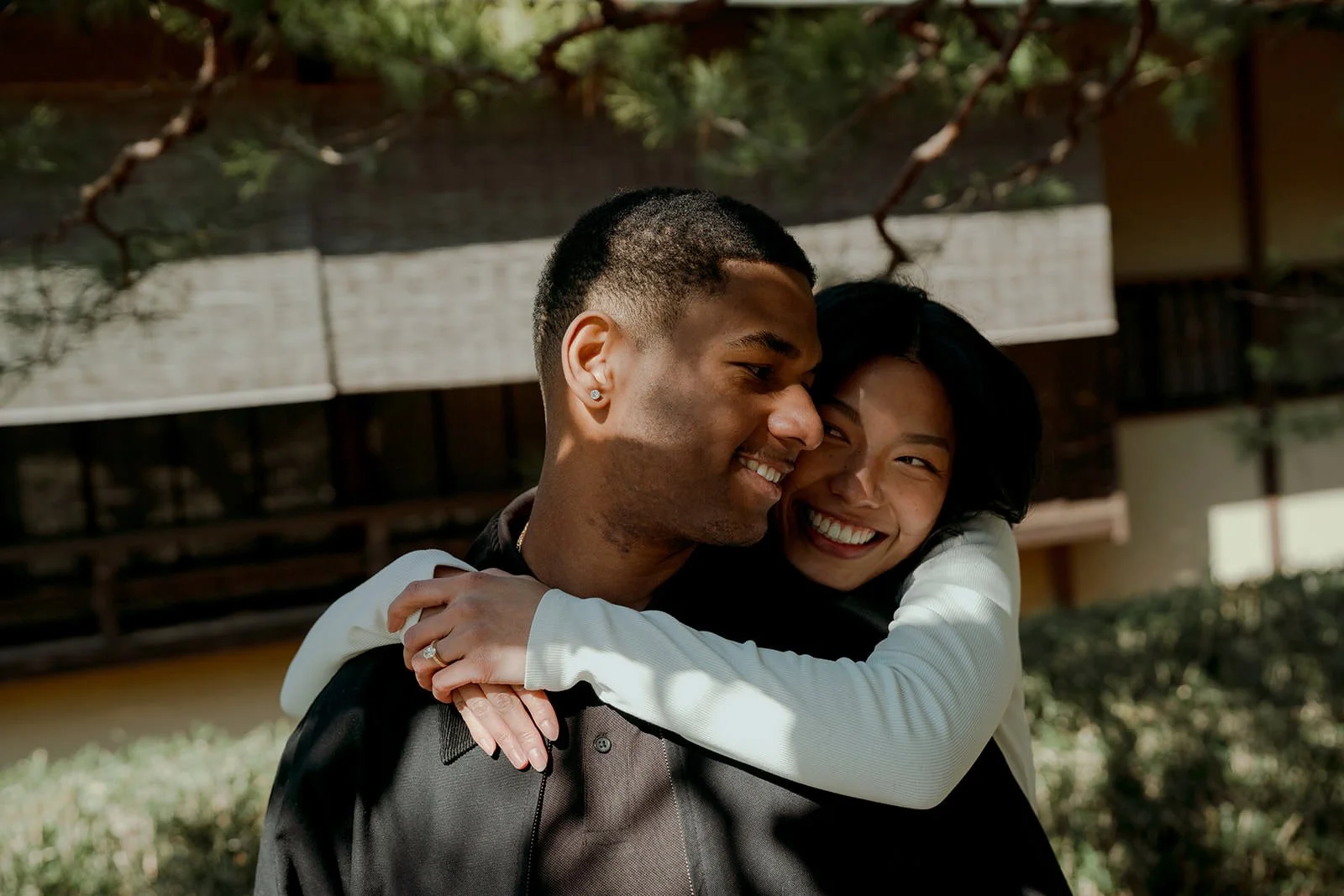
The actual photography happens around that foundation. Locations are chosen to suit the group's shoot type and timing. Movement is guided without being rigid. Many of the strongest frames come between the posed shots, when clients have stopped thinking about being photographed.
Locations and What Makes Them Work
Japan has no shortage of photogenic locations. The more useful question is which ones work for a specific shoot type, group, and time of day - and which ones perform better in other people's photos than in practice.
Tokyo
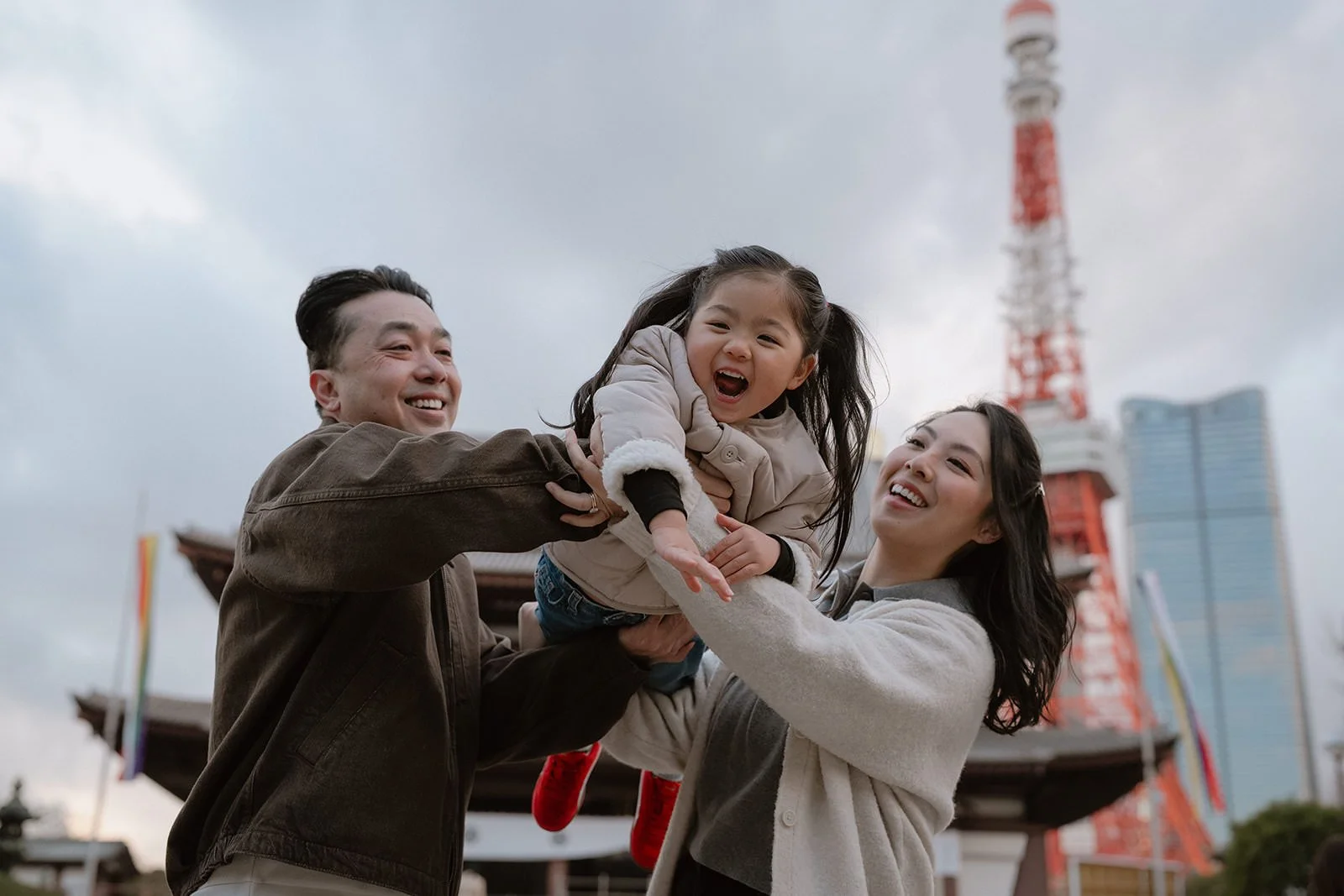
Tokyo's photographic strength is wide-ranging. Within short distances, you can move between traditional streets, modern architecture, parks, waterfront areas, and quiet residential neighborhoods. Almost any shoot style works without leaving the city.
Asakusa delivers a traditional Tokyo atmosphere. Historic streets, temple architecture, and the visual language most visitors associate with old Japan. The area changes significantly with the time of day. Before 8 am, with shop shutters still down and the streets quiet, it looks and feels genuinely different from what arrives later. By mid-morning, when tour groups have arrived and commerce is open, much of that quality is gone. The same location, separated by two hours, produces noticeably different results.
Shinjuku works best treated as a route rather than a single spot, starting near the station, moving through to Golden Gai. The urban energy is the point; it's not a location where you want stillness. Weekday evenings work better than weekends. Friday and Saturday nights bring a significantly larger crowd heading to bars, which makes clean shots harder and requires more patience. The difference is real enough that it affects session planning.
Hamarikyu Gardens has narrow pathways throughout, which shape everything about how it works as a shoot location. That quality suits couples and proposals well. Bridges, landmarks, an intimate atmosphere, a visual contrast between the Japanese garden and the office towers surrounding it on all sides. Families with young children are a different calculation. Narrow paths don't give kids room to move freely, and the natural energy of a good family shot depends on that freedom.
Shinjuku Gyoen is the most versatile park in Tokyo for photoshoots. Large enough to offer real variety across a single session, with Japanese garden elements throughout, such as bridges, stone lanterns, ponds, and stone pathways. There’s enough open space that it stays workable even when the park has significant visitor numbers. Cherry blossom season here is exceptional, and with the right knowledge of crowd behavior by the entrance gate, more manageable than it looks from the outside.
Marunouchi and Tokyo Station offer something most Tokyo locations don't: wide, planned streets with clear sightlines that allow golden hour shots at a scale the rest of the city rarely permits. The architecture is Western-influenced and upscale rather than traditionally Japanese. Distinctive within Tokyo precisely because it doesn't look like the rest of it.

Kyoto
Kyoto concentrates traditional Japan in a way Tokyo doesn't replicate. Wooden townhouses, stone lantern paths, bamboo groves, moss-covered shrine gates. The visual language of old Japan is consistently present here across a much smaller geographic area. This is why visitors who want traditional Japanese scenery as a priority tend to choose Kyoto over Tokyo for shoots.
Arashiyama's bamboo grove is among the most requested shoot locations PMT works with. It also requires strict timing. Before 8 am is the practical rule, and in peak seasons, even that window closes fast. The grove has been photographed from the same angles millions of times. Working different angles serves two purposes simultaneously: more interesting results, and avoiding the predictable crowd clusters even at busier times, since visitors congregate at the same spots.
Higashiyama Ninenzaka, Sannenzaka, and the less busy Nene no Michi running alongside offer the narrow stone-paved streets and traditional architecture that define Kyoto's visual identity. The main streets require early morning or evening timing to be workable at all. Nene no Michi runs quieter across more of the day, which provides meaningful flexibility. Parts of it are residential with photography restrictions that aren't obvious from a map and require local knowledge to navigate correctly, though.
Gion's most famous street is one PMT avoids for shoots, both for photographic and ethical reasons. The smaller surrounding streets offer the same quality of traditional architecture with a fraction of the crowd and without the uncomfortable atmosphere that heavy tourist traffic has created for the people who live and work there.
Beyond the main cities
PMT's primary shooting destinations are Tokyo, Kyoto, Kawaguchiko, Osaka, Nara, and Sapporo. Photographers are available to travel to other locations across Japan, and clients with specific destinations in mind are welcome to inquire.
Timing and Seasons
Timing affects shoot results more than almost any other variable. Two sessions at the same location on the same day, one at 7 am and one at 10 am, will produce noticeably different photos. That gap is about light, crowd density, and the overall experience of being somewhere - all three shift significantly within a few hours at the most popular locations.
The early morning pattern
Across every destination and every season, early mornings are consistently better. Crowds are thinner. Light is softer and more directional. Locations that are difficult or impossible to shoot cleanly at 10 am are often genuinely quiet an hour or two earlier.
Many visitors assume arriving at 9 am counts as early. At Arashiyama in autumn, or Higashiyama on a spring weekend, 9 am can already be too late. The grove fills fast. By mid-morning, the paths are dense enough that getting a clean background requires specific positioning that even experienced photographers have to work for.
What compounds this: "early" means something different depending on the season. In summer, the sun rises before 5 am, and the light is already hardening by 7 am. In winter, there's a much longer window of soft morning light. The same arrival time produces different results depending on the month, which means early needs to be defined by the season, not by habit.
Summer
Tokyo and Kyoto summers run 30 to 35°C with high humidity. The conditions are manageable with the right timing. The practical window is 7 am to 9 am: the city has cooled slightly overnight, light is soft, and streets are genuinely quiet. Midday is best spent indoors regardless of plans.
Kyoto's summer is noticeably worse than Tokyo's. The city sits in a basin surrounded by mountains, which traps heat more effectively than Tokyo's more open geography. The difference is felt, not just measured.
Summer also has something the other seasons don't: matsuri. Neighborhood festivals run through July and August. Yukata, lantern light, natural movement, and energy in the streets. These produce some of the most interesting evening photography of the year. Summer is not a consolation prize for missing autumn. For the right client, it's a reason to specifically choose summer.
Autumn
Autumn is high season, running across three months rather than the compressed three weeks of cherry blossom season. Crowd pressure is real, but more spread out.
One distinction that consistently surprises visitors: Kyoto and Tokyo behave differently in autumn. Kyoto peaks in November with yellows, oranges, and reds arriving simultaneously. Tokyo's color progression is slower and more staggered - yellows in November, reds not until December. Clients planning an autumn trip and expecting a Kyoto-style display in Tokyo in November will be disappointed. Clients who understand the timeline can plan accordingly.
Winter
Winter in Japan is consistently underestimated by international visitors who arrive expecting grey, bare conditions. Tokyo in winter delivers clear blue skies, persistent sunshine, and crowds that are significantly thinner than in spring or autumn. Some locations that are genuinely difficult to shoot during peak seasons become accessible in winter simply because fewer people are there.
Kyoto in winter adds one possibility worth treating as a bonus rather than an expectation: snow. A light dusting on temple roofs and bamboo is one of the more visually striking things Kyoto can offer. It's not frequent enough to plan around. Kyoto gets snow more readily than Tokyo due to its mountain geography, but it's still not predictable. If it happens, it's worth adjusting plans around it. If it doesn't, the clear winter light and thinner crowds are still a good reason to be there.
Cherry blossom season
Peak demand. Locations that are manageable in other seasons become genuinely crowded in ways that require early timing and specific location knowledge to navigate. The season runs roughly late March through mid-April, varies year to year, and compresses significant tourist volume into a short window. Manageable with the right approach, but not the relaxed experience some visitors expect when they book months in advance without asking what early March in Kyoto actually looks like on the ground.

Shoot Types
Couples and honeymoons
The most common shoot type. Works across essentially all locations and seasons. Location and timing selection is primarily about the visual style the couple wants - traditional Japan, urban energy, gardens, waterfronts - rather than any particular logistical constraint.
Proposals
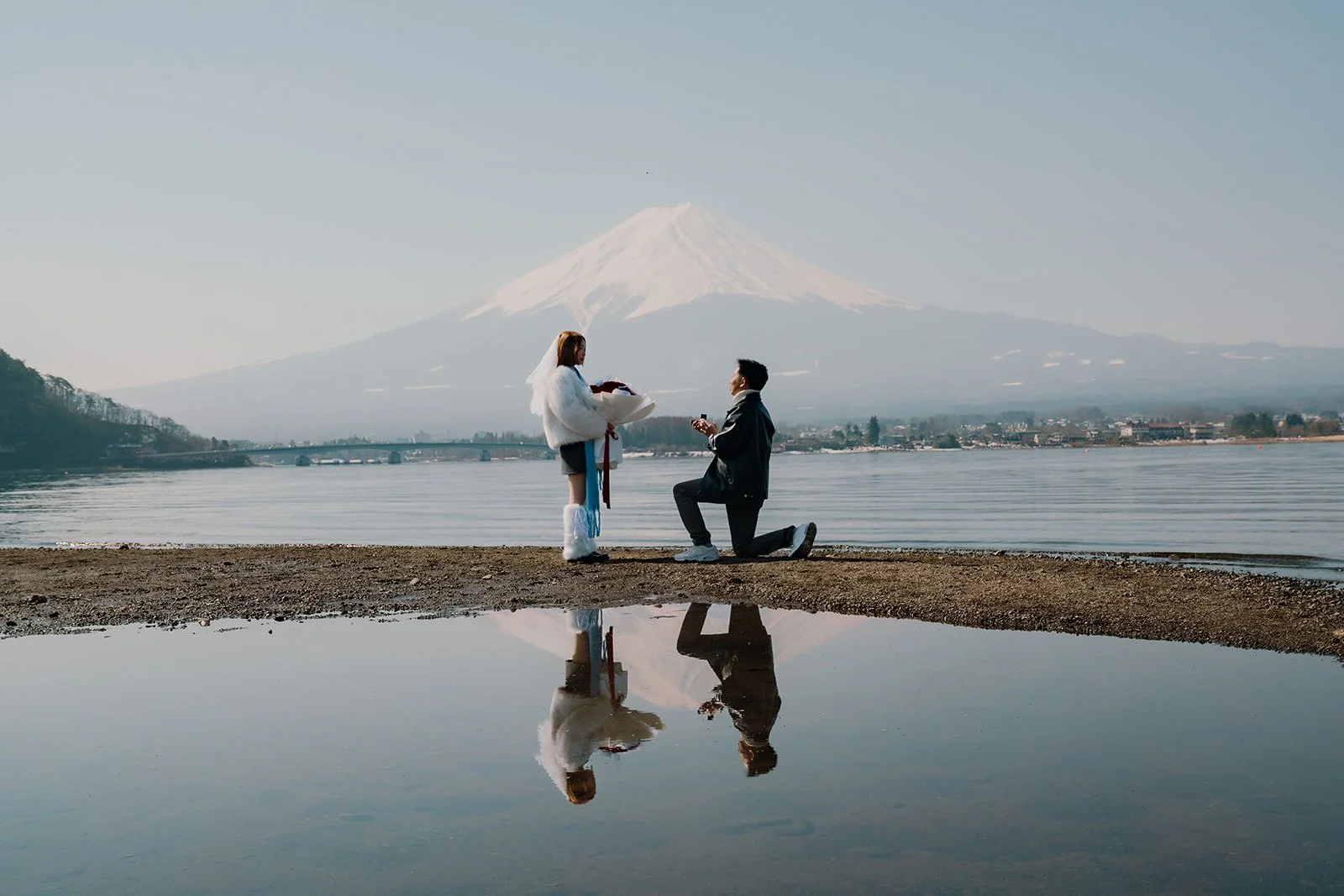
One person knows what's coming. One person doesn't. Those two emotional states arriving simultaneously at the same moment are what make proposals photographically distinct from any other shoot type.
Pre-shoot coordination is everything: exact location, timing, route, cover story. The more precisely this is planned, the more the photographer can focus on reading the moment rather than managing logistics. Good proposal locations have a natural stopping point, like a bridge, a gate, or a specific bend in a path that gives the moment somewhere to land without requiring it to be explained by the setting.
Families
Family photoshoots cover very different realities depending on the ages involved. Families with young children work best when the session follows the child's energy rather than imposing structure. A 40 to 60-minute session is typically the right call. Beyond that, the experience tends to deteriorate regardless of photography conditions or location.
One principle that shapes location recommendations for families with young children: a child at peak energy in imperfect light produces better photos than a tired child in perfect golden hour conditions. Timing a family session around when the children are at their best takes priority over ideal photography conditions. Adapting to that is the photographer's job.
Location selection matters for the same reason. Narrow paths don't give young children room to move, which works against the natural energy family shots depend on. More open locations serve families better, and that consideration should come before anything else when recommending where to shoot.
Solo travelers
Logistically straightforward and works across all locations. Solo travelers frequently book almost as an afterthought and come away with the photos they're most glad they have from the trip.
Pre-wedding
Typically, longer sessions cover multiple locations. Tokyo's Marunouchi area works well for pre-wedding shoots that want something more architectural and upscale. Traditional Japanese aesthetics suit Kyoto's Higashiyama and Arashiyama areas. The two cities are different enough that the choice is usually obvious once the visual direction is clear.
Pricing and Booking
Session pricing varies by duration, location, and number of participants. Rather than quoting figures here, current rates are on PMT's pricing page. That's the right place to check, and it stays up to date.
A few things worth knowing about how the booking process actually works:
Location and timing recommendations are part of the service. Clients who aren't sure which location suits their trip can ask, and frequently do. The booking support PMT receives consistent positive feedback on is specifically around recommendations being useful rather than generic. A client who knows they want Kyoto but isn't sure whether to prioritize Arashiyama or Higashiyama, given their travel dates and shoot type, gets a specific answer, not a list of options with no guidance.
Session time doesn't include transit. If a client wants two locations that are forty minutes apart, that's forty minutes of session time not spent shooting. Clients who understand this upfront make better location decisions. When genuinely distant locations are the right choice, additional session time is the practical solution.
Itinerary flexibility matters more than most clients expect when booking. A photographer who recommends adjusting timing or location based on conditions - weather, crowd patterns, light - can only act on that if the client's schedule has room. Clients locked into a rigid itinerary often get good results. Clients with some flexibility consistently do better, particularly at locations or seasons where conditions shift within a short window.
How to Get the Most Out of Your Session
Book before your itinerary is final, not after. Timing and location recommendations are more useful when the schedule still has room. A photographer who knows your dates, shoot type, and priorities can give you information that actually affects how you plan the trip.
Take the timing recommendation seriously. Early mornings are almost always better. At crowd-sensitive locations, the difference between arriving at 7 am and arriving at 9 am isn't marginal. It's the difference between a location that works and one that doesn't.
Let the warm-up happen. The first ten to fifteen minutes of a session aren't wasted time. They're how the rest of the session works. Clients who let themselves settle in rather than trying to perform from the first frame come away with noticeably more natural photos.
Say what you actually want. Not just the reference photo from Instagram, but what you want to remember about this specific trip, this specific group, this place. Clients who communicate that clearly give their photographer something to work with that produces better results than open-ended direction.
Build in flexibility if you can. Japan's most interesting photography conditions, like an early autumn light in Kyoto, a clear Fuji morning, or a well-timed matsuri evening in Tokyo, don't always align with fixed schedules. Clients who can say yes when a photographer suggests adjusting the plan last-minute tend to come away with the sessions they talk about afterward. That willingness to follow a local read of the conditions, even when it means changing plans the night before, is often what separates a good result from a great one.
—
The session is the easy part. The location, the timing, the photographer, all those decisions happen before you arrive at the meeting point. Get them right, and the rest follows naturally. Get them wrong, and no amount of good photography can recover what was lost in the planning.
Japan rewards visitors who prepare well and stay flexible. A photoshoot here works the same way.